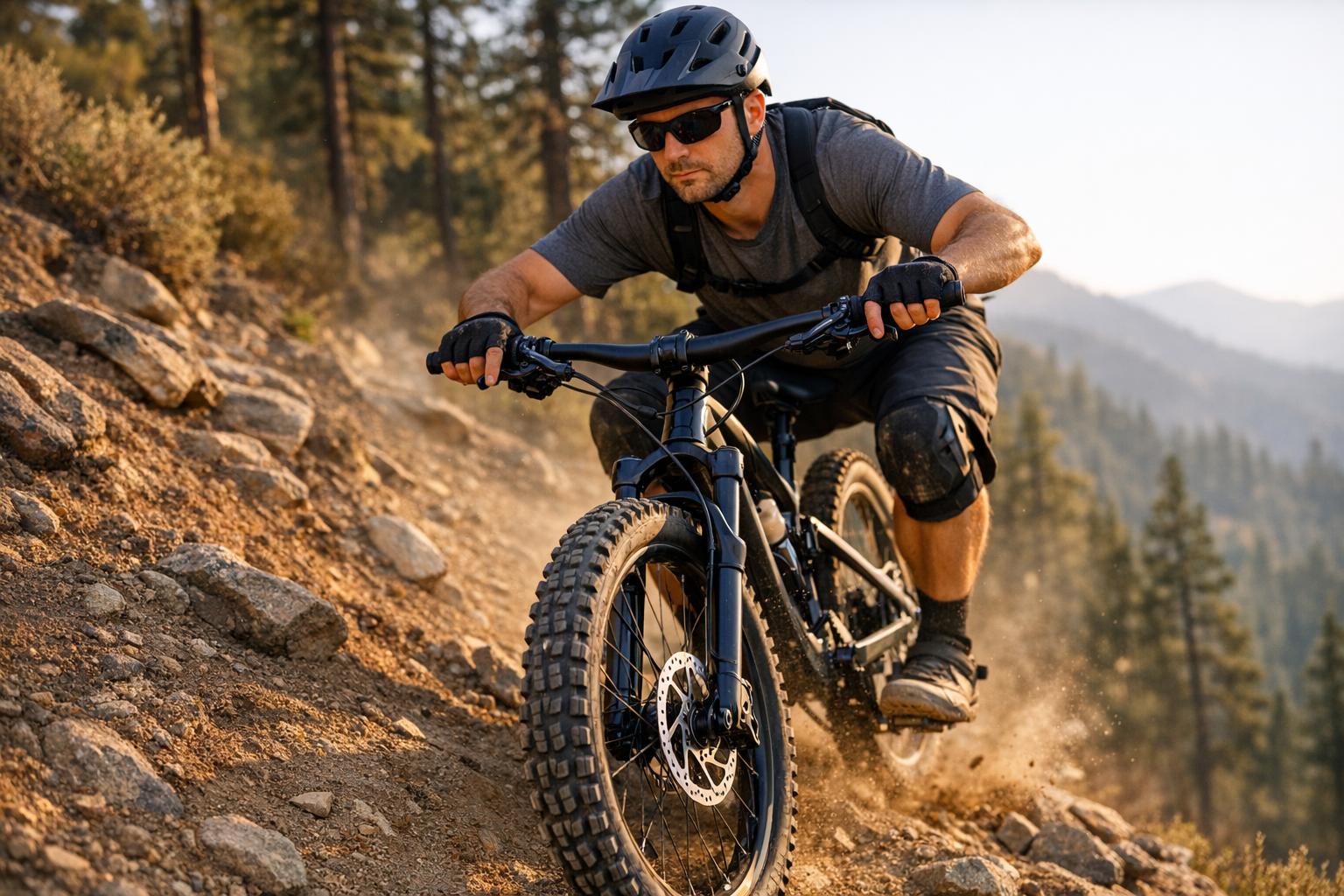
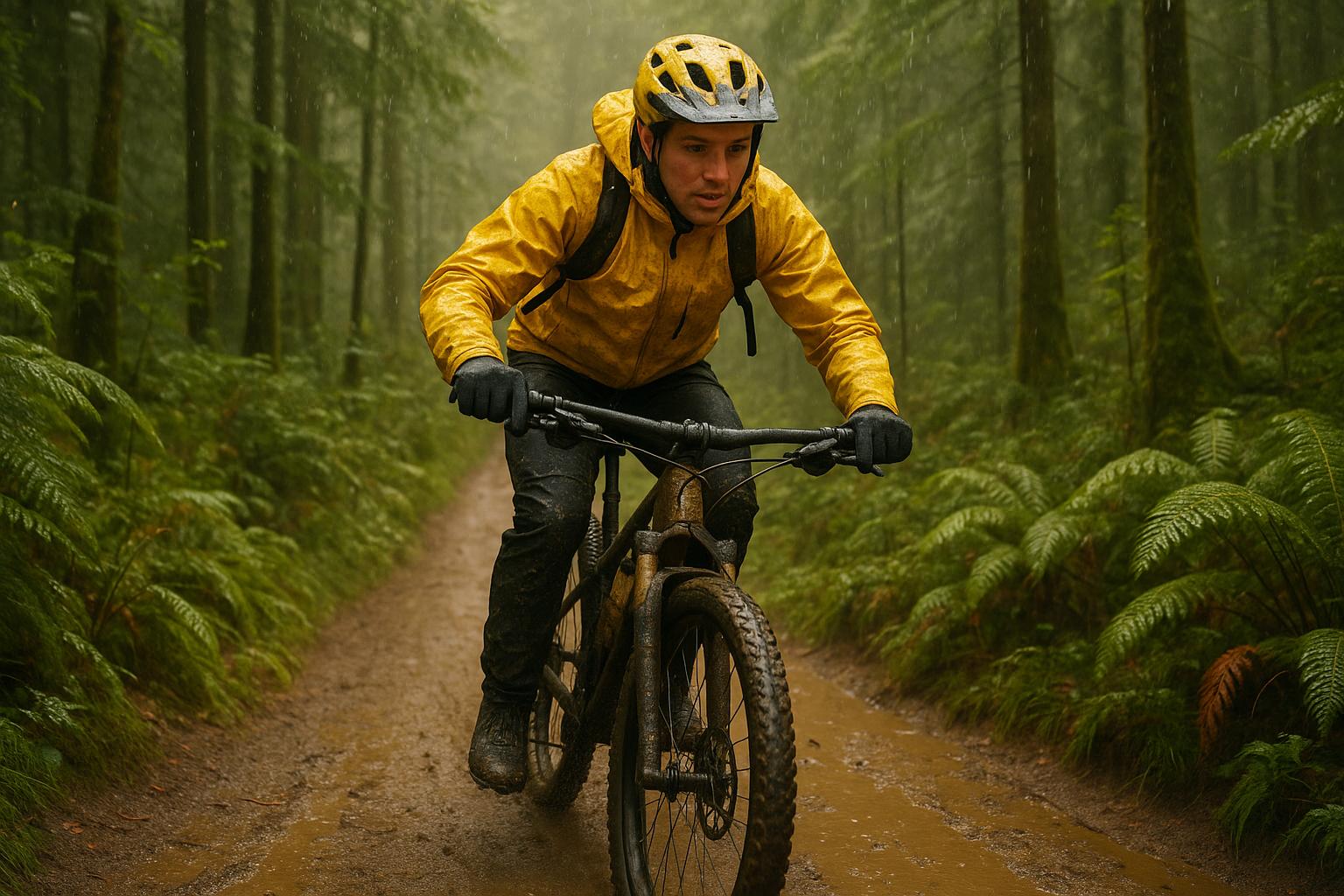
Want to master mountain biking in the rain? Here’s what you need to know: Wet trails demand extra care, but with the right preparation, gear, and techniques, you can ride safely and enjoyably.
Key Takeaways:
- Check trail conditions: Avoid damaging trails by riding responsibly.
- Lower tire pressure: Gain traction on slippery surfaces.
- Wear waterproof gear: Stay dry and visible with breathable jackets, pants, and gloves.
- Install fenders: Protect yourself and your bike from mud and water.
- Adjust braking technique: Brake earlier and more gently to maintain control.
- Watch for hazards: Roots, rocks, and wooden features get slick – approach with caution.
- Use wet-weather chain lube: Protect your drivetrain from water and mud.
- Ride cautiously: Slow down, plan your lines, and stay balanced.
- Pack extra dry gear: Bring spare gloves, socks, and a towel for comfort and safety.
- Clean your bike afterward: Prevent rust and wear with a thorough post-ride cleanup.
Rainy rides can be challenging but rewarding. With these tips, you’ll be ready to tackle wet trails while staying safe and protecting the environment.
Mountain Biking In The Rain SUCKS Unless You Do This
1. Check Trail Conditions First
Before you hit the trails, make it a priority to check their condition. Riding on trails that are too wet doesn’t just ruin your ride – it can also cause lasting damage. Over time, this can lead to trail closures and major repair efforts.
Here’s why it matters: when mud sticks to your tires, it creates ruts that harden as they dry. These ruts channel water down the trail, increasing erosion and creating hazardous trenches. Plus, if you try to avoid muddy patches by riding around them, you risk widening the trail and harming nearby vegetation and tree roots.
"Soils are more erodible as you move north to south (Medina and South Salado are the softest and we have the greatest problems with erosion on these trails)….SA is prone to flash flooding, which washes out unsustainable dirt trails and is prone to suddenly deposit large amounts of sediment in our waterways." – Brandon Ross, AICP, San Antonio Parks and Recreation
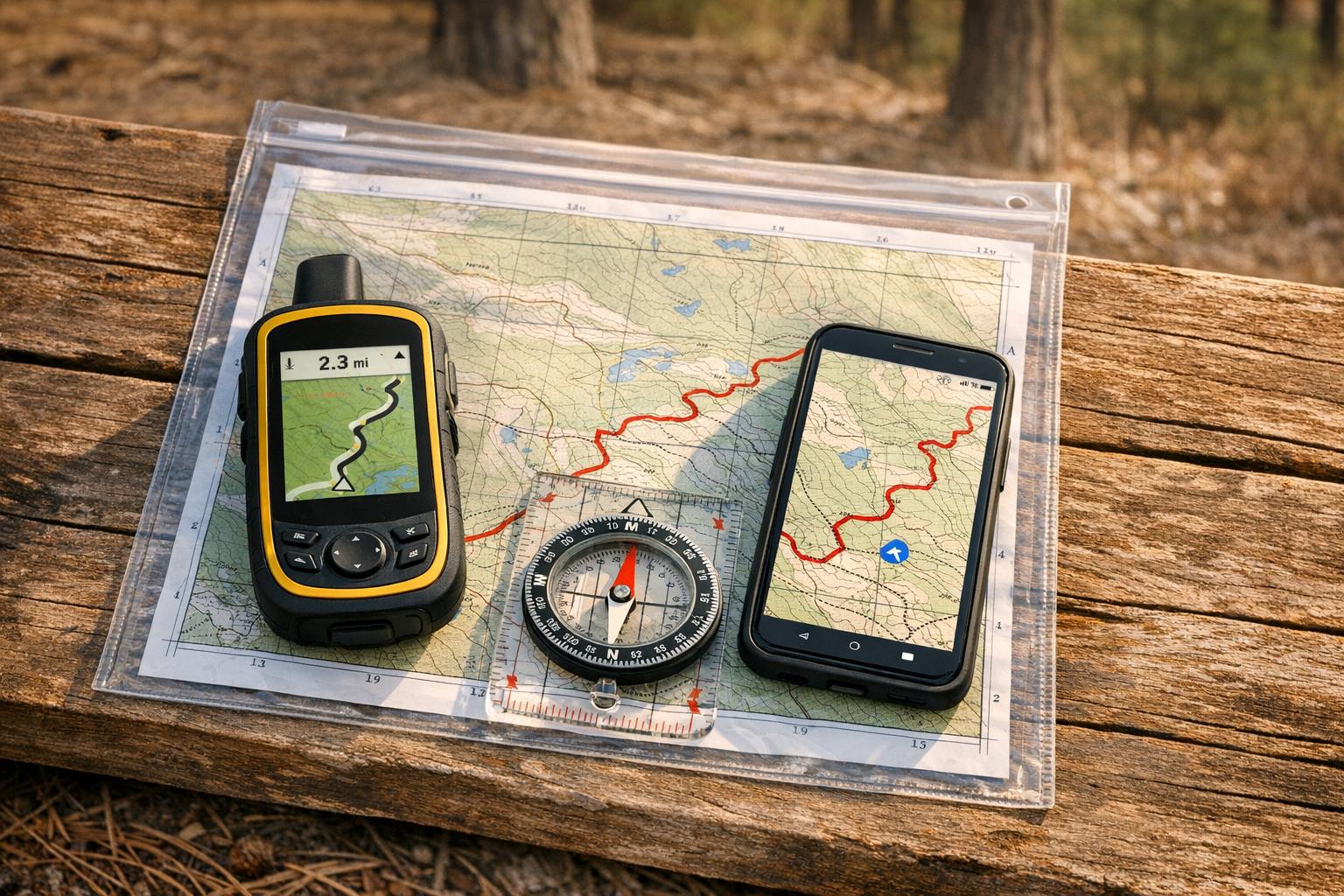
To stay informed, use apps like Trailforks or MTB Project. These platforms feature user-submitted trail conditions and detailed maps. If you prefer instant updates, apps like RainoutLine or Trailbot can send alerts when conditions change.
Don’t stop there – official park and forest websites often post trail status updates and regulations. Many local trail organizations also send out email or text alerts about closures. Social media is another great tool; for instance, groups like Urban Trail Co. frequently share real-time updates on Twitter (e.g., @KCTrailsStatus). After checking these resources, it’s a good idea to confirm conditions in person before riding.
Lastly, do a quick "mud test": if dirt starts sticking to your tires, it’s a clear sign to turn back.
2. Lower Your Tire Pressure
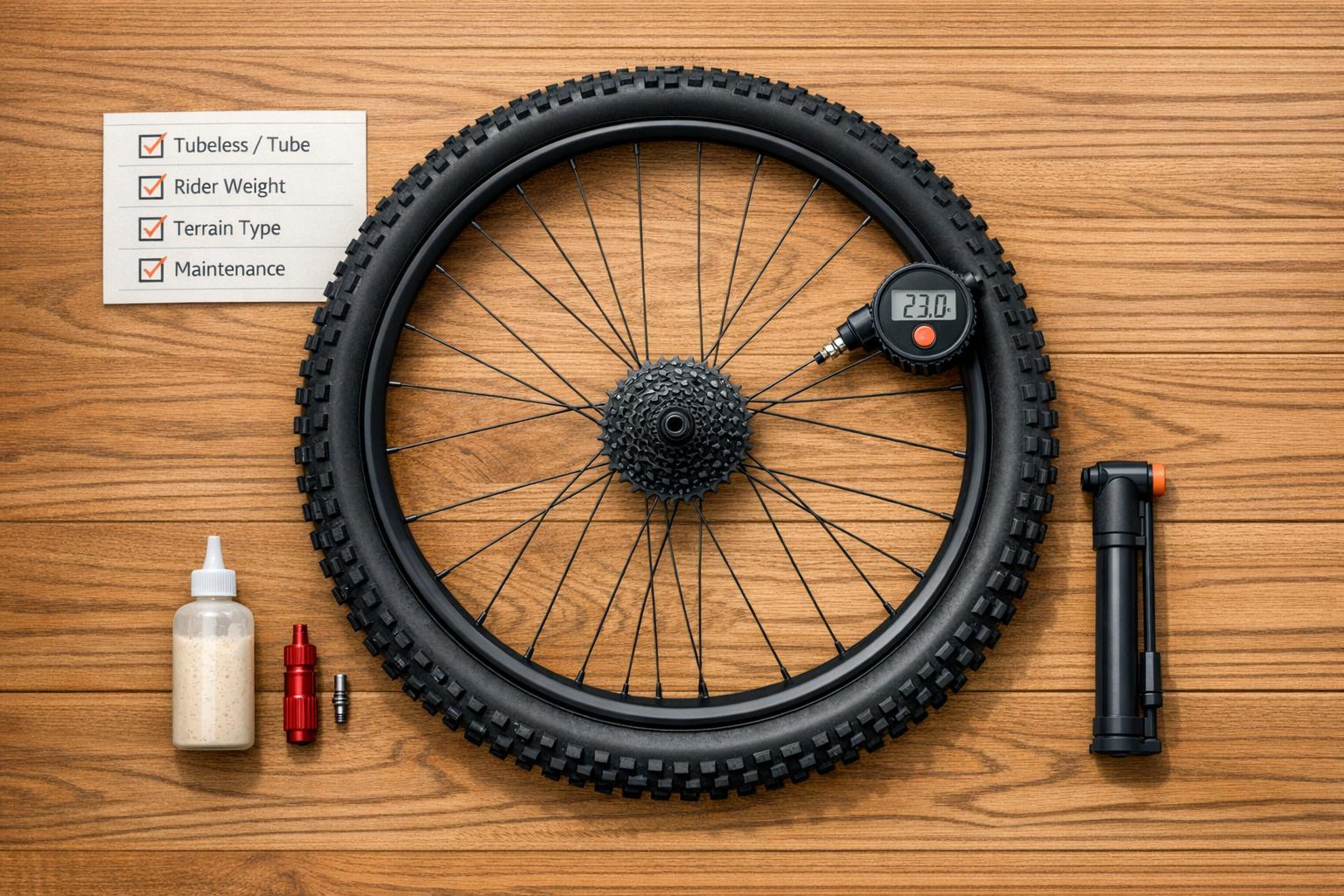
Dropping your tire pressure by 2–3 PSI can make a big difference when riding on wet, root-filled trails. This adjustment increases the contact patch, giving you better traction and stability in slippery conditions. With lower pressure, your tires can mold more easily to obstacles, spreading your weight more evenly and boosting grip.
Start by reducing your usual dry-weather tire pressure (for example, from 20–22 PSI down to around 17 PSI). If you’re still struggling with traction, especially in corners, drop it by another 2–3 PSI. In fact, a January 2022 report from Singletracks highlighted that SRAM‘s tire pressure calculator suggests lowering pressure by about 1 PSI for wet conditions.
Be cautious, though – too little pressure can lead to issues like tire burping, rims rolling off, dents from rocks, and increased resistance when climbing. To find the sweet spot, make adjustments in 1 PSI increments until you hit the perfect balance of traction and performance. Additionally, tweaking your suspension by slowing down the rebound speed can help reduce the chances of slipping on wet obstacles.
And don’t forget: having the right rain gear is another key to staying safe and comfortable on wet trails.
3. Wear Waterproof Rain Gear
Staying dry isn’t just about comfort – it’s crucial for both safety and performance. The right waterproof gear keeps you warm, helps prevent hypothermia on long rides, and ensures you maintain your energy, even on tough, rain-soaked trails. It’s not just about staying dry; it’s about staying ready for whatever the trail throws at you.
Don’t overlook breathability. Waterproof gear should also let sweat escape. Look for items with breathable membranes, like those inspired by GORE-TEX technology, which keep water out while allowing moisture from your body to evaporate.
For mountain biking, a lightweight, breathable waterproof jacket is your best friend. It should resist water pooling and hold up against snags from branches. Features like sealed seams, adjustable cuffs, and reflective details make a big difference in keeping you dry and visible.
Here’s what to look for in your gear:
- Seam-sealed construction to block leaks.
- Adjustable cuffs to keep water from sneaking in.
- Durable Water Repellent (DWR) coating that makes water bead and roll right off.
Extra features like pit zips can help you stay cool during intense climbs, and jackets with adjustable hoods that fit over your helmet provide full rain protection.
Visibility is another key concern in rainy weather. Overcast skies and wet roads make it harder for others to see you. Choose gear with reflective strips and bold, high-visibility colors like neon yellow or bright orange. This applies not just to jackets but also to waterproof pants and gloves.
"There’s no downside to being more visible, but what we do matters way more than anything we can wear or attach to the bike." – Jim Rutberg, CTS Pro Endurance Coach
Layering is just as important as your outerwear. Start with a breathable base layer, like Merino wool, which wicks moisture and resists odor. Add an insulating mid-layer for colder rides, and top it off with your waterproof jacket as the outer shell.
Combine these gear choices with the right bike adjustments to tackle wet weather riding with confidence.
4. Install Fenders on Your Bike
Once you’ve got your waterproof rain gear sorted, it’s time to outfit your bike with fenders – a must-have for riding in wet conditions. Fenders shield you and your bike from mud, water, and debris, keeping you cleaner and reducing wear on your bike’s components.
Fenders not only help maintain your bike’s longevity but also improve visibility and safety by blocking the spray that can kick up from your tires. Adjusting your tire pressure and adding fenders work hand-in-hand to make wet-weather rides safer.
"Even in hard rain, you will become wet with clean rain from above, but your body and bicycle will be protected from the mud and sand kicked up from dirty puddles and rivulets." – Adventure Cycling Association
When choosing fenders, consider your bike type and riding style. Full-length fenders offer maximum coverage, while clip-on versions are more versatile and easier to remove. For extreme mud, compact "ass-savers" provide a quick and lightweight option.
If you’re riding a mountain bike, look for mudguards – fenders designed specifically for off-road conditions. These are built to accommodate larger tires and suspension systems. Front mudguards typically attach to the fork with zip ties, while rear options mount to the saddle or seat post, offering adjustable coverage.
Tech experts from Pinkbike recommend models like the MuckyNutz MugGuard Long and the Fox XL Mud Guard, praising their secure fit and straightforward installation.
"Next to lock-on grips, mud guards could be one of the most practical wet-weather additions you could make to your bike, since holding onto your bike and being able to see where you’re going are mildly important." – Matt Beer, Tech Editor, Pinkbike
For rougher terrain, bolt-on fenders are your best bet – they stay in place even on bumpy rides. Just make sure there’s enough clearance between the fender, tire, and brakes. If zip ties aren’t your thing, some forks support direct mount adapters for a cleaner look. Adding mud flaps can also enhance protection, especially if your bike doesn’t have mounting points for full fenders.
Installing fenders not only keeps you and your bike cleaner but also boosts your handling confidence, which is crucial when roads or trails are slick.
5. Change Your Braking Technique
When riding in the rain, your braking habits need a serious update. Wet conditions can completely change how your brakes respond, and sticking to your dry-weather techniques can quickly land you in trouble.
Rain reduces tire grip and delays brake pad engagement, which significantly increases stopping distances. To stay safe, you’ll need to rethink both when and how you brake.
The key to braking in wet weather is to be gentle and steady. Avoid grabbing hard on the levers, as abrupt braking can make your wheels skid and cause you to lose control. Instead, apply both brakes gradually and evenly to maintain stability. Timing is also critical – adjust your braking to match the slippery conditions.
Rider Josefine Björkman emphasizes the importance of braking in the right spots:
"It’s important to brake in the right spots. Try not to brake on slippery rocks and roots, but rather control your speed going into the technical sections and then let go of the brakes over the technical stuff to get better traction. A good tip is to brake a little more than usual beforehand to have more control going into the slippery section."
When approaching corners, stick to using your rear brake. Apply pressure evenly and release it quickly to avoid locking up the wheel, as locked wheels lose traction. Keeping the wheels spinning will help you maintain control.
For added stability during stops, shift your weight back. This improves traction on the rear wheel, giving you better control in slick conditions.
Before tackling tricky terrain, do a quick brake test on a safe section of the trail. This will give you a feel for how slippery the conditions are and help you gauge how much braking is needed. By managing your speed early, you’ll maintain better control over wet roots, rocks, and mud.
sbb-itb-9d75ae1
6. Watch for Slippery Surfaces
Rain can turn a fun trail into a tricky obstacle course, transforming roots, rocks, and leaves into slick hazards. Wet roots, often hidden under a layer of mud, can send you sliding if you hit them at an angle. Clay-heavy hardpack trails become greasy, and even painted road stripes can be unexpectedly slippery. Navigating these conditions requires a sharp eye and some adjustments to your riding technique.
Wooden features, like bridges or ramps, become especially treacherous when wet. To stay safe, keep your bike as upright as possible while crossing them. When dealing with wet roots, aim to hit them head-on so your tire meets them at a right angle. For wooden sections, avoid leaning the bike – this helps preserve what little traction you have. Managing your speed is equally important: slow down before you hit these slippery areas rather than braking mid-turn or descent, which could throw off your balance.
If you come across muddy patches, the best approach is to ride straight through them. Not only does this keep your ride smoother, but it also minimizes the damage to the trail itself. As you approach slippery sections, reduce your speed and keep your weight centered to handle any sudden loss of grip. Use your legs as natural suspension to absorb bumps and uneven terrain, a technique that pairs well with earlier tips on braking and handling in wet conditions.
Confidence is key when riding in wet weather. As seasoned rider Richard Shoop wisely advises, "You can’t ride nervously in wet conditions. That always ends in disaster." Stay focused, pick your lines carefully, and trust your abilities to tackle these slippery challenges head-on.
7. Use Wet-Weather Chain Lube
When the skies open up and the roads turn slick, your bike’s chain faces a real challenge. Dry lube just doesn’t cut it in these conditions – it washes away easily, leaving your drivetrain exposed to water and mud. That’s where wet-weather chain lube comes in. It’s designed to stick around, offering reliable protection and keeping your chain running smoothly, even in heavy rain.
Wet lube creates a durable coating that resists being washed off, reducing drivetrain noise and protecting against wear. Unlike dry lube, which disappears quickly in wet conditions, wet lube clings to the chain, ensuring quieter and more efficient rides. In regions like the Pacific Northwest, where sudden showers are a regular occurrence, many cyclists rely on wet lube all year long. It’s the go-to solution for riders who don’t want their chains to squeak and grind through every puddle.
Here’s how to apply it properly for the best results:
- Shake the bottle well before use.
- While slowly pedaling backward, apply a single drop of lube to each link on the inside of the chain near the derailleur wheel.
- After a few pedal strokes to spread the lube, let it soak in for a few minutes.
- Finally, use a dry cloth to wipe off any excess from the chain’s exterior. This step is key – it prevents dirt and grime from sticking to your chain during the ride.
Using wet lube not only keeps your bike performing at its best but also extends the life of your drivetrain. Water and road debris can wreak havoc on an unprotected chain, but wet lube forms a barrier that shields against moisture and contaminants. Just don’t forget to give your chain a thorough cleaning after every muddy ride to keep it in top shape.
8. Ride with Extra Caution
When rain turns your favorite trails into slippery challenges, your riding style needs a complete makeover. Wet conditions demand slower speeds, careful line choices, and constant awareness of how the trail is changing beneath your wheels.
The first adjustment? Slow down. Wet dirt and obstacles can behave unpredictably, so what feels safe on a sunny day can quickly become risky in the rain. Reduce your speed and start braking earlier before corners – wet surfaces make your brakes less responsive, and sliding into a turn is no fun.
Trail vision becomes your best friend in wet weather. Look ahead to identify hazards like puddles, exposed roots, or muddy patches, and plan your line accordingly. If possible, choose alternative lines to dodge the worst obstacles. However, ride through puddles or soft spots instead of skirting around them – this prevents trail widening, which damages the environment. Scanning ahead also helps you prepare for tricky sections before you’re in the thick of it.
"Riding in the wet is a battle for traction and whilst there is no magic formula for unlocking Velcro-like grip, there are a few things you can do to take your wet weather riding from ‘wet wobbler’ to ‘slippery slayer.’"
– H+I Adventures
When tackling technical sections, adjust your approach. Slow down before entering, let your bike’s suspension do its job, and avoid sudden braking mid-section. For roots and rocks, aim to hit them straight on with your front wheel. Stay off the saddle and keep your body loose – this allows the bike to flow naturally over the terrain. On slippery roots, maintain steady momentum and avoid braking. If possible, unweight the front wheel or hop over them entirely.
Your body position is key to staying upright. Keep your weight forward when cornering to prevent the front wheel from sliding out. Adjust your center of gravity based on the terrain and make slow, deliberate movements to change direction instead of jerky, rushed inputs.
Austin High’s Head Coach Thad Williams shares some essential advice for wet-weather riding:
"Embrace the fact you’re not going to be 100% in control. The bike will move underneath you, keep your arms loose, and elbows supple, and allow the bike to move within reason. Clenching and trying to force a line will end badly."
Momentum management is another critical skill. You’ll need enough speed to glide through muddy sections without getting bogged down, but not so much that you lose control on slick surfaces. Keep your eyes up, stay low, and use your body to pump and absorb bumps. If jumping feels risky, simply unweight the front wheel as you roll over slippery spots.
Finally, watch for signs that the trail might be too wet to ride safely. Trail advocate and Mountain Bike Hall of Famer Dave Wiens advises:
"As a rule of thumb, if you are leaving deep tracks and/or mud is sticking to your tires and frame, turn around immediately and exit the trails."
Different trail surfaces respond to rain in different ways. Clay soil becomes dangerously slick when wet, while rocky or slate trails often provide better traction. Be extra careful in low-lying areas where water pools, and approach wooden features and roots with heightened caution – they can turn into ice-like hazards in the rain.
9. Pack Extra Dry Gear
Bringing along extra dry gear during wet rides isn’t just about comfort – it’s a safety measure, too. While your bike setup and riding gear are crucial, having backup dry items can make a world of difference when the weather turns.
Start with your hands. Wet gloves can make it hard to grip handlebars and brakes, which is not only uncomfortable but downright dangerous. To avoid this, pack at least one or two extra pairs of gloves in a ziplock bag. When your hands start to feel numb, swapping to a dry pair can instantly lift your spirits and improve your control.
Don’t forget about your feet. Wet socks can leave you feeling miserable and distracted, especially on longer rides. Keep a pair of dry socks in a waterproof bag so you can change out of soggy ones when needed. Your feet will thank you later.
A small towel is another versatile addition to your pack. Use it to wipe down your face, hands, or gear during the ride, and it’ll come in handy for cleaning yourself and your bike afterward. This is especially useful if you’re hopping back into your car post-ride. For an extra layer of preparedness, stash a couple of hand warmers in your pocket or pack. They’re lightweight, and in case you’re stuck waiting out bad weather, they can provide much-needed warmth.
To keep all your gear dry, invest in a quality pack cover. Look for one with seam taping and adjustable cords, like the Sea to Summit Ultra-Sil Pack Cover, which offers solid rain protection without adding bulk. For added security, store critical items – like dry clothes, electronics, and emergency supplies – in waterproof bags inside your pack. This double-layered approach ensures your essentials stay moisture-free, no matter how heavy the rain gets.
Finally, think ahead to your post-ride recovery. If someone’s picking you up, ask them to bring a towel and a trash bag to protect their car from mud and water. These small steps can make your rainy ride safer, more comfortable, and less stressful.
10. Clean Your Bike After Riding
Finishing your ride doesn’t mean your work is done – proper maintenance is key to keeping your mountain bike in great shape. Cleaning up after a wet or muddy ride is just as important as the prep you did before hitting the trails. As Remco Schouten, Product & Retail Specialist, wisely notes: "Putting your bike ‘away’ wet is asking for trouble".
Start by giving your bike a gentle rinse using low-pressure water. Avoid high-pressure sprays, as they can push dirt and moisture into sensitive areas like bearings and bushings, potentially causing more harm than the mud you’re trying to clean off. Let the bike soak briefly to loosen stubborn grime before you start scrubbing.
Pay extra attention to the drivetrain – the chain, cassette, derailleur pulleys, and crankset. These components endure the most abuse during muddy rides and tend to collect the most dirt. If left uncleaned, mud and water can seep into critical areas like the bottom bracket and wheel hubs, leading to long-term damage. Once the dirt is gone, it’s time to dry your bike.
Thorough drying is essential, especially for the chain and sprockets, to eliminate moisture that could lead to rust. If you ride frequently in wet conditions and have a steel frame, consider using a product like Frame Saver to add an extra layer of protection. A handy tip: remove the seat post and turn the bike upside down to drain any water that may have collected inside the frame.
Once your bike is dry, reapply lubricant to the chain and other moving parts. Make sure the chain is completely dry before adding fresh lube, and wipe off any excess to prevent dirt from sticking. This step not only protects your drivetrain but also ensures smooth braking and extends the life of your components.
The good news? You don’t need pricey tools to get the job done. Affordable options like the Halfords Bikehut Mini Cleaning Kit for $13 are great for basic cleaning, while more advanced kits like the Muc-Off 8-in-1 Kit (regularly $65, often discounted to $50) offer a more complete solution.
"Regular cleaning and lubing prevent dirt and grime buildup, reducing wear on your bike’s moving parts and prolonging their lifespan." – Bicycle Warehouse
Spending just 15–20 minutes on post-ride cleaning can save you from costly repairs and keep your mountain bike running smoothly for many more adventures.
Conclusion
Mountain biking in the rain can turn an ordinary ride into an unforgettable adventure. While preparation and technique are key, your mindset is just as important. Approaching wet conditions with a positive attitude can turn challenges into opportunities to improve your skills and enjoy the ride.
Safety should always come first. By making smart adjustments, like choosing the right gear and being mindful of trail conditions, you can stay in control and minimize risks on slippery terrain.
Taking care of the trails is just as crucial. Damaged trails are much harder to fix than they are to protect. As Jim Rutberg from USA Cycling puts it:
"It is far easier to harm a trail than to repair or restore it. The more you respect the dirt the more fun we’ll all be able to have on it."
Opt for trails with good drainage, ride through puddles when it’s appropriate, and avoid overly muddy areas. These small steps help keep trails in great shape for everyone to enjoy.
The right gear can make a world of difference, too. Trails with gravel bases or sandy, loamy soils tend to drain quickly, making them excellent choices for honing your wet-weather riding skills. Each ride in the rain is a chance to practice, build confidence, and sharpen your technical abilities, all while having a blast.
And don’t forget the most important part – enjoy yourself. As Bike Mag reminds us:
"Have fun. It’s really that simple. Remember that you willingly subject yourself to this experience; it should be fun."
When safety, preparation, and technique come together, rainy-day rides can offer a quieter trail, unique scenery, and the chance to grow as a rider. So, the next time the clouds roll in, grab your gear and head out – you might just discover a new favorite way to ride.
FAQs
How can I take care of my bike after riding in the rain to avoid rust and damage?
To keep your bike in good condition after riding in the rain, it’s important to clean it as soon as possible. Use a gentle spray of water or a damp cloth to wipe away mud and moisture, but steer clear of high-pressure water, as it can strip grease from critical parts. Once it’s clean, dry your bike thoroughly with a soft cloth and store it indoors in a dry space to avoid rust.
After cleaning, apply lubricant to the chain and other moving parts to guard against rust and keep everything running smoothly. Choose a high-quality lubricant that isn’t wax-based, as wax-based options can attract dirt. Lastly, take time to inspect areas like the hubs, headset, and bottom bracket. Grease these components as needed to prevent corrosion and keep your bike performing well. With these easy steps, your bike will be ready to handle rainy rides without a hitch.
What’s the best way to adjust tire pressure for better traction when mountain biking in the rain?
When riding in wet conditions, slightly lowering your tire pressure can make a big difference in traction and stability. By reducing the pressure, you create a larger contact patch, which helps your tires grip slippery surfaces like wet rocks, mud, and roots. A general guideline is to drop your usual pressure by about 5 PSI, though the exact adjustment will depend on the terrain and your weight.
For tubeless setups, a good starting point in rainy weather is around 23–24 PSI for the front tire and 27–28 PSI for the rear tire. However, don’t go too low – steering can become harder, and you risk damaging your rims on impacts. Take some time to test and tweak the pressure until you find what feels right for your ride.
What should I look for in waterproof gear to stay dry and comfortable while mountain biking in the rain?
When gearing up for rainy rides, it’s important to choose waterproof gear that keeps you dry without making you uncomfortable. Start by focusing on breathable materials like Gore-Tex, which let sweat escape while blocking out rain. To ensure no water sneaks in, check that the seams are fully sealed or taped.
For practicality, go for lightweight, packable options that are easy to stash when the skies clear. Look for cycling-specific designs, such as jackets with longer backs and sleeves that stay put while you ride. Features like zippered vents are great for managing heat during intense efforts, and a durable water-repellent (DWR) coating will help water roll right off the surface. Picking gear with these details ensures you’ll stay dry, comfortable, and ready to handle wet rides without a hitch.