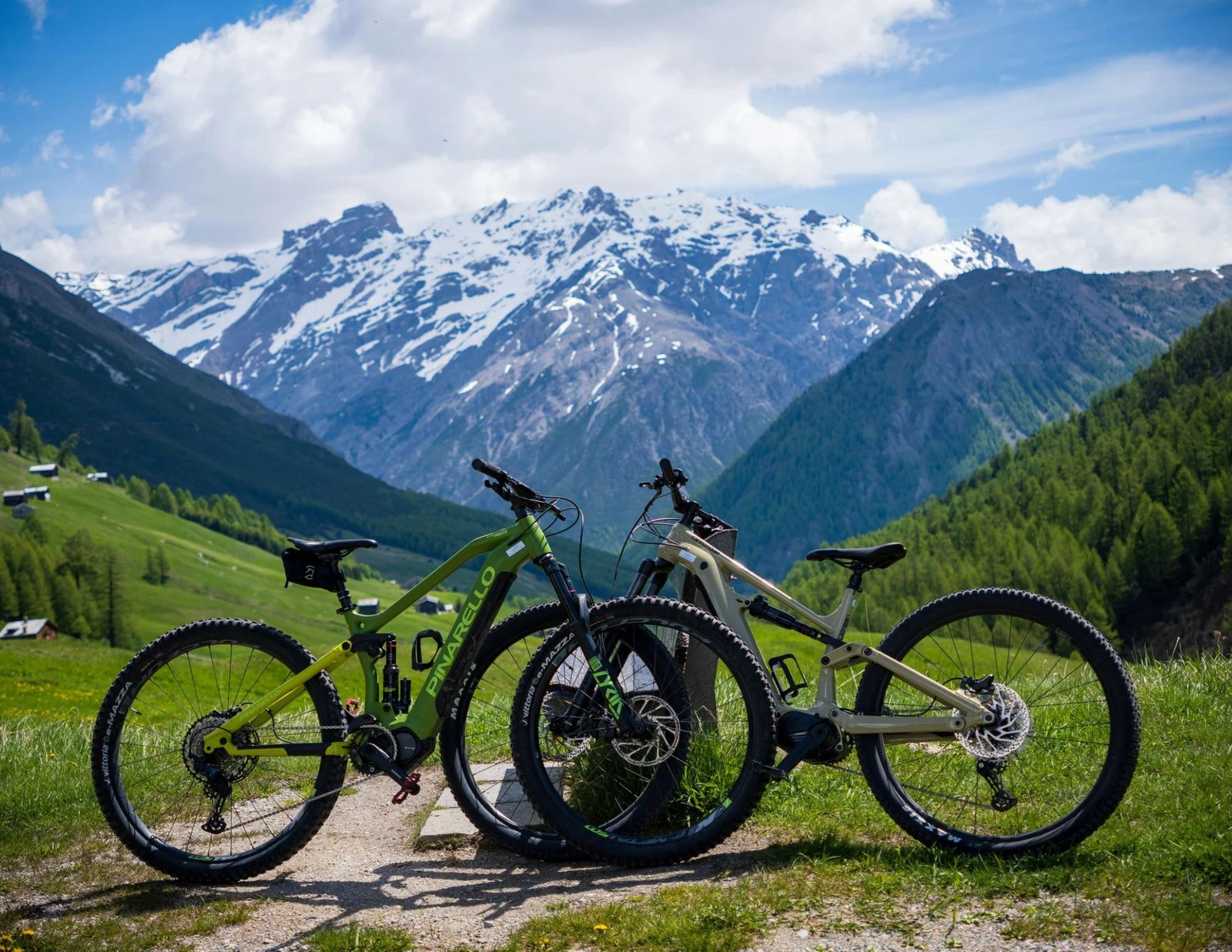
Electric mountain bikes, or eMTBs, are one of the best purchases you can make today for several reasons. These bikes let you go farther than you might on a regular mountain bike and fit in more trail time without sacrificing your busy schedule.
On top of this, eMTBs can help you tackle technical climbs much more easily while still giving you a real workout. Overall, eMTBs are great for those who love a challenge but still want to take in the beautiful scenery.
Even so, there are some great budget-friendly mountain bikes under $3,500, and we’ve researched them to ensure you get the right information, specs, and a clear idea of why each one is an excellent choice. Let us review them below.
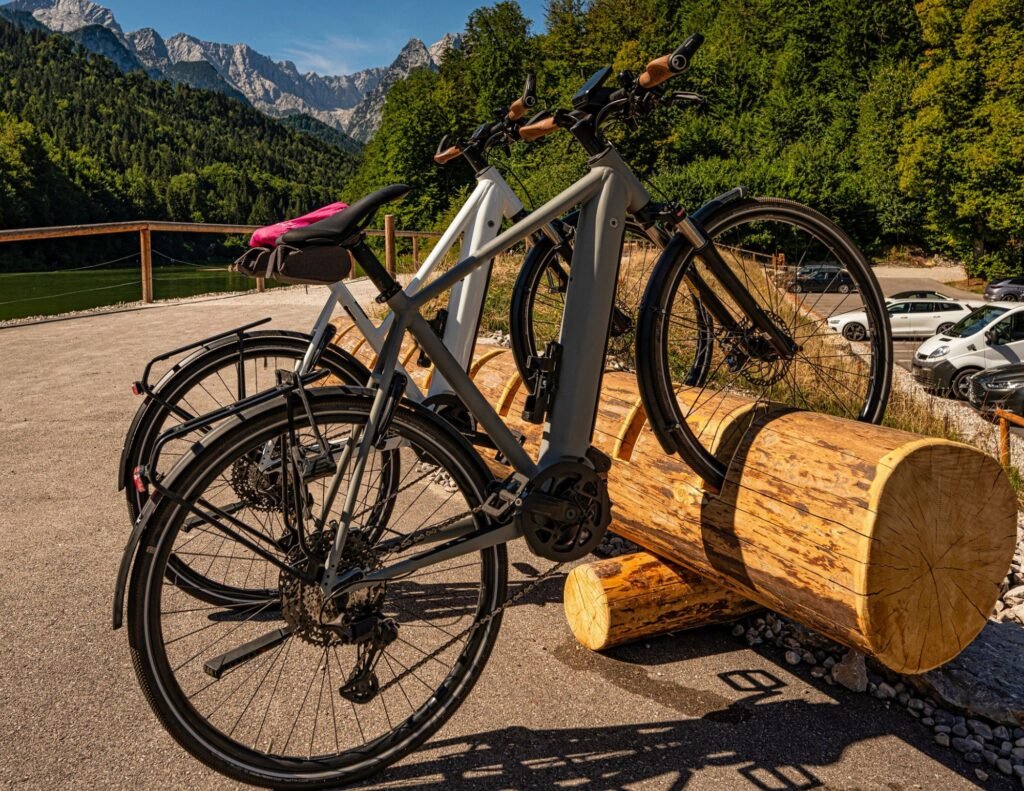
Our Top Picks at a Glance
As mentioned above, here are our reviewed picks for the best electric mountain bikes. We encourage you to read all the information before making an informed decision, so let us get to the details of each one!
1. Giant Talon E+
2. Giant Fathom E+
3. Trek Marlin+
4. Trek Powerfly+ FS
5. Specialized Turbo Tero X 4.0
6. Aventon Ramblas
7. Cannondale Trail Neo S
In this article, we will discuss the best budget eMTB we mentioned above. We’ll also cover where you can ride an eMTB vs. where you cannot, along with other essential information. We encourage you to continue reading along for more information.
What You Get (and Give Up) With a Budget eMTB
There are many things you get with a budget eMTB. However, you also give up some features. For those who want the highest quality, for example, it may be best to invest in a higher-priced bike. However, budget eMTBs still offer great value. Even so, let us review what you get vs. what you give up with a budget eMTB.
1. Frame Type & Suspension
With a budget-friendly electric mountain bike, you will most often end up with a hardtail. This means your bike has front suspension, but not rear suspension.
With both front and rear suspension, your comfort, traction, and control on rough terrain will improve. In contrast, front-only suspension cushions only the front wheel, making it more efficient and firmer on smoother trails.
On the other hand, a more expensive eMTB provides a full-suspension layout, meaning you have both a front fork and a rear shock. Because of this, you can utilize technical terrain and higher speeds much more easily than with a less expensive eMTB.
2. Battery Capacity
Usually, a budget mountain bike battery capacity is between 500 and 625 Wh. This provides a significant range for most trail rides (30 to 100 miles).
However, more expensive eMTBs have a battery capacity between 600 and 800 Wh (lasting 50 to 80 miles). These capacities vary depending on the bike you choose, but batteries on more expensive bikes are typically much larger, heavier, and longer-lasting.
It is important to note that, depending on the terrain you ride (rough vs. smooth) or how heavily you use the battery, runtime will vary.
3. Weight
Generally speaking, a lower-budget eMTB will weigh more than a high-end model. This is because the frame is made from different materials. Budget-friendly e-mountain bikes use aluminum alloy frames, which are durable, affordable, and suitable for trail riding. Budget-friendly eMTBs usually weigh between 50 and 60 pounds.
On the other hand, high-end e-mountain bike models use carbon-fiber frames, making them lighter than their more affordable counterparts. However, if a more expensive version has a larger battery, heavy-duty suspension, and a powerful motor, it can add weight, so it may not be much lighter than a cheaper version. More expensive eMTBs weigh between 35 and 52 pounds.
4. Motor Type
Many budget-friendly eMTBs use a mid-drive motor or a hub motor in the wheel axles, offering better weight distribution and trail performance. More expensive models use torque-sensing mid-drive motors mounted at the bike’s bottom bracket to keep the bike balanced for jumping and cornering.
5. Features
Although budget-friendly electric mountain bikes are excellent in many ways, one of their biggest drawbacks is a lack of specific features. For example, more expensive eMTBs provide adjustable suspension and other high-end components, which can limit your ability to ride on technical trails. In this case, a budget-friendly electric mountain bike might not be as beneficial if you want to tackle harder courses, but it’s great for easy-to-intermediate trails.
Best Budget eMTBs Reviewed
Thankfully, we have taken the time to research and review what the best budget eMTBs are below. Needless to say, the hard part is already done for you, so all you have to do is review which one is best for you and make the investment. We promise you will not be disappointed!
1. Giant Talon E+
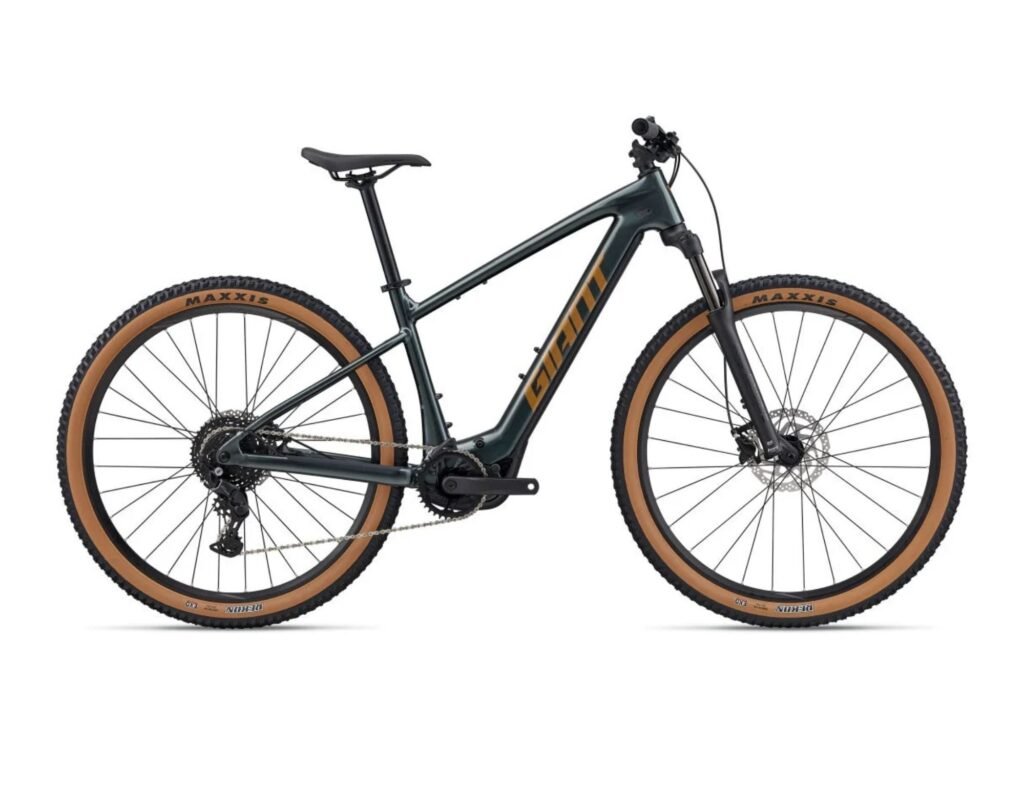
For those wanting the best electric mountain bike under 3000, look no further than the Giant Talon E+. This bike was made in 2026, making it an excellent, newer choice. Not only is it a model designed for today, but it is also extremely lightweight, making it more enjoyable to use in the mountains.
Many people can use this for their daily commute or a weekend trip in the mountains thanks to its 100mm suspension fork, which helps smooth out bumps.
With a single battery charge, you can expect to ride anywhere between 35 and 71 miles, depending on conditions like your weight and cargo, wind resistance, tread profile, tire pressure, and terrain and elevation changes. Lastly, the frame weighs roughly 47 pounds and is much lighter than other bikes in its category, making it easier to lift and transport.
2. Giant Fathom E+
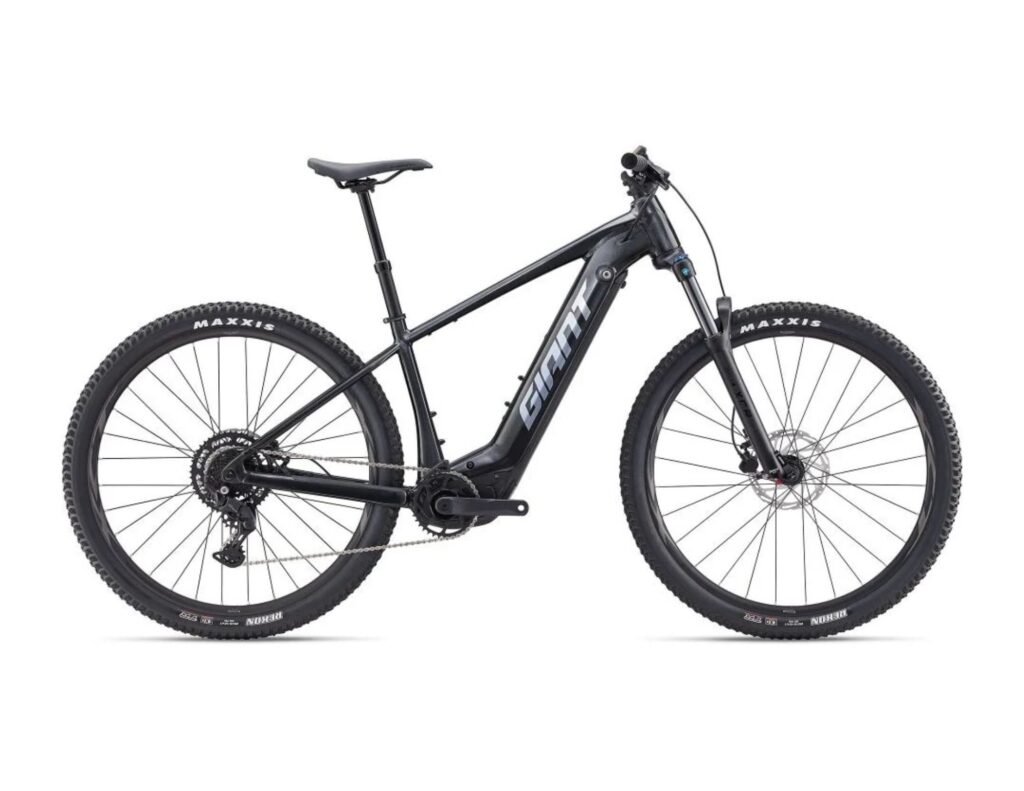
For those looking for a cheap e-MTB that will last a long time, look no further than the Giant Fathom E+. This bike weighs just under 43 pounds, making it lightweight to take to and from places. It is a good value for its money, with a long-lasting battery and a powerful motor for climbing.
On top of this, the Giant Fathom E+ has a 130mm front suspension instead of a full suspension, meaning it is lighter and more efficient on smooth trails. It is one of the best buys for a beginner eMTB rider, making it all worth it.
3. Trek Marlin+
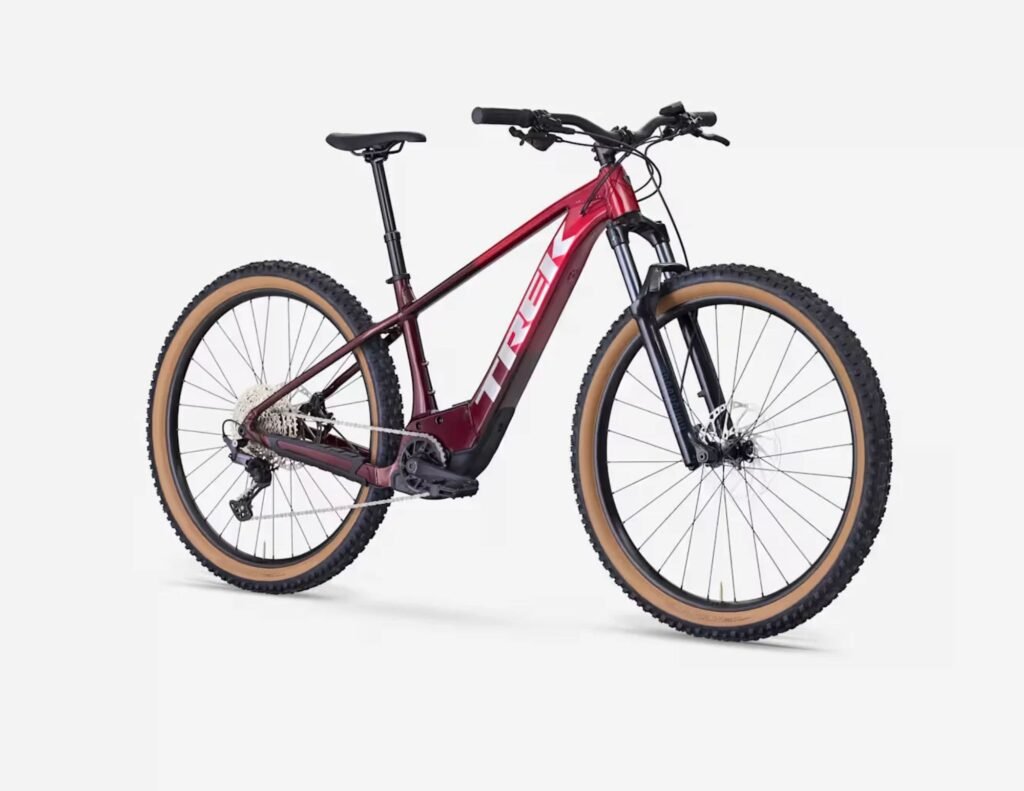
The Trek Marlin+ comes with a 120mm front suspension and multiple wheel sizes to choose from, ranging from 27.5″ to 29″, so no matter your size, they have what you need! This bike weighs between 47 and 50 pounds.
The 400 Wh battery can provide 20 to 30 miles of range, or 1.5 to 4 hours, depending on the terrain and the assist mode you use. However, you can attach an additional 250 Wh range extender to further the distance traveled if you want to go that route.
Note: The battery cannot be removed, so storing the eMTB indoors will help the battery (and frame) last much longer.
Lastly, the bike’s trail geometry is excellent, making it great for crevices and tight corners, and it also has a good hydraulic disc brake. Overall, the Trek Marlin+ is perfect for everyday commuting and bikepacking, and allows well-balanced, playful trail handling.
4. Trek Powerfly+ FS
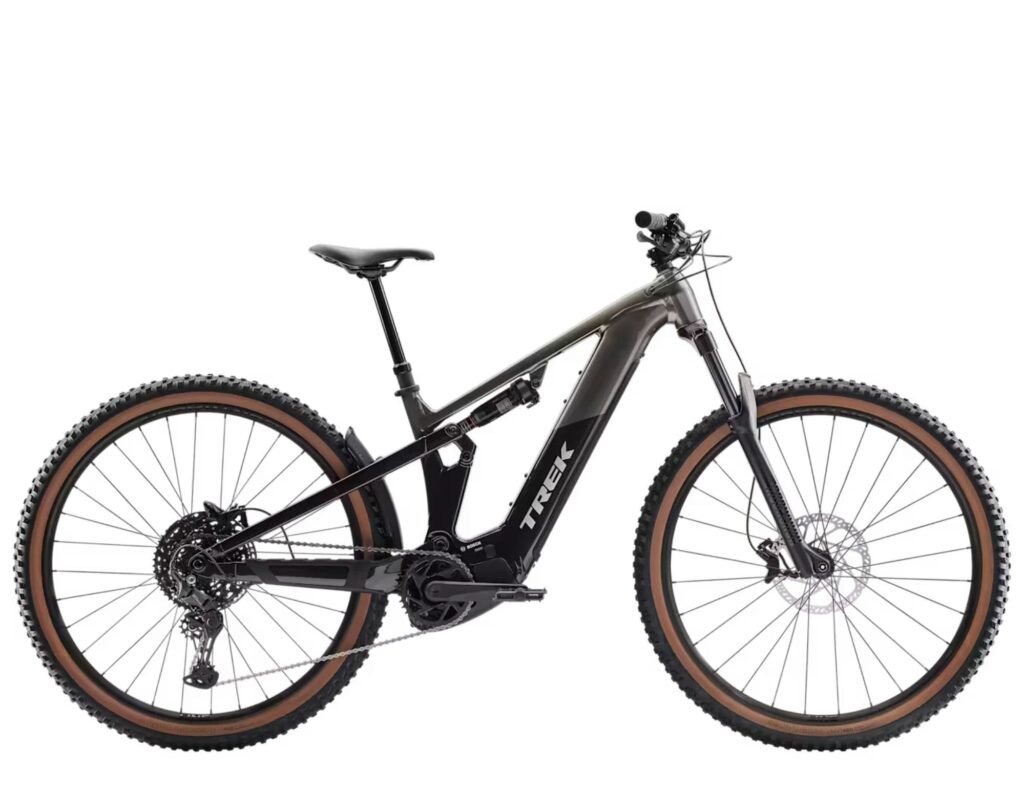
Although the Trek Powerfly+ FS is a bit more than $3500, we included it here because it’s a high-quality, versatile, full-suspension eMTB. This bike is designed for all types of terrain, including dirt roads, singletracks, and all-day trail exploration, rather than heavy enduro or extreme bike-park jump riding.
In terms of its motor and battery, the Powerfly+ FS utilizes an 800 Wh battery for strong torque and long-range trail rides. On average, this battery lasts 4 to 7 hours, or between 30 and 50+ miles. Many riders note that this bike offers smooth, intuitive assistance and a quieter ride than older generations, making it an excellent riding choice.
Thankfully, this eMTB is full suspension, with 130 mm front travel and 120 mm rear travel, and an Alpha Platinum aluminum frame. Because of this, it is a bit more expensive than its more affordable counterparts. However, for the price, you can cover longer distances, ride rougher terrain, and essentially do more.
Lastly, it’s a bit heavier, weighing around 50 pounds, depending on the model and feel. Not only that, but the frame comes in 4 sizes: S, M, L, and XL, or 27.5″ to 29″ wheel sizes.
5. Specialized Turbo Tero X 4.0
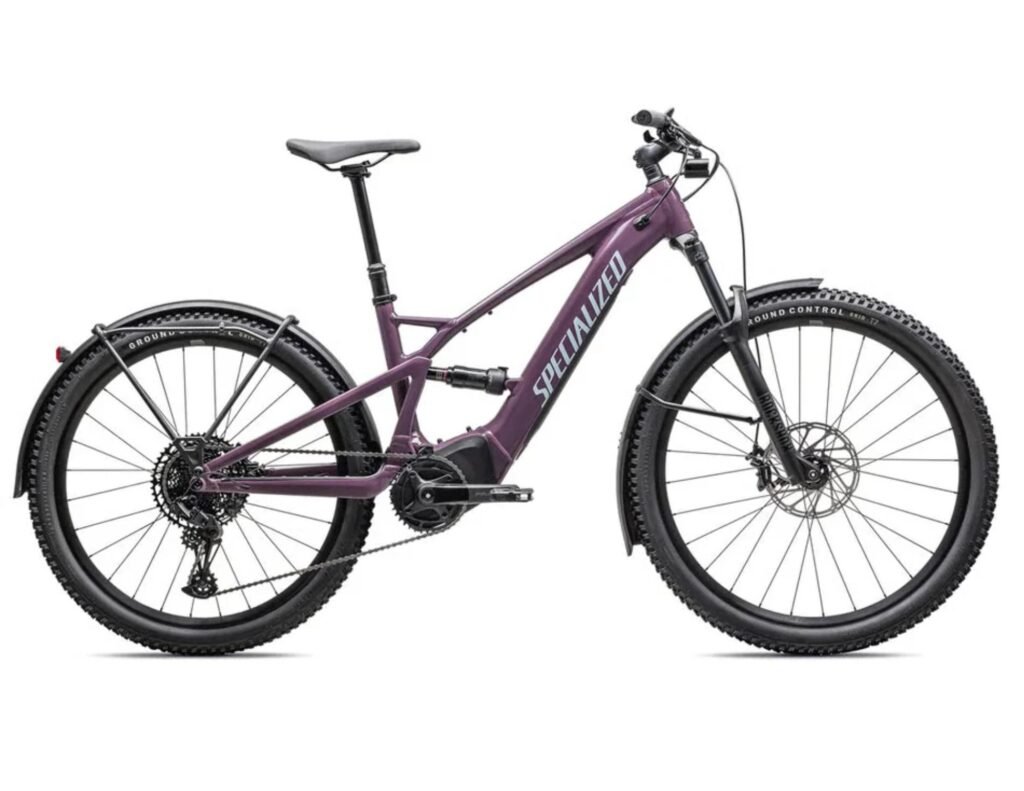
Yet another full-suspension bike, the Specialized Turbo Tero X 4.0 is hot on the market, and reviewers have praised it as one of the best off-road and on-road trail bikes. Not only that, but it is extremely affordable and under our price tag listed above.
As mentioned earlier, this e-bike is full-suspension (130mm front and 120mm rear), making it an excellent choice for gravel riding (pun intended). Not only that, but the wheel setup is a tad different from other bikes, with a 29-inch front and 27.5-inch rear for most sizes. On small, both wheel sizes are 27.5.
The mid-drive motor is powered by Specialized’s 2.0E /tuned mid-drive, which can be paired with the Mission Control app. Many riders also note that the battery range is long, between 49 and 68 miles, depending on terrain, rider weight, and assist level. Even so, you cannot beat that battery range, especially if you love going long distances!
6. Aventon Ramblas
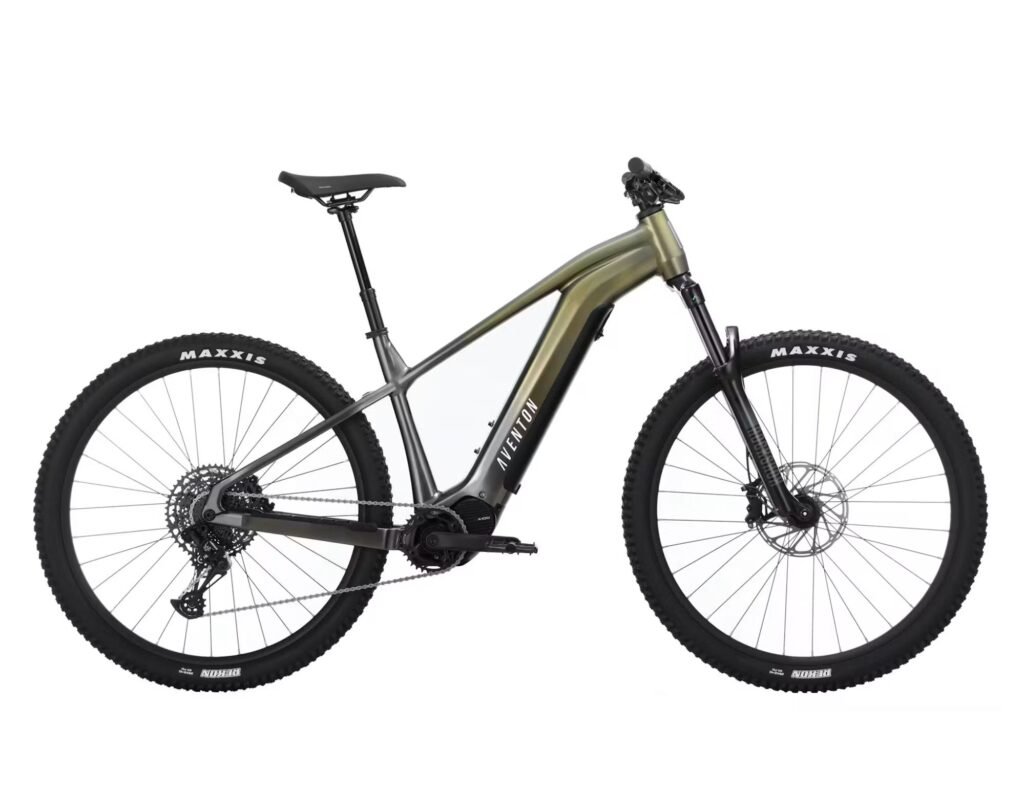
As one of the highest-value hardtail eMTBs out there, many Aventon Ramblas owners praise it for handling steep hills well without draining the battery. Even with over 2,200 feet of climbing, the battery can last 46 miles on a single charge!
The battery is a removable 708 Wh, UL-certified LG battery, rated up to 90 miles in ideal conditions. This particular bike can get you from point A to point B with no problem.
The bike itself weighs roughly 54 pounds, give or take, and it can carry up to 300 pounds. It comes in tire sizes of 27.5″ (S) and 29″ (M, L, and XL). All in all, many users say the Aventon Ramblas mid-drive is an excellent mountain bike with punchy motor power, making it one of the best budget-friendly eMTB options.
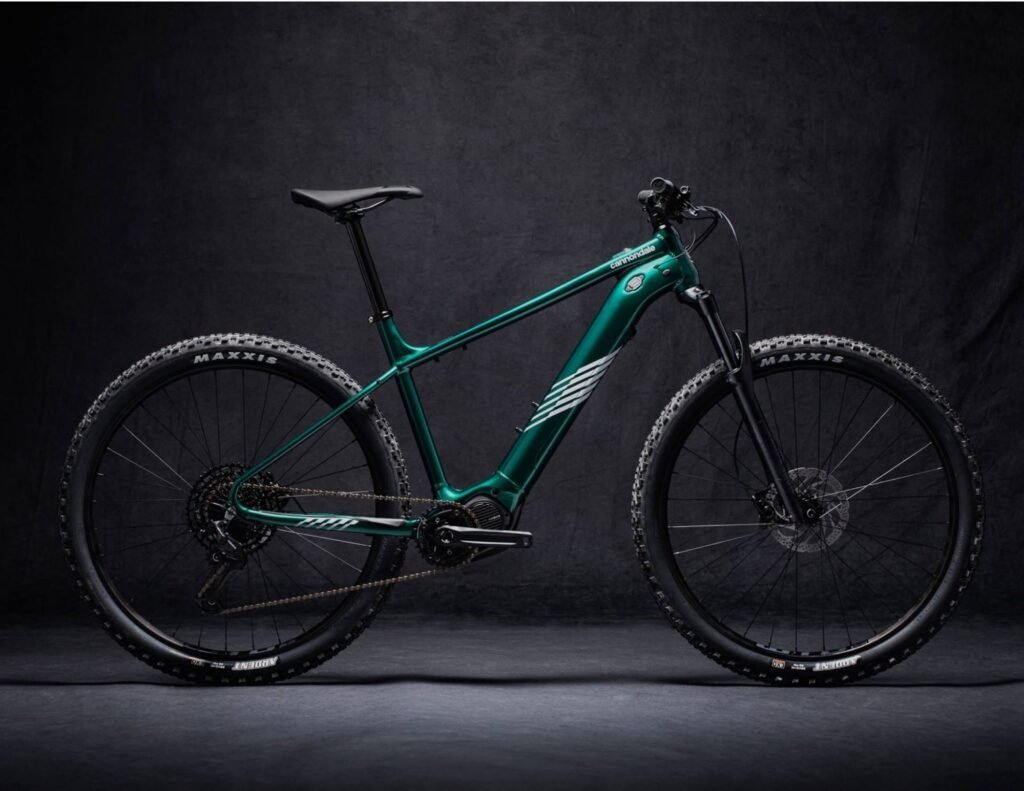
7. Cannondale Trail Neo S
The last eMTB we will review today is the Cannondale Trail Neo S. This model goes above and beyond what other models have offered by adding pedal assist.
On top of that, the 504 Wh battery is removable, making it much easier to store inside your home instead of storing the entire bike in a controlled environment. With a 504 Wh battery, it can go up to 60 miles on a charge, making it an excellent choice for your everyday commute and any adventures you want.
This particular model uses 29″ wheels with all frame sizes (S, M, L, and XL), so it provides a smoother, more efficient, and stable ride across mixed terrains.
Hardtail vs. Full-Suspension eMTB: The Main Difference
There are several differences between a full-suspension and hardtail eMTB. We will break it down into a few categories, including budget, maintenance, and riding style. You will also learn the pros and cons of a hardtail versus a full-suspension. We encourage you to continue reading for more information so you can make an informed decision about the best option for you.
1. Budget
Overall, the best budget-friendly option will be a hardtail. However, if you want a complete full-suspension bike, investing a bit of money will be worthwhile.
Most hardtail mountain bikes cost between $1300 and $3500, but some hardtails go up to $8000. These prices depend on multiple factors, such as motor type, trail components, air-suspension forks, and battery capacity. On top of that, you have entry-level ($1000-1800), mid-range ($1900-3500), and high-end ($3500-8000) options.
On the other hand, full-suspension eMTBs range from $3,500 to over $10,000+. This price tag is due to multiple factors, including heavier-duty trail components, more complex frame linkages, better batteries, motor systems, suspension dampers, and rear air shocks. On top of that, full-suspension frames are made of carbon fiber or, sometimes, aluminum alloy.
2. Maintenance
In terms of maintenance, a hardtail will inevitably cost less because of its simpler design. Not only that, but it requires less cleaning and prep because it doesn’t have a rear shock, so you don’t need to service it as often. On top of this, hardtail eMTBs don’t have pivots and bearings, so dirt and grime won’t get stuck in there.
Full-suspension bikes, on the other hand, have a rear shock, which needs periodic air pressure to blow debris and mud away. On top of that, the rear shock needs regular adjustment and service. Full-suspension bikes have more moving parts exposed to dirt, grit, and grime, which can cause more wear and tear and make them more maintenance-intensive than a hardtail.
3. Riding Style
The difference between each riding style is that hardtail eMTBs ride much better on smoother surfaces, whereas full-suspension eMTBs ride better on rockier, more complex terrain. Let us break them down below for better understanding:
Hardtail
Rather than plowing straight through roots, rough patches, and rocks, you’ll pick smoother lines. A hardtail eMTB can handle multiple routes, including gravel, commuting, cross-country trails, and unpaved roads.
On top of this, hardtail eMTBs will have you standing more because the rear frame is more rigid, giving you better balance. However, because a hardtail has no rear suspension, you will feel more bumps, making it a harsher ride overall.
Full-Suspension
Because a full-suspension is better suited for rough terrain, you can ride straight through roots and rock gardens, or on a heavy-on-the-terrain trail, with little to no feel. Because of this, it’s much easier on your muscles, body, and even joints than a hardtail.
If you hit a jump or a rough landing, full suspension helps smooth out mistakes while the rear tire stays planted on uneven ground, making it better for rocky terrain and technical descents.
4. Advantages & Disadvantages of Hardtail
Beyond the differences between the two types of mountain bikes, each has pros and cons. Here, we will discuss the pros and cons of a hardtail.
| PROS | CONS |
| Does not require a lot of maintenance | Not as confident on descents |
| Versatile for everyday use (good for commuting) | Does not have as much rear wheel traction |
| Budget-friendly | Harsher ride |
| Efficient on suitable routes (smoother trails rather than rocky and bumpy) | Not suitable for more demanding trails |
| Makes the bike feel lighter on paved grounds |
5. Advantages & Disadvantages of Full-Suspension
The next electric mountain bike on our list is a full-suspension model. Below are the advantages and disadvantages, presented in a graph for easy viewing.
| PROS | CONS |
| Better control and traction | More maintenance work |
| Provides a smoother ride / more comfort | Costs more money |
| Useful on rough rides | Can be heavier depending on what is on the bike |
| More confidence on descents | Not as suited for smooth routes |
Motor, Battery, and Range Explained
As you may have noticed, we have provided a few definitions above that beginners might not know. Let us review what each one means below.
1. Watt Hours (Wh)
Watt hours are essentially how much electricity is used over an hour. For example, if your e-bike battery uses 600 Wh, then this measures the total battery capacity and range.
If you think of this in terms of your gas tank, it can be easier to visualize. For example, if you are climbing up a mountain with your e-bike and you reach the top, you might only have 300 Wh left. Thankfully, many eMTB batteries let you see the remaining percentage, although it depends on the model; if you want this feature, we recommend choosing a battery that offers it.
2. Torque
Torque essentially tells you how much rotational force the motor produces, usually measured in N·m (newton-meters). It shows how strong the motor’s push feels, especially on technical trails, during steep climbs, or when accelerating out of corners. Think of rotational force as a wrench tightening a bolt. You are essentially applying the force to tighten the bolt more. Typically, an eMTB provides anywhere between 50 and 150 N·m, depending on whether it is a full-power or lightweight trail system.
3. Hub vs. Mid-drive
Put simply, hub-drive motors are less expensive and suit casual riding, mellow trails, and fire roads, whereas mid-drive motors cost more and offer better off-road riding and climbing performance.
On the other hand, hub-drive motors are heavier than mid-drive motors. More specifically, hub motors add more weight to the back of the bike, making it feel heavier over bumps and potentially harder to lift over obstacles.
Where Can You Ride an eMTB?
Moving on, there are many places that you can ride an eMTB. However, it is imperative to know the bike classes before riding somewhere that might get you in trouble. Although we will get into more of that later, let us review the places where you can ride an eMTB below.
Before going over where you can ride your eMTB, it is important to check local rules and regulations beforehand. So, if you are planning a vacation to a National park, for example, finding out whether your bike is suitable for that area is imperative before packing up all of your supplies.
Also, note that weight and steep inclines will drain your battery faster. Heavier bikes will also be more difficult to lift onto the racks you brought along. If possible, we recommend bringing a secondary battery as a backup to ensure you don’t run out of fumes, so to speak.
1. Ski Resorts & Bike Parks
Ski resorts and bike parks are excellent places to ride your electric mountain bike because they offer steep hills and other climbing areas where you cannot only practice but also get a good feel for how your bike works. You will be happy to note that the more you ride in these places, the easier it will become to get accustomed to your bike and become a pro in no time.
Bike parks are a great place to practice anything daring you might want to try because they are in a more controlled environment, whereas ski resorts might be riskier. Even so, both are excellent riding spots.
2. Federal Lands
Federal lands are lands owned and managed by the US federal government under constitutional authority. More often than not, you can ride your bike on federal lands, but rules vary: some places allow only Class 1 and 2 e-bikes, while others allow Class 3 as well.
3. Bureau of Land Management (BLM)
The BLM allows Class 1, 2, and 3 e-bikes up to 750 watts with operable pedals in motorized areas, which include motorized trails and off-highway vehicle areas. You must stay off non-motorized roads and trails unless you have a site-specific written decision from an authorized BLM officer following a NEPA review. If you do not have either, you can be fined up to $1,000 or spend up to 12 months in prison. Lastly, know your legal rights before going to a BLM site.
4. National Park Service (NPS)
In an NPS area, eMTBs are only allowed where traditional bikes can go and where a park superintendent specifically designates e-bike use. These areas are usually as follows:
- Park roads
- Administrative roads
- Off-road motor vehicle areas (if open under park regulations)
- Bike and trail routes (ex: gravel paths and carriage roads in specific parks)
5. US Forest Service (USFS)
In terms of the USFS, there are several places your eMTB can go, but many are strictly off-limits. Here is a quick list of places you may ride on:
- Permitted resort areas (use a special permit when authorized)
- Motorized roads and trails
- Locally approved non-motorized trails
Wilderness and off-trail areas, as well as standard non-motorized trails, are generally prohibited.
6. State, County & Local Parks
Some areas across the US treat e-bikes as bikes, while others treat them as motorized vehicles. Because of this, eMTBs might not be allowed everywhere, so check your local ordinances to confirm where you can and cannot ride.
Some states will also set a uniform baseline for e-bikes. For example, many places allow Class 1 pedal-assist bikes where traditional bikes can go, while others leave this decision up to individual state park managers.
Can You Ride Class 1, 2 & 3 eMTB Anywhere?
No, you cannot ride a Class 1, 2, or 3 electric mountain bike anywhere. This depends on the land manager or local trail rules.
Frequently Asked Questions
How Long Do Electric Mountain Bike Batteries Last?
More often than not, most electric mountain bike batteries last anywhere between 3 and 5 years. However, some batteries last up to 10 years, depending on usage and care. For example, if you casually ride the bike around but do not put the battery in a controlled temperature environment where it can get rained on or become extremely hot or cold, then odds are, your battery will not last long at all. However, if you ride the bike often and take good care of the battery, it will still last a long time.
If you are looking to replace the battery itself, the cost varies by brand and capacity, but many of these batteries run between a few hundred dollars and $1,000. Consider eBay, resale shops, or similar options if you are on a tight budget.
How Does Pedal Assist Work on a Mountain Bike?
Pedal assist is when an electric mountain bike uses a battery, controller, sensors, and a motor to amplify your leg power as you pedal. It lets you go farther with less effort and fatigue. However, it does not let you go faster than the legal speed limit of your bike’s class. For example, Class 3 can go up to 28 mph, whereas Class 1 can only go up to 20 mph.
Are eMTBs Worth the Extra Money Compared to a Regular MTB?
For some people, investing in an eMTB is worth the extra money compared to a regular MTB. This is due to many reasons, including but not limited to the following:
- Allows more accessible rides (for those with physical limitations).
- Provides more flexible outings (when time or energy is limited).
- Reduces effort on ascents, saving you energy for technical and descent areas.
- Allows more riding time per outing due to motor assistance, giving you more climbs and laps.
How Do You Protect Your eMTB From People?
To make sure your electric mountain bike is protected from anyone who attempts to steal it, it is important to consider getting a high-quality lock (like a U-lock or heavy-duty chains – even better if it is both), and consider getting an anti-theft system that turns off the motor and sends an alert to you if your bike is moved without your authorization. On top of this, park your bike in a well-lit, high-traffic area.
Lastly, if the battery is removable, we recommend removing it whenever it is not in use. This is especially true because someone trying to steal it might go for the battery first. Furthermore, they can sell the battery, and you will have a regular bike instead of an “electric” one, so to speak.
Final Words
To summarize, there are many wonderful electric mountain bikes out there. However, it is important to do your research before choosing the best one that suits you. Overall, we hope this article was helpful. If you have any more eMTB questions, we have you covered at Intermountain Bikes, so we encourage you to check out our other articles for more information!