Group mountain biking is fun and challenging, but it also comes with risks. Staying safe requires preparation, clear communication, and awareness of your limits. Here are five key rules to make your group rides safer and more enjoyable:
- Wear Proper Gear: Use a well-fitted helmet, gloves, knee pads, and glasses to protect yourself.
- Communicate Clearly: Use hand signals and verbal cues to warn others about hazards or changes in speed.
- Know Your Limits: Stick to trails that match your skill level to avoid accidents.
- Maintain Safe Distance: Keep enough space between riders to react to sudden stops or obstacles.
- Plan Ahead: Carry emergency supplies like a first-aid kit, tools, and water, and share the route details with the group.
How To Stay Safe On A Mountain Bike Ride | MTB Trail Safety
1. Wear Proper Safety Gear
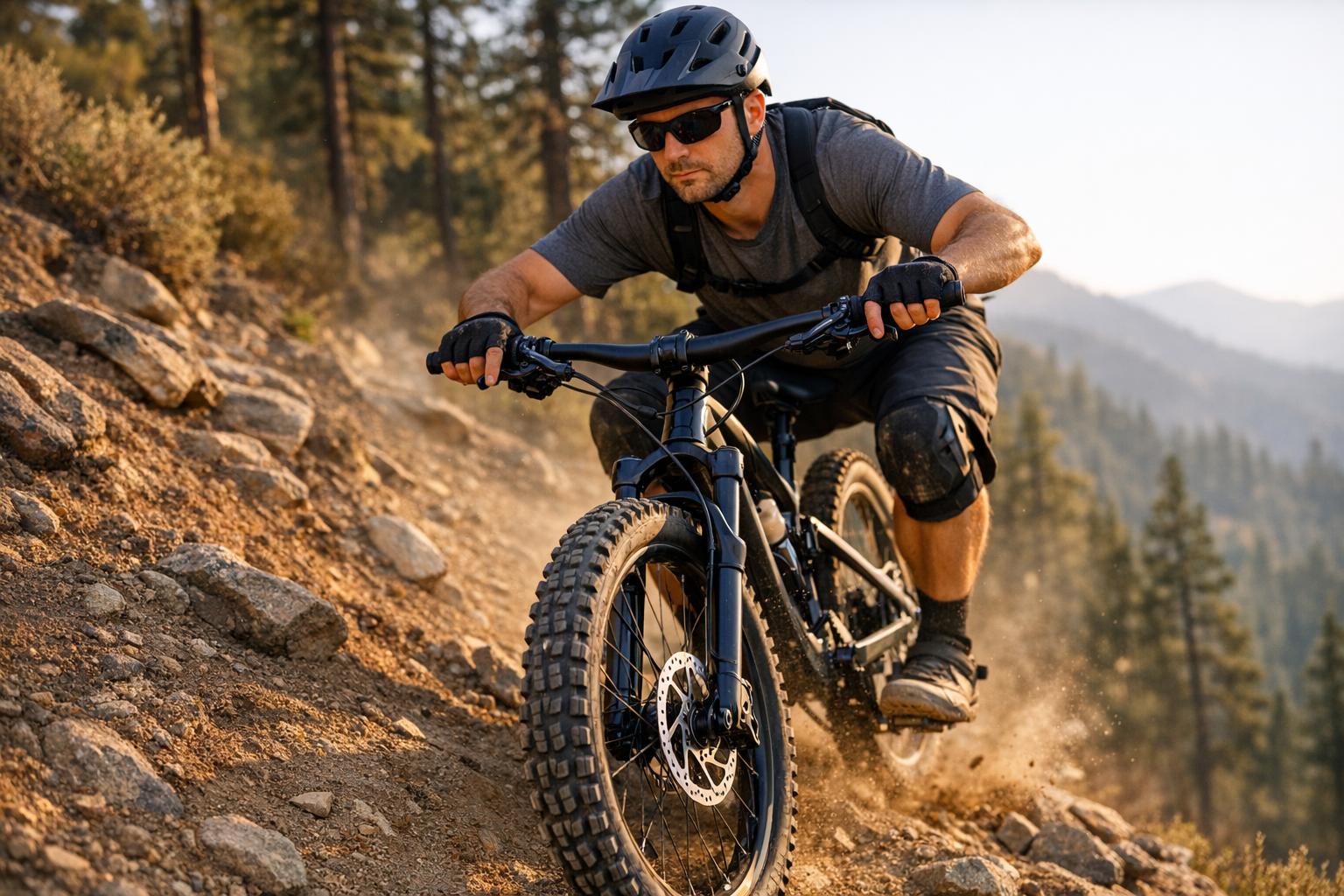
Safety gear isn’t just an accessory – it’s your first line of defense on demanding trails. When riding in groups, where pushing limits and tackling tough lines is common, having the right gear becomes even more crucial. In fact, one rider’s protection can impact the safety of the entire group. Let’s break down the essentials to keep you safe during group rides.
Start with a helmet that fits properly. Choose one with MIPS (Multi-Directional Impact Protection System) for added safety. A snug fit is key: you should see the foam when looking up, the Y-straps should sit comfortably below your ears, and the chin strap should be secure. Helmets should be replaced every five years to ensure they remain effective. For trail and cross-country rides, a half-shell helmet offers enough protection, but for downhill, enduro, or bike park riding, a full-face helmet is the better choice.
Full-finger gloves are a must for mountain biking, especially in group settings where falls are more likely. Look for gloves made from breathable materials with silicone grip pads and padded palms. These not only protect your hands from scrapes and blisters but also ensure a firm grip during tricky sections.
When it comes to knee protection, go for lightweight, flexible knee pads. For trail rides, soft slip-on pads work well, while hard-shell or Velcro-on models are better suited for rougher terrain.
Don’t forget to protect your eyes. Sunglasses or clear riding glasses shield you from debris and harmful UV rays. Look for options with good ventilation to prevent fogging during your ride.
Lastly, always inspect your gear before heading out. Make sure everything fits correctly and functions as it should. For trusted recommendations, check reviews from Intermountain Bikes to ensure you’re investing in reliable equipment.
2. Communicate Clearly with Your Group
Clear communication is the key to a safe and enjoyable group ride. When you’re out on the trail with others, each rider plays a role in ensuring the group’s safety. Using clear hand signals and verbal cues keeps everyone in the loop about obstacles, changes in speed, or direction. Here’s how to make sure your group stays connected.
Hand signals are the foundation of communication on mountain bike trails. Before hitting the trail, take a moment to ensure everyone knows the signals you’ll be using. Some of the most important ones include: a closed fist held behind your back to indicate stopping, a palm-down motion to signal slowing, and pointing directly at hazards like rocks, roots, or potholes. For turns, extend an open arm to the left or right to show your intended direction. If your group has specific preferences, you can add custom signals to your repertoire.
Verbal cues are just as important, especially when trails are noisy or visibility is limited. Loud, clear calls like "car back", "slow down", or even naming hazards can reinforce your hand signals. In areas with wildlife or livestock, a strong verbal alert can help avoid surprising animals and prevent accidents. Keep these commands simple and direct – they’re most effective in fast-paced or stressful situations.
Hazard signals should be passed down the group to ensure everyone is informed. This relay system is especially important during long rides when the group may stretch out over a considerable distance.
Finally, make sure your signals are exaggerated and held long enough for everyone to see, particularly near blind corners or tricky sections of the trail. Clear and consistent communication can make all the difference for a smooth and safe ride.
3. Stay Within Your Skill Level
One of the most common missteps riders make in group settings is pushing themselves onto trails beyond their current ability. In fact, about 70% of injured bikers cite riding errors as the main cause of their accidents. Overestimating your capabilities not only increases your risk of injury but can also lead to poor decisions, especially when trying to keep up with others. Staying within your comfort zone ensures a safer experience for both you and your group.
Modern mountain bikes, with their advanced suspension systems and optimized geometry, can give a false sense of confidence. These features might make tough terrain feel more manageable than it really is, tempting you to take on challenges you’re not ready for. This overconfidence can result in crashes that disrupt the ride for everyone.
Take a moment to assess your skills honestly. Think about the types of trails you’re comfortable with – whether you prefer smooth or bumpy surfaces, steep inclines or flat paths, flowy trails or technical features. Reflect on your core skills like cornering, braking, and handling obstacles, and don’t forget to factor in your endurance, especially for longer rides.
When you come across a section of trail that feels beyond your ability, don’t hesitate to dismount and walk through it. Attempting something you’re not prepared for puts you at risk and can slow down the group.
For beginners, it’s best to start with easier trails and gradually work your way up as your skills improve. If you’re new to group rides or exploring unfamiliar areas, let others know your skill level beforehand. This helps the group plan a route that suits everyone. Once you’ve mastered the terrain you’re comfortable with, consider additional training to prepare for more advanced trails.
"Ride within your skillset and if the opportunity is given, take skills clinics to help learn some of those fundamental skills that you can apply to the trail and help build that confidence." – Brandon Hopkins
Investing in skills clinics or coaching sessions is a great way to practice essential techniques in a controlled setting. These sessions not only help you refine your abilities but also boost your confidence for tackling tougher trails.
sbb-itb-9d75ae1
4. Keep Safe Distance Between Riders
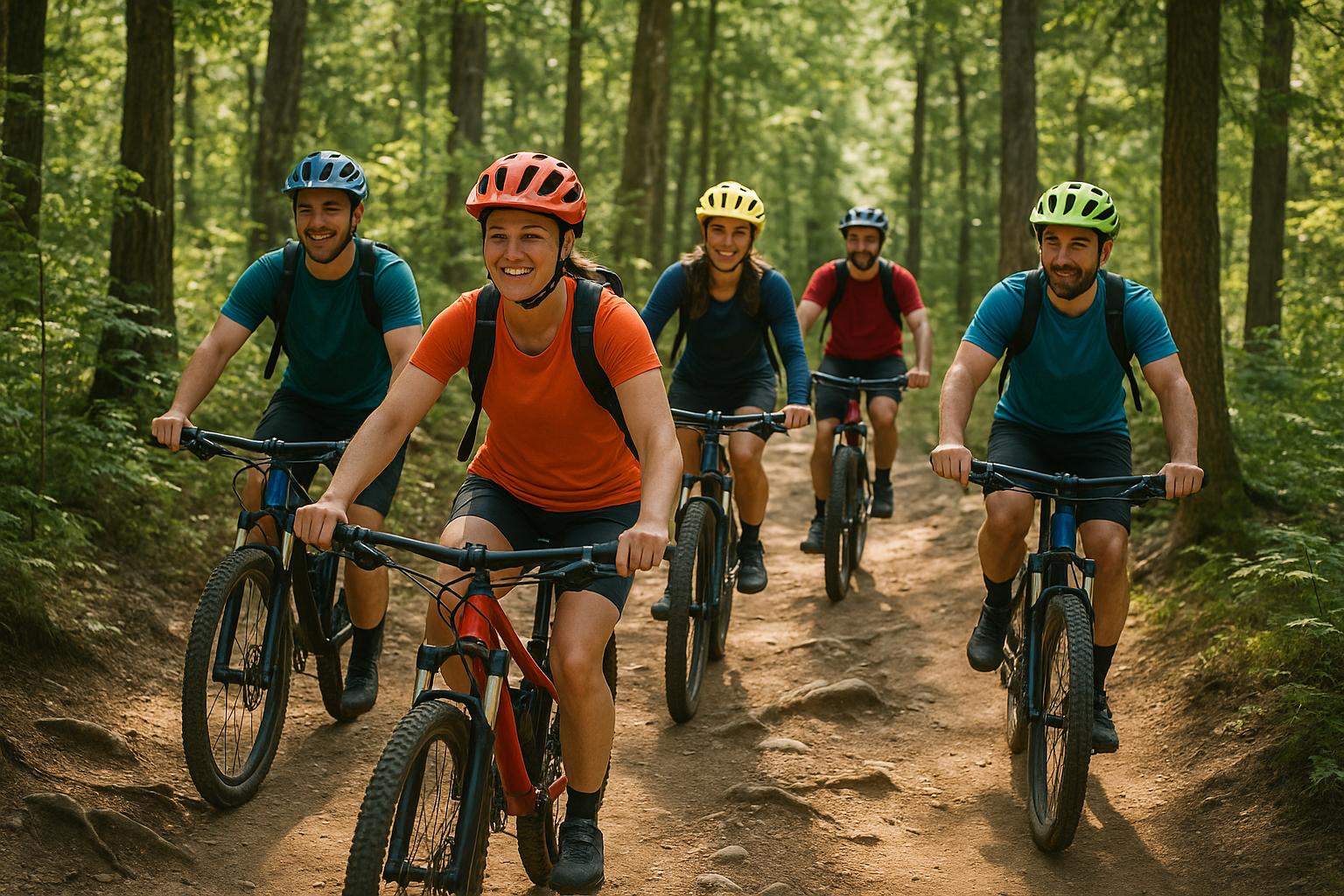
Keeping a safe distance between riders is one of the most important aspects of group mountain biking. When riders are packed too closely, a single mistake can put everyone at risk. Make sure there’s enough space between you and the rider ahead, so you can stop safely if they crash or come to a sudden halt.
Spacing goes hand in hand with clear communication to avoid collisions. Aim to maintain at least three feet between riders. This buffer allows you to react to unexpected stops or obstacles. But distance alone isn’t enough – your positioning matters too.
Don’t ride directly behind someone’s rear wheel; instead, position yourself slightly to one side. This slight offset improves your view of the trail ahead and provides an escape route if the rider in front stops suddenly. Imagine creating multiple lanes on a narrow trail.
Maintaining consistent spacing takes focus. Hold your position and avoid sudden changes in speed or direction. At the same time, ride at a steady pace to prevent large gaps from forming between riders.
Look ahead to anticipate what’s coming. Scan the trail beyond the rider in front of you. This helps you adjust your spacing as you approach tricky sections like steep descents or rocky patches.
Climbs require a different approach to spacing. On uphill sections, let the group naturally spread out and regroup at the top. Forcing a tight formation during climbs can be counterproductive, as riders exert varying levels of effort.
Communication plays a huge role in keeping distances safe. Use verbal cues to warn others when you’re stopping or slowing down, and always let the group know if your pace changes. If you’re struggling to keep up, it’s best to ride at the back, where you won’t disrupt the group’s flow or spacing.
5. Plan Ahead and Pack Emergency Supplies
When organizing a group ride, preparation is key – especially when it comes to emergency supplies. Having the right gear and a clear plan can mean the difference between a minor hiccup and a serious situation.
A 2019 study revealed that 65% of mountain bikers involved in trail emergencies didn’t have a first-aid kit or essential tools. Similarly, a 2022 survey by the International Mountain Bicycling Association (IMBA) found that 37% of group riders experienced at least one mechanical issue per season, and 12% encountered injuries requiring first-aid.
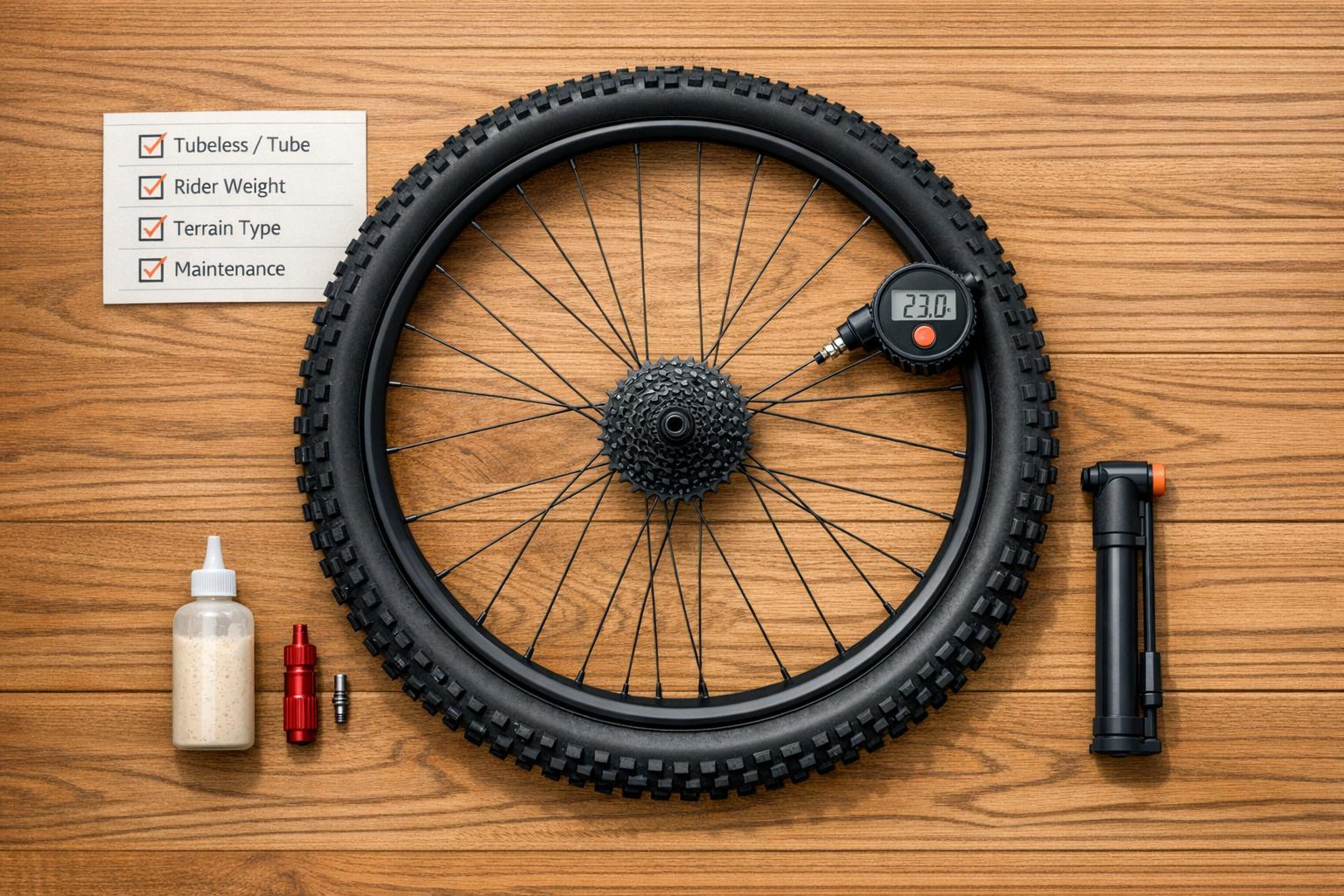
To be ready for common trail emergencies, every rider should carry basic essentials: a first-aid kit, a multi-tool, spare tubes, tire levers, and either a pump or a CO2 inflator. For instance, a chain tool can quickly fix a broken chain, while spare tubes and a pump can turn a flat tire into a minor delay rather than a major setback.
In addition to mechanical tools, pack extra water, high-energy snacks, and ensure at least one person has a fully charged cell phone with local emergency numbers. Save 911 as a priority contact and carry identification along with your health insurance details. It’s also smart to pack a small amount of U.S. cash for unexpected situations.
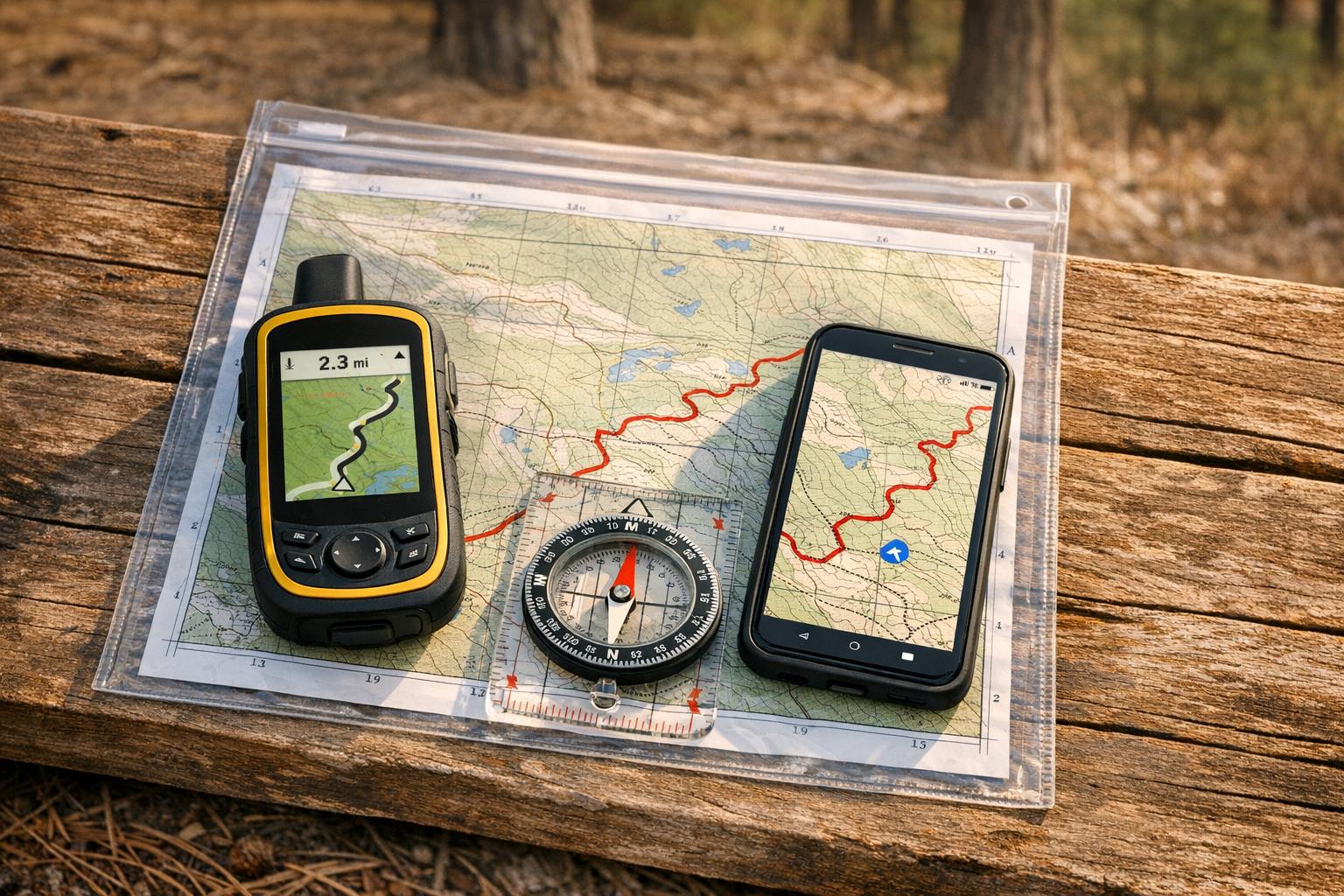
Once the gear is sorted, route planning becomes the next step. A well-communicated plan helps keep the group on track and prevents unnecessary confusion. Share the ride details in advance, including the route, estimated duration, waypoints, rest stops, potential hazards, and emergency exit points. When everyone knows the plan, it’s easier to stay together and avoid wrong turns.
To enhance group safety, assign roles like a group leader and a sweep rider (the person at the back). The leader sets the pace and handles navigation, while the sweep rider ensures no one gets left behind and monitors for mechanical issues or struggling riders. Always check weather conditions and trail updates before heading out, and adjust your plans if needed.
Technology can also play a big role in safety. GPS tracking apps or devices help monitor group members’ locations, especially on remote or unfamiliar trails. These tools are particularly useful in areas with limited cell coverage, adding an extra layer of security.
Before starting the ride, take a few minutes for a pre-ride meeting. Review the route, emergency procedures, and confirm that everyone has the necessary supplies. A little preparation at the beginning can save hours of trouble later on.
Conclusion
Group mountain biking becomes safer and more enjoyable when everyone follows a few key principles: wearing the right gear, communicating effectively, riding within your skill level, keeping safe distances, and planning ahead.
These guidelines are the backbone of smooth group rides. Before hitting the trails, take time to review these rules with your fellow riders. Double-check your gear, agree on hand signals, and confirm route details. Using GPS tracking apps can also help keep tabs on the group’s location.
Reliable trail planning tools are invaluable for matching trails to the group’s experience level. A little preparation goes a long way in avoiding unnecessary challenges.
By sticking to these simple safety habits and emphasizing clear communication, your group can ride confidently and responsibly. Share these tips with your biking community – when more riders adopt these practices, the trails become a safer and more enjoyable place for everyone.
For more tips on mountain biking safety and gear, visit Intermountain Bikes.
FAQs
What should I do if I’m unsure whether a trail matches my skill level during a group mountain biking trip?
If you’re unsure about tackling a particular trail, it’s always wise to play it safe. Begin with trails where you feel comfortable and gradually work your way up to more difficult ones as your confidence and skills grow. Pay close attention to trail ratings, and don’t hesitate to ask experienced riders in your group for advice – they often have helpful tips and know what to expect.
Mountain biking is all about enjoying the ride, not forcing yourself into situations that feel too daunting. Take it slow, focus on having fun, and you’ll naturally improve while keeping safety a priority.
What’s the best way to communicate with my group while mountain biking in areas with poor visibility or loud noise?
When you’re riding in places where visibility is low or noise levels are high, staying connected with your group is crucial for safety. Tools like two-way radios, Bluetooth headsets, or helmet-mounted intercoms specifically designed for mountain biking can help you maintain clear communication.
On the other hand, hand signals and visual cues are excellent backups when electronic devices fail or aren’t an option. Before hitting the trail, take a moment to ensure everyone in your group knows these signals. It’s a simple step that can make a big difference in keeping your ride smooth and safe.
What should I pack in an emergency kit for group mountain biking?
When you’re gearing up for a group mountain biking adventure, having a thoughtfully packed emergency kit is a must. It’s your go-to for handling those unexpected mishaps on the trail. Here are some essentials to include:
- Bandages, gauze, and antiseptic wipes: Perfect for treating cuts and scrapes quickly.
- Pain relievers and allergy medication: Medications like ibuprofen and Benadryl can help manage pain or unexpected allergic reactions.
- A lightweight SAM splint: Handy for stabilizing potential injuries.
- A tourniquet: Critical for managing serious bleeding in an emergency.
These items can be lifesavers when you’re out in the wild. Make sure your kit matches the specific needs of your group and the challenges of the terrain you’re tackling.