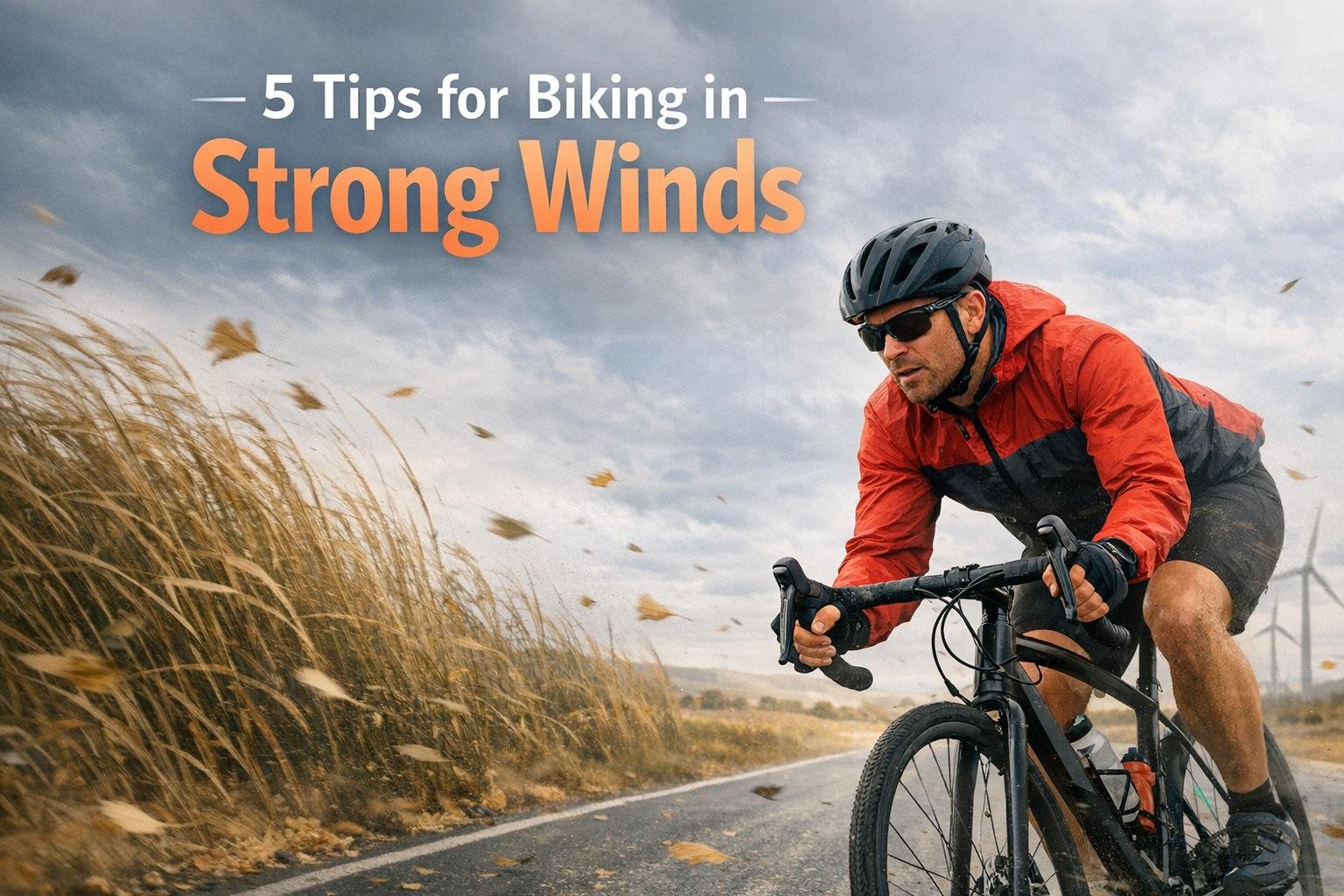
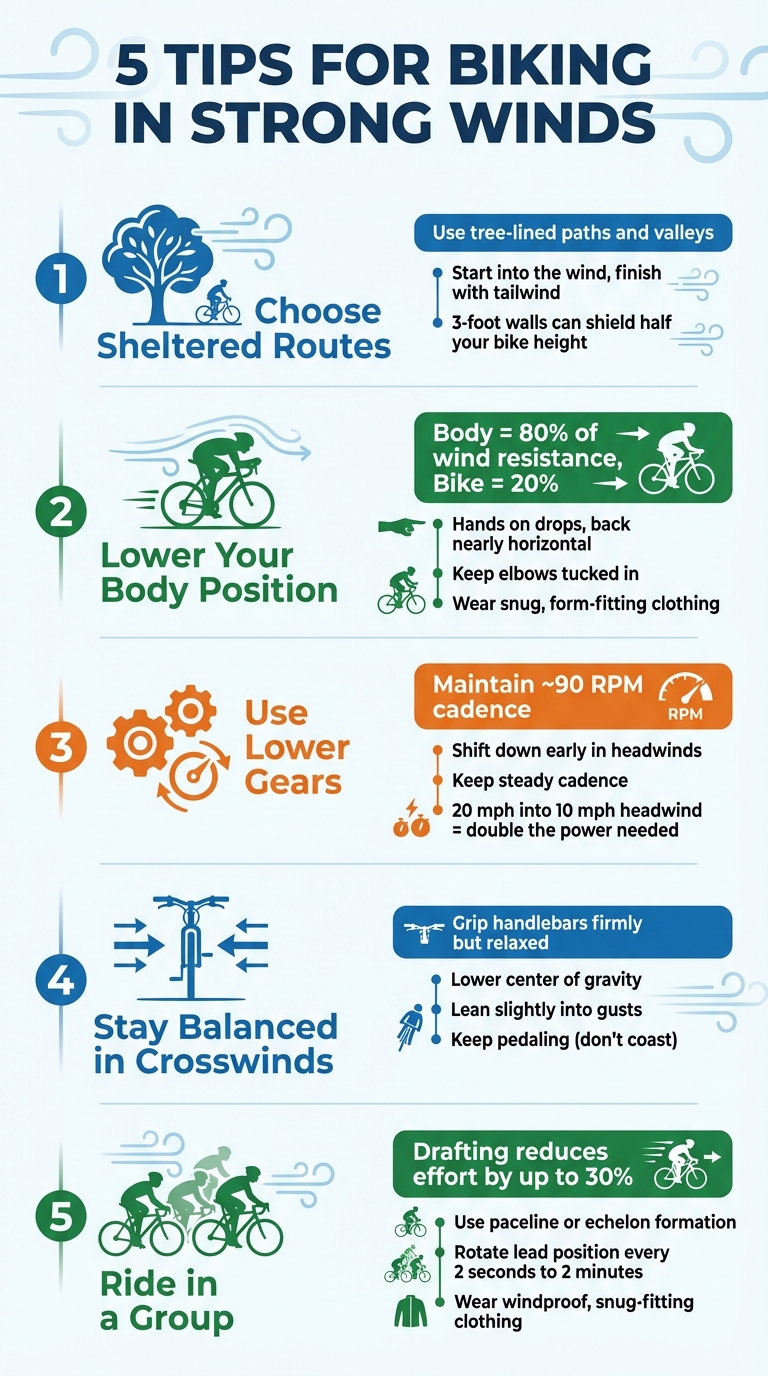
Biking in strong winds can be tough, but with the right approach, you can make it safer and less exhausting. Here are five key strategies to help you handle windy rides:
- Choose sheltered routes: Opt for tree-lined paths, valleys, or areas with natural windbreaks like buildings or hedges. Start your ride into the wind and finish with a tailwind for an easier return.
- Lower your body position: Tuck into a more aerodynamic posture by bending forward and keeping your elbows close. Avoid loose clothing to reduce drag.
- Use lower gears: Shift to a lower gear and maintain a steady cadence to conserve energy and stay in control.
- Stay balanced in crosswinds: Keep your weight centered, grip your handlebars firmly but not tightly, and lean slightly into gusts to maintain stability.
- Ride in a group: Drafting in a paceline or echelon formation reduces effort by up to 30%. Wear snug, windproof clothing for added comfort.
5 Essential Tips for Cycling Safely in Strong Winds
How To Make Riding In The Wind A Breeze!
1. Pick Sheltered Routes and Plan Around Wind Direction
Opt for routes that naturally shield you from the wind. Wooded areas, forests, and trails lined with trees act as excellent windbreaks. In late summer, high hedges and mature cornfields can also provide solid protection. Riding through neighborhoods? Buildings can offer cover, but be mindful of "gust zones" where gaps between structures might channel sudden, strong winds. Even a low stone wall, just 3 feet high, can shield about half your bike and body height if you stay close to it. Terrain plays a big role in determining how much wind exposure you’ll face.
Pay attention to the terrain. Routes that follow valleys or small drainages often provide natural shelter, while ridgelines and hilltops leave you exposed to the elements. Fred Matheny explains:
"When it comes to wind, not all roads are the same, even if they point in a similar direction. Most bike paths in my area follow small drainages, shielded from wind by trees and elevation".
A smart strategy: start your ride into the wind and finish with a tailwind. This method allows you to face the hardest part of your ride when your energy levels are highest, leaving the easier, tailwind-assisted return for later. Keep the outbound leg shorter since riding into a headwind demands more time and effort. Before heading out, tools like Windy.com (which supports GPX file uploads to analyze wind conditions) or Epic Ride Weather can help you gauge wind speed and direction for different parts of your route. Look for visual clues like swaying trees, flapping flags, or bending tall grasses that indicate wind exposure. Be particularly cautious when crossing open fields, bridges, or gaps in tree cover, as these areas are prone to sudden gusts.
2. Lower Your Body Position to Reduce Wind Resistance
Did you know your body accounts for about 80% of the wind resistance you face while cycling, with your bike making up the remaining 20%? That means your riding posture plays a massive role in how efficiently you cut through the wind. Sitting upright might feel comfortable, but it turns your chest into a sail, catching more wind and slowing you down. To combat this, adopting a compact, nearly horizontal position can make a world of difference.
Here’s how to perfect this streamlined posture: Move your hands to the drops – the lower part of your handlebars – and bend forward until your back is almost parallel to the ground. Keep your elbows tucked in close to your body instead of letting them flare out. As Chris Yu from Specialized Bicycle Components explains:
"The tighter you are to the bike, the less area the wind will hit."
This position not only helps you conserve energy but also improves your bike’s handling. By lowering your center of gravity, you enhance traction on the front wheel, which is especially useful when navigating gusty conditions.
However, even the best posture can be sabotaged by common mistakes. Loose, baggy clothing acts like a parachute, increasing drag no matter how aerodynamic your position is. Stick to snug, form-fitting layers to minimize wind resistance. And don’t forget to maintain a relaxed grip on the handlebars – this allows your bike to better absorb sudden gusts. Fred Matheny offers this advice:
"Limit the area the wind ‘sees’ by bending your elbows and keeping them in line with your body. Of course, don’t get so low that your vision up the road is compromised."
Finally, keep pedaling through strong winds. Coasting might seem like a break, but it reduces traction and makes your bike less stable. Steady pedaling, on the other hand, keeps you balanced and helps counter sudden wind shifts.
3. Shift to Lower Gears and Pedal Faster in Headwinds
Facing a headwind can feel like hitting an invisible wall, and your natural reaction might be to push harder in the same gear. Resist that urge. It’s a quick way to burn through your energy reserves. Instead, approach a headwind like a steep hill – shift to a lower gear and keep your legs moving at a steady, brisk pace.
Why is this effective? Lowering your gear allows you to maintain a consistent cadence, which is crucial when battling wind resistance. For most fit cyclists, a cadence of around 90 rpm is ideal. Riding in a high gear with a low cadence forces your legs to generate a lot of torque with each pedal stroke, which can quickly lead to fatigue. Rob Kemp from BikeRadar describes this as a "death spiral":
"It will avoid the cycling-through-treacle feel and keep your legs fresh, so you don’t get into a death spiral of pushing harder and harder at lower and lower cadence and almost stopping in your tracks."
To avoid this, shift down early, as soon as you feel the wind picking up. This helps you establish a sustainable rhythm before exhaustion sets in. Yes, you’ll sacrifice some speed, but in the long run, it’s more efficient. For instance, to maintain 20 mph into a 10 mph headwind, you’d need to produce double the power compared to riding in calm conditions. Dropping a gear makes this effort more manageable. Fred Matheny sums it up well:
"Spinning at least gives the illusion of speed and control. In a headwind, we all need some help from illusions!"
Once you’ve found your rhythm, keep it steady. Constant pedaling is key. Coasting in a headwind makes it much harder to regain momentum, and consistent effort also helps stabilize your bike when gusts hit from the side.
sbb-itb-9d75ae1
4. Stay Balanced and Grip Firmly in Crosswinds
Crosswinds can be one of the most challenging aspects of riding in strong winds. Unlike headwinds, which slow you down in a predictable way, crosswinds can catch you off guard by pushing you sideways – especially when passing gaps in buildings, bridges, or breaks in treelines. To handle them effectively, you need to stay centered, keep your front wheel steady, and maintain a grip that’s firm yet relaxed. A balanced posture is your best ally in these conditions.
Your front wheel is particularly vulnerable in crosswinds. Ingmar Jungnickel from Specialized Bicycle Components offers this caution:
"Every little steer can put you at risk, especially in traffic."
To counteract this, adjust your hand position to the drops of your handlebars. This lowers your center of gravity, improving front-wheel stability. Moving slightly forward on the saddle also helps by adding more weight to the front tire, giving it better resistance against sudden gusts.
Avoid sitting upright in gusty winds, as this shifts too much weight to the rear wheel, leaving the front underloaded. Instead, keep your body low and centered over the bike. Fred Matheny from RoadBikeRider emphasizes:
"Loose, relaxed and in control is the ticket."
In crosswinds, staying loose is just as important as staying balanced. A firm – but not overly tight – grip on the handlebars allows your arms to act as shock absorbers, helping you manage unexpected jolts. When a gust hits, lean slightly into it to counterbalance the force. Tucking your elbows and knees close to the bike also reduces your wind profile, making you less susceptible to being pushed sideways.
Lastly, always keep pedaling in a crosswind. Coasting can make you more vulnerable to losing control. Maintaining steady momentum and leaving extra space around you can mean the difference between a minor wobble and a serious mishap.
5. Ride in a Group and Wear Windproof Clothing
Riding solo means taking on every gust of wind by yourself, but when you ride with a group, you can share the workload. Using a paceline formation, riders take turns leading at the front, breaking through the wind while others draft behind. Each person "pulls" for a short stint – anywhere from 2 seconds to 2 minutes in tough wind conditions – before rotating to the back for a break. This strategy helps spread the effort evenly and keeps everyone from burning out while maintaining a steady pace.
Drafting in a paceline can reduce the energy needed by about 30%, and the benefit becomes even greater when the winds are strong. Fred Matheny, a seasoned cyclist and author, sums it up perfectly:
"By riding in a paceline, each rider has to bore into a headwind only a few seconds before sliding back and getting shelter behind the others".
If you’re dealing with crosswinds, an echelon formation works better. This diagonal alignment lets riders offset slightly to the side of the person ahead, creating a staggered barrier against the wind blowing from one direction. Alongside group riding, the right clothing can make a big difference when facing harsh conditions.
Choose windproof gear that fits snugly to reduce drag. Look for jackets with DWR (Durable Water Repellent) coatings, high collars that zip up fully, and lightweight gilets that protect your chest while still allowing airflow. Marc Lindsay, Cycling Editor at Active.com, offers this practical advice:
"Loose-fitting clothes will act as a parachute in the wind. Clothing that fits you snug will create less drag, so choose a jacket that keeps you warm and hugs you tight".
To cut down on wind noise and stay mentally sharp, consider using simple earplugs. If your jacket flaps in the wind, try layering a wind-resistant garment under your jersey or even slipping a piece of plastic sheeting between your base layer and jersey as a temporary chest shield. These small tweaks can keep you warmer, more comfortable, and better equipped to handle tough weather.
Conclusion
Tackling strong winds while cycling doesn’t have to feel like an uphill battle. By choosing sheltered routes, lowering your body to reduce wind resistance, shifting to lower gears during headwinds, maintaining balance in crosswinds, and riding in groups with the right gear, you can make those gusty days much more manageable. Since wind resistance is a major factor in energy expenditure, every small adjustment can make a big difference. Of course, physical preparation is only part of the equation – it’s just as important to approach the ride with the right mindset.
The mental game matters just as much. As Fred Matheny wisely says, "Power, technique and belief are a tough combination to beat!" When you’ve planned your route, fine-tuned your position, and dressed for the conditions, you can focus on enjoying the ride rather than stressing over the next gust. And remember, slower speeds aren’t a failure – they’re just physics in action.
Before heading out, take a moment to check detailed wind forecasts. Apps like Epic Ride Weather ($14.99 per year) can help you plan your route and optimize your gear. If you’re in need of windproof jackets, shallow-rim wheels for better stability, or other specialized equipment, Intermountain Bikes offers guides and reviews to help you make confident decisions. With the right preparation and a positive mindset, even the windiest days can turn into some of your most rewarding rides.
FAQs
How can I plan a bike route to reduce wind resistance?
To make biking easier when dealing with wind, consider routes that naturally shield you from strong gusts. Roads or trails lined with trees, buildings, or hills can serve as effective windbreaks, reducing resistance. On the other hand, open spaces like hilltops or ridgelines tend to have stronger winds, so it’s best to steer clear of those.
Another helpful tip is to plan your ride so that you face the wind at the start and have it at your back on the way home. This approach can make the ride feel less taxing and more enjoyable overall. Checking the weather forecast ahead of time will give you a good idea of wind patterns, helping you map out the best route.
What are the best body positions and clothing tips to reduce wind resistance while cycling?
To make cycling against the wind less of a challenge, focus on your body position. Keep your stance low and compact by tucking your elbows in and lowering your torso. This reduces the surface area exposed to the wind, helping you glide through it more easily. Using drop bars or positioning your forearms horizontally on the brake hoods can also boost your aerodynamics while giving you better control.
What you wear matters, too. Snug, form-fitting clothing is your best friend when it comes to cutting down drag. Loose gear flaps in the wind, creating resistance – almost like a parachute. Stick to tight-fitting jerseys and pants, zip up your jersey fully, and consider aerodynamic apparel to make your ride smoother and more efficient.
How does riding in a group make biking in strong winds easier?
Riding in a group can make biking against strong winds much easier. By positioning yourself just 6 to 12 inches behind the rider in front, you benefit from the slipstream effect. This reduces wind resistance, helping you save energy and cut down the effort needed by as much as 20–30% compared to riding solo.
When dealing with crosswinds, smaller groups or echelons can be even more effective. This formation not only offers better wind protection but also helps riders stay in control, feel more at ease, and maintain a steady pace, even in tough conditions.