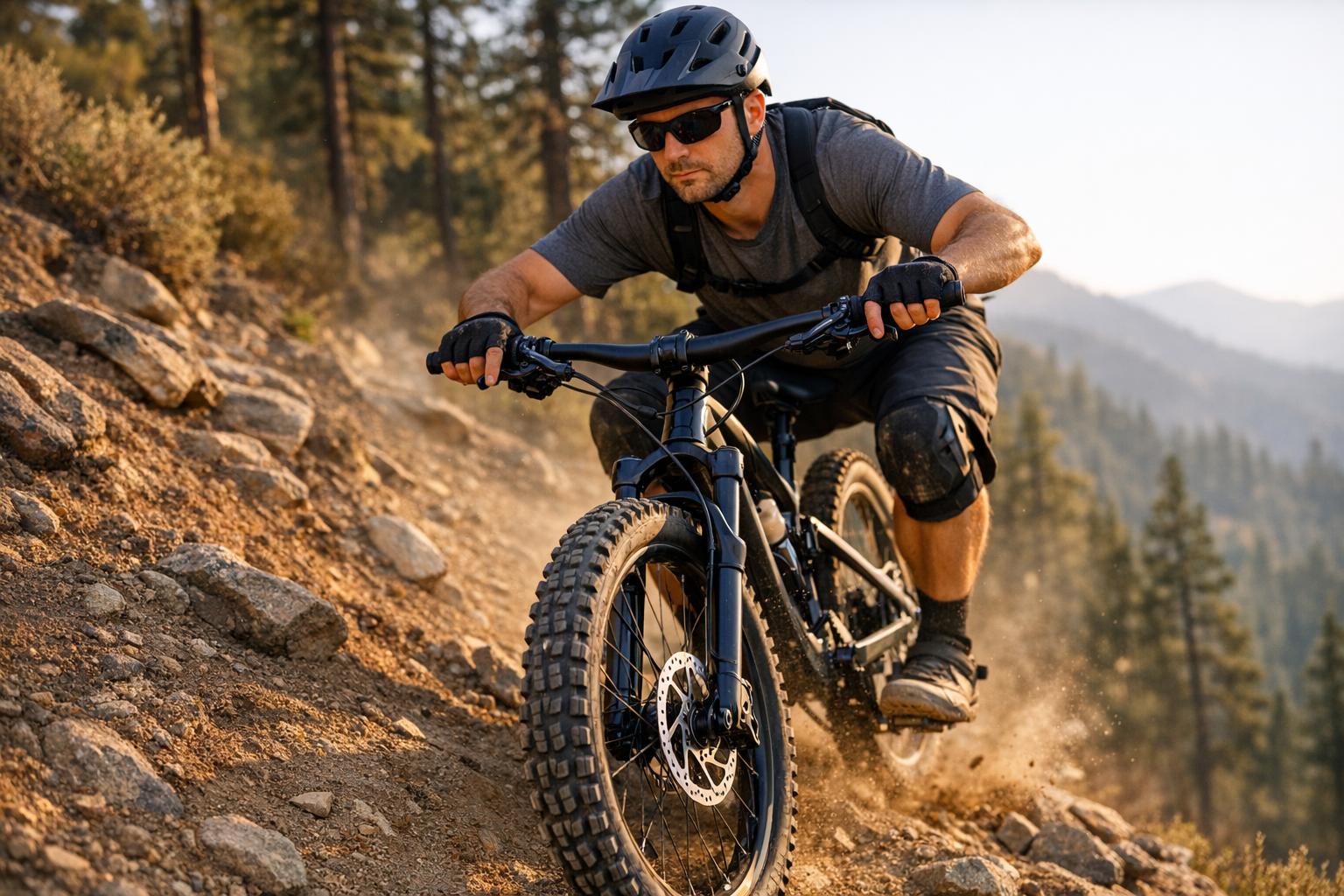
Cold weather can drastically reduce your performance and recovery when mountain biking. Here’s what you need to know:
- Endurance drops: Skin cooling alone can lower endurance by 31%, while a 1–2°F drop in core temperature can reduce it by up to 70%.
- Aerobic capacity decreases: VO₂max falls by 5–6% for every 2°F drop in core temperature.
- Muscle and nerve function slows: Cold temperatures reduce muscle responsiveness and coordination, making movements feel harder.
- Recovery takes longer: Reduced blood flow and delayed muscle warming slow down recovery, increasing fatigue and soreness.
Key Tips for Riding in Cold Weather:
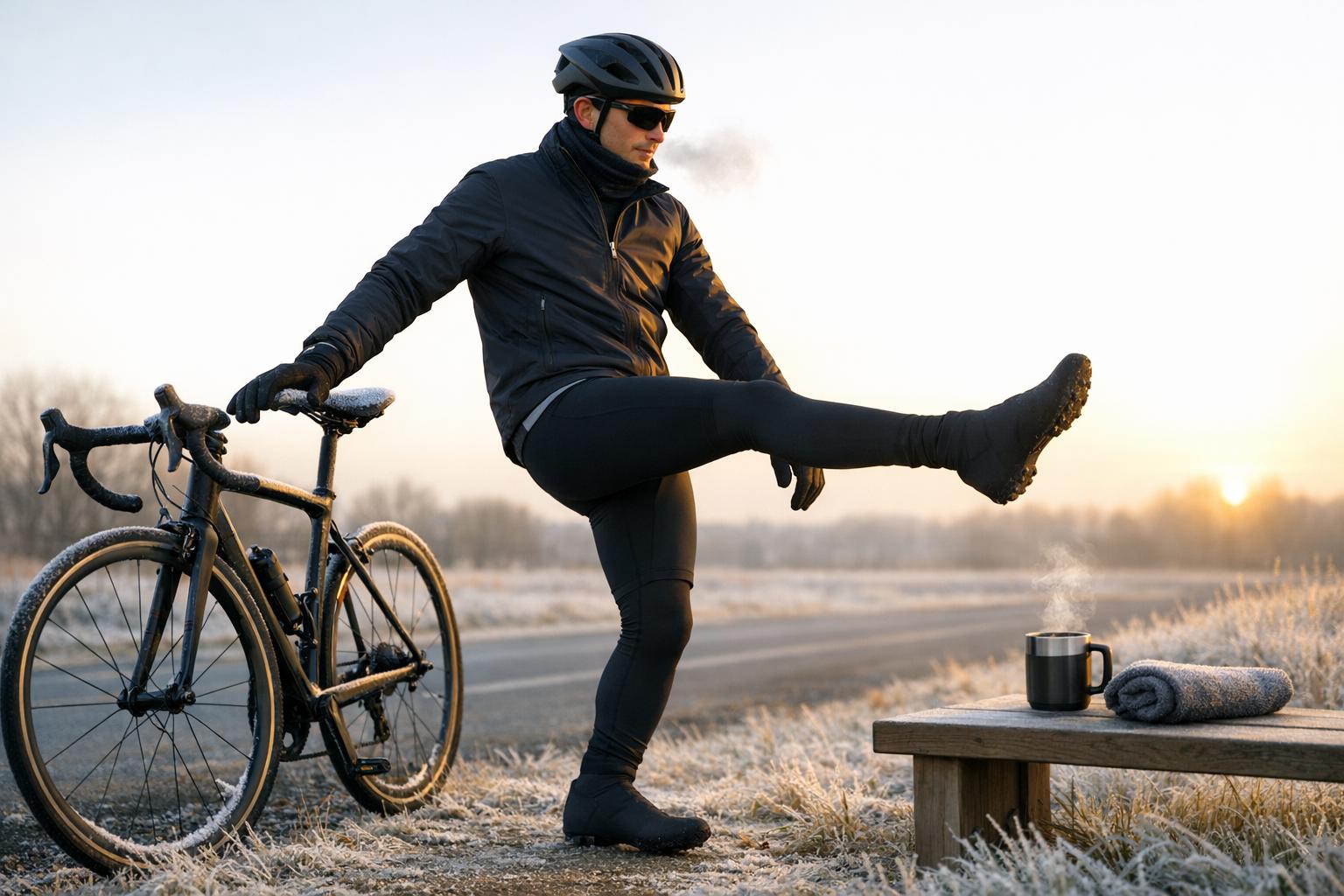
- Warm up thoroughly: Start with dynamic stretches and ease into your ride with light pedaling.
- Layer up: Use a base layer, insulating mid-layer, and windproof outer layer to maintain body heat.
- Protect extremities: Gloves, thermal socks, and shoe covers are essential for keeping hands and feet warm.
- Post-ride recovery: Change into dry clothes, rehydrate with warm drinks, and eat nutrient-rich meals to replenish energy.
Cold temperatures demand extra preparation, but with the right strategies, you can still perform effectively and recover efficiently.
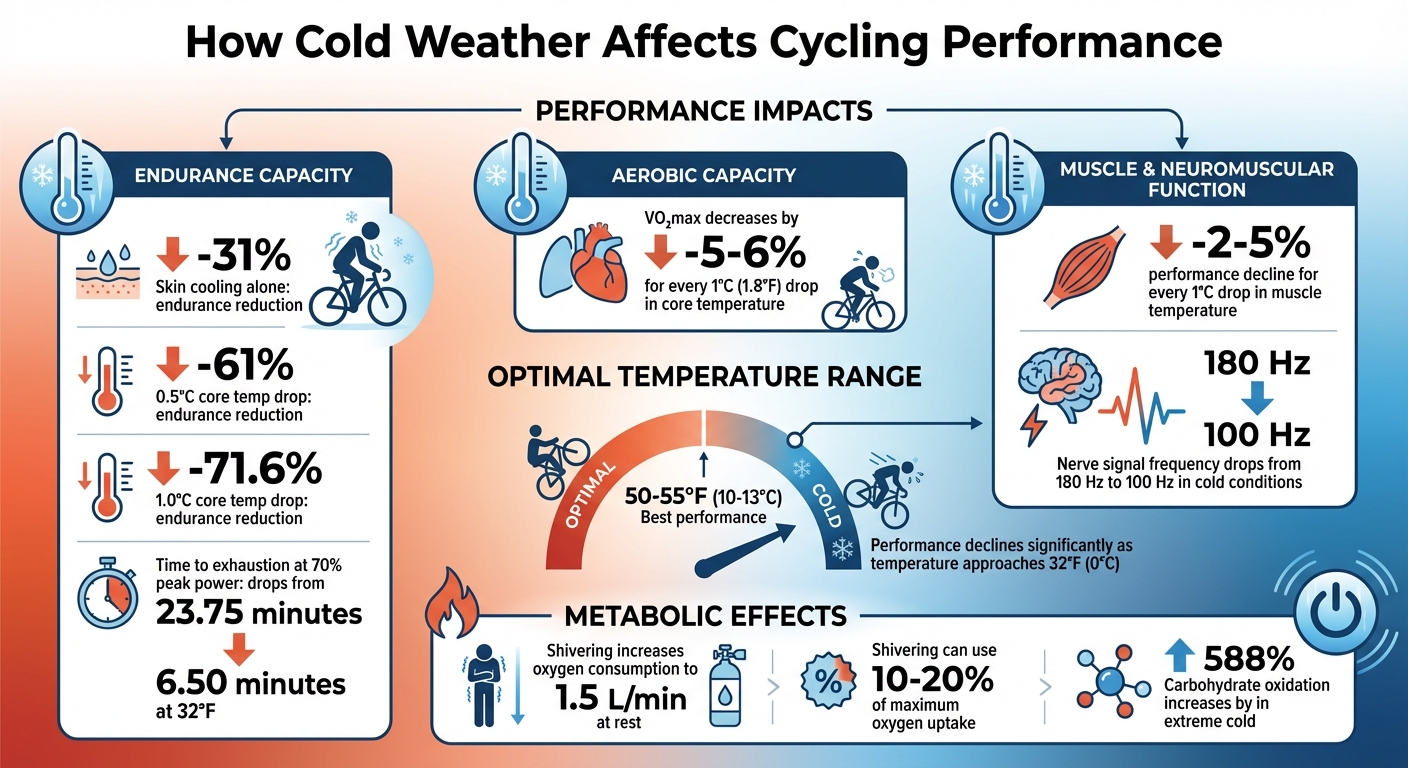
How Cold Weather Impacts Cycling Performance and Endurance
What Is the Most Effective Cycling Warm Up? The Science
sbb-itb-9d75ae1
How Cold Weather Affects Pre-Ride Warm-Ups
Heading out for a ride in cold weather brings its own set of challenges, especially when it comes to warming up. Your body has to work harder to prepare, and understanding these effects can help you adapt your routine.
Core Body and Muscle Temperature in Cold Conditions
Cold air cools down your muscles and skin even before you start moving, which not only feels uncomfortable but can also hurt your performance. Studies show that for every 1°C drop in muscle temperature (about 1.8°F), performance can decline by 2% to 5%. On top of that, the "afterdrop effect" complicates things further. This happens when warm blood from your core moves to your extremities, cools down, and then returns to your core, making it harder for your body to stabilize its temperature – even during intense activity.
If you’ve been standing around in freezing temperatures before your ride, your body may struggle to generate enough warmth. To counteract this, avoid lingering in the cold and wear layers during the early stages of your warm-up. Layering helps trap heat until your body starts producing enough warmth on its own. Beyond just the thermal impact, cold weather also slows down how effectively your nervous system communicates with your muscles.
Reduced Neuromuscular Efficiency
Cold weather doesn’t just stiffen your muscles – it slows down your nervous system too. For example, nerve signal frequency can drop from 180 Hz to 100 Hz in cold conditions, which delays muscle activation and reduces responsiveness. This effect, combined with the "braking effect", makes your muscles work against increased internal resistance. Essentially, your muscles contract more slowly for the same amount of force, which shifts the force-velocity balance.
"Practically all aspects of neuromuscular function, (i.e. mechanical, biochemical and neural), are deteriorated with lowered muscle temperature." – S. Racinais and J. Oksa, Scandinavian Journal of Medicine & Science in Sports
For mountain bikers, wind chill during high-speed descents adds another layer of difficulty. The cold air rapidly cools the outer layers of your muscles, reducing coordination and power output. These combined factors make your ride feel tougher than usual.
Higher Perceived Effort
The combination of reduced neuromuscular efficiency and cold temperatures makes everything feel harder. Your body has to split its energy between maintaining core temperature and powering your ride. For instance, shivering – a natural response to generate heat – can double your metabolic heat production, using up 10% to 20% of your maximum oxygen uptake. This leaves less energy for pedaling. Additionally, muscles stay tense to conserve heat, which increases baseline fatigue and makes your movements feel less fluid.
Breathing in cold, dry air can irritate your airways, further increasing your effort. Studies have found that athletes rate their effort higher in cold conditions, averaging around 12.0–12.5 on the Borg scale, compared to about 9.5 in more moderate temperatures. Cold air is also denser, which increases aerodynamic drag, and bulky winter clothing can restrict your movement. Together, these factors make each pedal stroke feel like more work. This disconnect between your actual power output and how hard it feels is normal in cold weather, so focusing on staying comfortable might be more beneficial than fixating on performance metrics.
Cold Weather’s Effects on Post-Ride Recovery
Cold weather doesn’t just make warm-ups harder – it also slows down your recovery after a ride. Once you’re done cycling in chilly conditions, your body takes longer to bounce back, leaving you feeling more fatigued and sore.
Slower Muscle Temperature Recovery
After a cold ride, your muscles struggle to warm back up. In low temperatures, your body triggers vasoconstriction, which reduces blood flow to the muscles. This limits the delivery of oxygen and nutrients needed for repair and slows the removal of waste products like lactic acid. Studies suggest that even passive rewarming at room temperature can take about an hour to restore muscle function after being cooled.
There’s also something called "afterdrop", where your body temperature continues to drop even after you’ve come indoors, which can further delay muscle recovery. On top of that, cold weather slows nerve signals and reduces muscle electrical activity, meaning your muscles respond more sluggishly and coordination suffers. If your muscles are already damaged, reduced blood flow in cold conditions can make it harder for your body to clear out damaged tissue or activate satellite cells – key players in muscle repair and regeneration.
Greater Fatigue and Muscle Soreness
The cold doesn’t just delay recovery – it can make fatigue worse. Shivering, for instance, can increase your resting oxygen consumption to about 1.5 L/min, draining energy reserves that your body needs for repair. Cold temperatures also shift your metabolism, pushing your body to rely more on carbohydrates, as shown by a higher respiratory exchange ratio (RER). This speeds up glycogen depletion, leaving you with less energy.
Another issue is the "braking effect." Cold conditions make your body work harder by increasing the co-activation of opposing muscle groups, which leads to quicker fatigue. On a cellular level, cold slows down critical muscle processes, like the activity of the SERCA pump and cross-bridge kinetics, which are essential for muscle contraction and relaxation. Repeated exposure to cold can even reduce muscle protein synthesis and lower testosterone levels, both of which are crucial for muscle repair. If you’re training in cold weather regularly, these factors can significantly extend your recovery time and slow down your progress. Knowing these challenges can help you plan better recovery strategies after cold-weather rides.
Research Findings on Cold Weather and Performance
Temperature Thresholds and Performance Declines
Recent studies have pinpointed the temperatures where cold begins to significantly hinder physical performance. Endurance activities perform best in ambient temperatures between 50°F and 55°F (10°C and 13°C), with noticeable declines as temperatures approach freezing. The closer it gets to freezing, the faster performance deteriorates.
A January 2024 study from Brock University examined how cold impacts endurance in 10 male cyclists. At 32°F (0°C), these athletes experienced a sharp drop in endurance. Their time to exhaustion at 70% peak power output plummeted from 23.75 minutes to just 6.50 minutes when a 1.0°C core temperature drop led to mild hypothermia – a staggering 71.6% reduction in endurance capacity. Even a smaller core temperature decrease of 0.5°C caused endurance to drop by about 61%.
"Endurance capacity impairment at 70% peak power output occurs early in cold exposure with skin cooling, with significantly larger impairments with mild hypothermia up to Δ-1.0°C." – Phillip J. Wallace, Researcher, Brock University
Cold also affects oxygen uptake and muscle performance. Peak VO₂max – a key measure of aerobic capacity – drops by 5% to 6% for every 1°C (1.8°F) decrease in core temperature. Similarly, muscle temperature declines by 1°C can reduce performance by 2% to 5%, depending on the type of muscle contraction.
Adaptation Limits in Extreme Cold
The body has mechanisms, like shivering and increased metabolism, to maintain core temperature, but these have their limits. When temperatures fall below 83°F (28.5°C) – the "lower critical temperature" – the body must work harder to produce heat. At rest, shivering increases oxygen consumption to about 1.5 L/min. In cold water, shivering can reach up to 46% of VO₂max, with carbohydrate oxidation spiking by 588% compared to resting in neutral conditions. This rapid energy use causes glycogen stores to deplete quickly.
Real-world scenarios illustrate these limits. In a multiday cross-country ski race held in temperatures between –0.4°F and –18.4°F (–18°C to –28°C), only 6% of participants finished due to extreme fatigue and discomfort. Sports organizations acknowledge these risks: the International Ski Federation cancels events below –4°F (–20°C), and UEFA postpones soccer matches at 5°F (–15°C).
Recognizing these physiological barriers is critical as we delve into strategies to mitigate the effects of extreme cold.
Strategies for Adapting to Cold Weather
Warm-Up Techniques That Work
When temperatures drop, warming up takes on a whole new level of importance. Cold tightens your muscles, reducing flexibility and making those first pedal strokes feel awkward and stiff. A proper warm-up not only loosens your muscles but also kickstarts your aerobic system, helping you conserve energy and delay fatigue. It’s a smart way to counteract the slower muscle temperature recovery and reduced efficiency that cold weather brings.
Start your warm-up off the bike with dynamic movements like deep squats, bear crawls, and hamstring stretches. These exercises activate your muscles without the downsides of static stretching, which can actually hurt performance before a ride.
Once you’re on the bike, ease into it. Spend the first 5–10 minutes spinning lightly, then move into 5 minutes at a steady race pace, and finish with a few 10-second bursts of high-cadence sprints. For intense rides, like cross-country mountain biking, extend your warm-up to 20–40 minutes. Professional XC racer Alex Wild swears by a 45-minute routine: 20 minutes of warming up, finishing 15 minutes before the start to allow for lineup time.
"If you’re going to be racing in the cold, warm up until as close to starting time as possible and keep moving until the gun goes off." – Stacy Sims, Ph.D., Exercise Physiologist
Don’t forget your bike! Flip it upside down for a few minutes at the trailhead to let cold-thickened oil reach the suspension seals, then bounce on it to warm up the suspension fluid. For yourself, drink something warm – coffee or soup works great – to heat your body from the inside without triggering sweat. You can also stick flat toe warmers on the underside of your wrists to warm the blood flowing to your hands.
Once you’ve warmed up, the right clothing and gear will help you stay comfortable and perform at your best.
Clothing and Gear to Maintain Body Heat
Keeping your core temperature steady is non-negotiable. Even a small drop can cause your body to cut off blood flow to your fingers and toes, leaving them painfully cold. A three-layer clothing system is your best defense: start with a moisture-wicking base, add an insulating mid-layer, and finish with a windproof or waterproof outer layer.
Merino wool beats cotton hands down for winter rides. It keeps you warm even when damp, unlike cotton, which traps moisture and cools you down fast. For your hands, lobster-style or split-finger gloves strike a balance between warmth and the dexterity needed for braking and shifting. Pair thermal socks with windproof shoe covers, and for extreme cold, add air-activated heat packets between your socks and covers.
Here’s a quick guide to dressing for different temperatures:
| Temperature Range | Recommended Clothing Strategy |
|---|---|
| 32°F – 40°F (Dry) | Shorts with knee pads/warmers, wool socks, short-sleeve base layer, breathable fleece, and a light windbreaker for descents |
| 32°F – 40°F (Wet) | Rain jacket, long-sleeve base layer, lightweight long pants, and waterproof shoes |
| 20°F – 32°F | Softshell pants, mid-weight windproof gloves, waterproof mid-height shoes, and a helmet that covers the ears |
| Below 20°F | Heavyweight layers, headband over ears, thickest wool socks, and bar mitts/pogies to allow for thinner gloves and better bar feel |
A neck gaiter or buff can be a game-changer. It warms and humidifies the air you breathe, protecting your lungs from the harsh, dry cold. Carry extra layers in a frame or handlebar bag for quick adjustments during your ride. Remember, even skin cooling can sap endurance by as much as 30%, so keep yourself bundled in warm-up gear until the very last moment before a high-intensity ride.
"If your core temperature drops even half a degree, it contracts veins to your outer extremities because it knows it can lose a couple fingers and toes and still survive." – Derrick Lewis, former North American retail manager for Rapha
Once your ride wraps up, it’s time to shift focus to recovery.
Post-Ride Recovery Methods
Cold rides can leave your body more fatigued than usual, so quick and effective recovery is key. Within 30 minutes of finishing, change into dry, insulated clothing to prevent further heat loss. Staying in damp gear will only make you colder.
Cool down with 5–10 minutes of light spinning to flush out waste products and keep blood from pooling in your legs. Once you’re home, a warm shower or bath (98–100°F) can help regulate your body temperature and relax your muscles. Save stretching for after you’ve warmed up – your muscles will be more pliable and responsive.
"A cool down helps return your body to its pre-exercise state and will aid recovery and adaptation processes. It should be viewed as the first step to preparing your body for your next training session, race or event." – Dr. Andy Kirkland, BASES accredited sports scientist, British Cycling
Fuel your recovery with warm, nutrient-packed meals like protein-rich soups or bone broth. Research shows hot recovery meals can improve nutrient absorption by up to 25% compared to cold ones. For hydration, swap out icy drinks for warm herbal teas or heated electrolyte solutions to avoid chilling your core. Keep your recovery space cozy – 68–72°F with 40–50% humidity is ideal for helping your body repair.
Conclusion
Cold weather has a profound impact on your body’s performance and recovery. Even small drops in core or muscle temperature can lead to endurance losses of over 60% and significantly reduce power output. To ride effectively during winter, it’s important to understand how colder conditions affect warm-ups and recovery.
Thankfully, there are proven ways to counter these challenges. Studies show that proper preparation, such as thorough warm-ups and wearing layered clothing, can help offset the effects of cold. Simple adjustments – like keeping warm-up gear on until just before your ride – can also prevent significant performance dips caused by cold exposure.
Adapting to cold weather is a skill that improves with practice. Training regularly in colder temperatures helps your body’s thermoregulation adapt over time. This gradual adjustment builds resilience, making winter rides feel less daunting.
FAQs
How cold is too cold to ride?
Riding in temperatures below 50–60°F presents challenges like cold shock and hypothermia. To stay safe, it’s crucial to prepare by wearing the right gear designed for cold weather. Proper preparation can make all the difference in these conditions.
How long should my warm-up be in winter?
Research indicates that a proper winter warm-up should take around 5 to 10 minutes to get your body ready for exercise in colder temperatures. This brief routine helps to elevate muscle temperature, enhance flexibility, and steadily boost your heart rate – all critical factors for improving performance and reducing the risk of injury. Be sure to tailor your warm-up to match your fitness level and the specific outdoor conditions.
What’s the fastest way to warm up after a cold ride?
After a chilly ride, the key to warming up quickly is to start with a gentle indoor activity. This helps boost circulation and gradually raises your muscle temperature. Resist the urge to hop into a steaming hot shower right away – it might feel tempting, but it can actually dry out your skin. Once you’ve eased your body into recovery mode, opt for a warm (not overly hot) shower. This approach promotes recovery without risking skin dryness or stiff muscles.