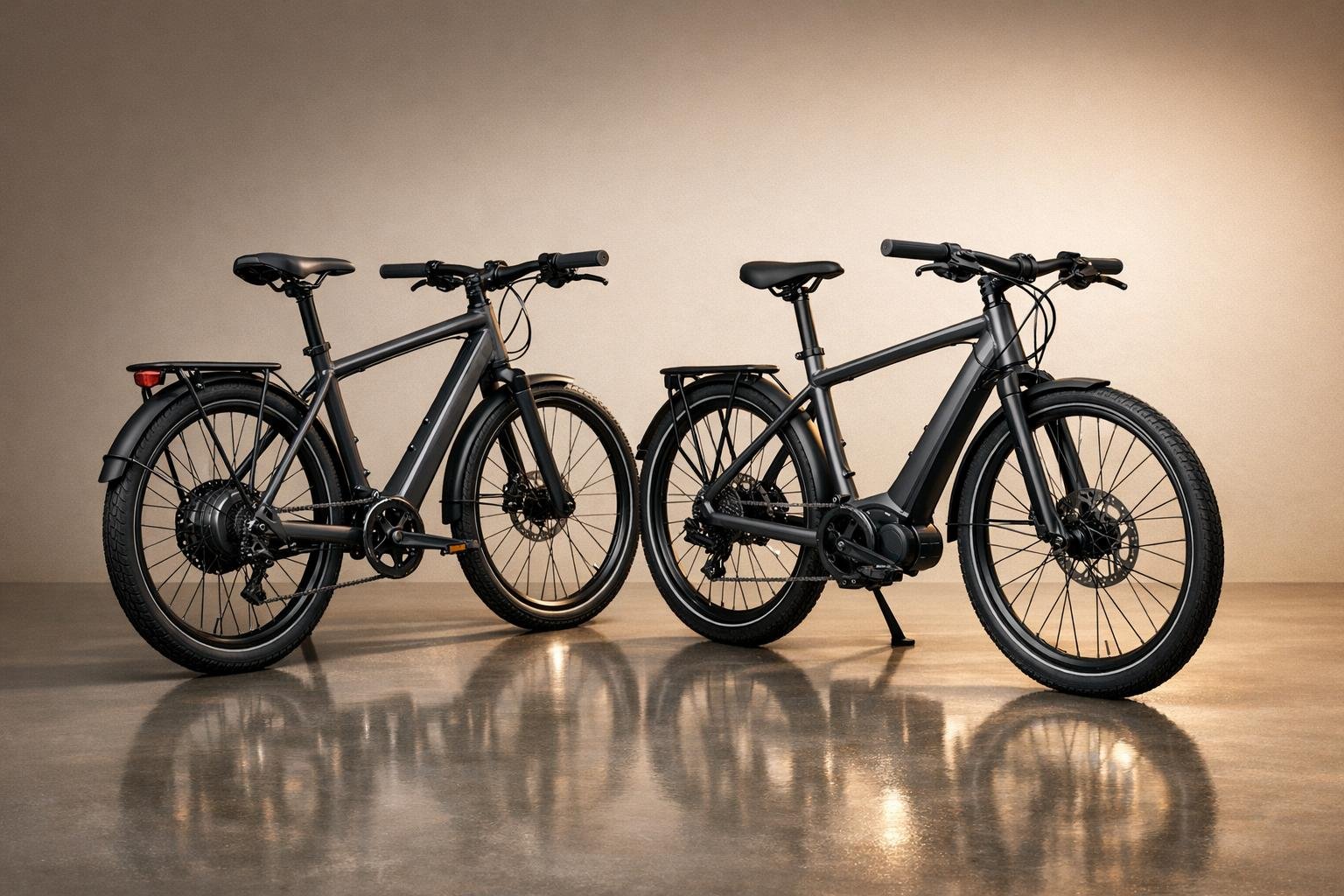
Hub motors and mid-drive motors each have specific frame requirements that impact e-bike performance, cost, and maintenance. Hub motors are mounted in the wheel hub and fit most standard bike frames, making them ideal for conversions and lower-cost setups ($600–$1,500). Mid-drive motors, mounted at the bottom bracket, require specially designed frames and are better suited for steep climbs and technical trails, though they come with higher costs ($2,000+), increased drivetrain wear, and more maintenance.
Key Takeaways:
- Hub Motors: Easy to install, compatible with most frames, but add unsprung weight and can strain axles.
- Mid-Drive Motors: Require specific frames, offer better weight balance and torque, but increase drivetrain wear.
Quick Comparison:
| Feature | Hub Motor | Mid-Drive Motor |
|---|---|---|
| Frame Requirement | Standard dropouts (100/135 mm) | Threaded BB (68/73 mm) |
| Weight Balance | Rear/Front heavy | Centralized and low |
| Cost | $600–$1,500 | $2,000+ |
| Maintenance | Low (sealed motor) | Higher (chain wear) |
| Terrain Suitability | Flat, urban | Steep climbs, technical trails |
Choose based on your bike’s frame, terrain, and budget.
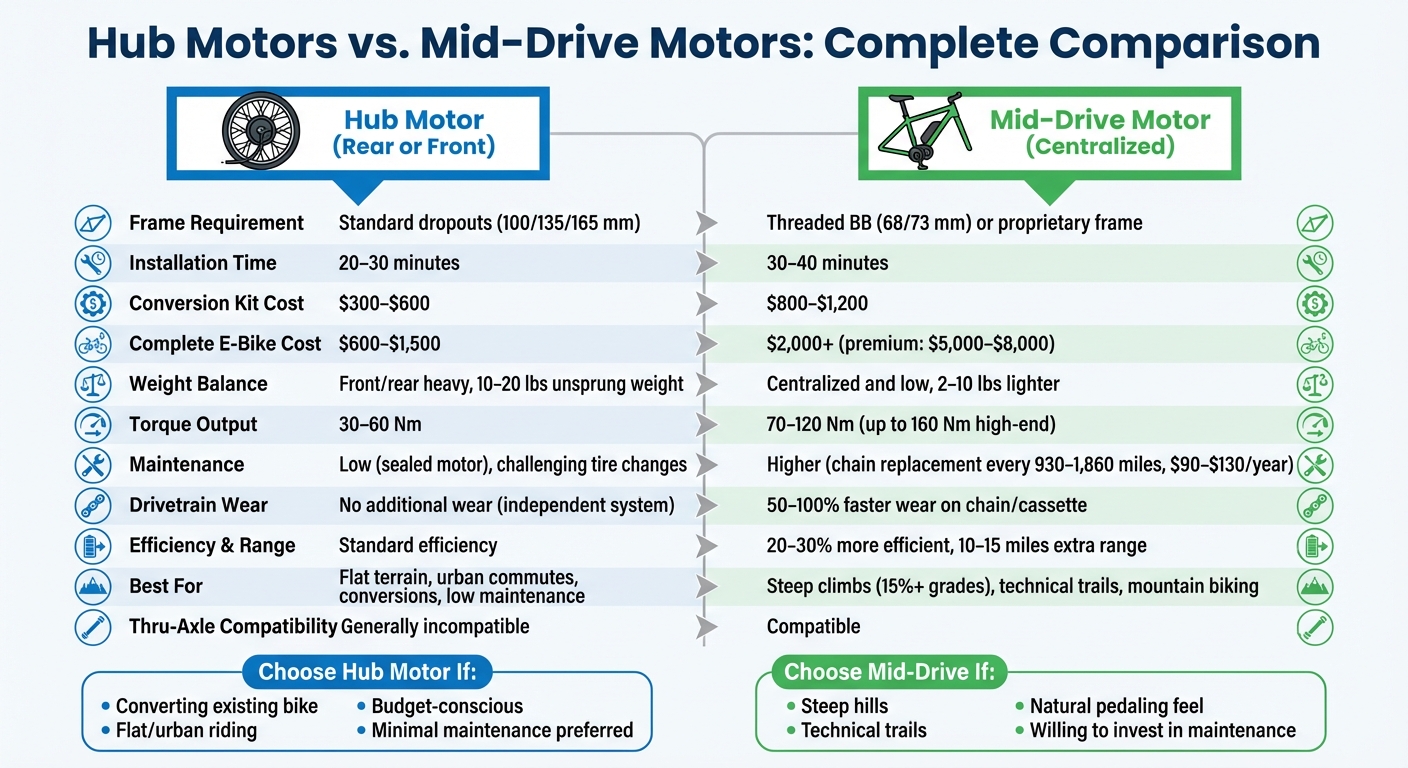
Hub Motor vs Mid-Drive Motor E-Bike Comparison Chart
What E-Bike Motor Should I Get – Hub Drive vs Mid Drive! – Electric Bike Guide | BikeRide.com
sbb-itb-9d75ae1
Hub Motors: Frame Compatibility
Hub motors work seamlessly with most standard bicycle frames, making them a convenient option compared to mid-drive systems that often require specialized motor mounts. Installation is straightforward and usually takes just 20–30 minutes, essentially involving a wheel swap. Frames with 10 mm dropouts and axle widths of about 100 mm (front) or 135–165 mm (rear) are generally compatible, covering a wide range of vintage, standard, and folding bikes. For electric tricycles, front hub motors are a simple and effective choice, offering a reliable drive system for three-wheeled designs.
"Hub motors are less expensive than mid-drive motors since they can be mounted on a standard bicycle frame." – EVELO
Let’s dive into the advantages and challenges hub motors bring to different frame designs.
Benefits of Hub Motors
One of the biggest perks of hub motors is their versatility. Since the motor is housed in the wheel rather than the bottom bracket, you can pair it with virtually any drivetrain – whether it’s an internal gear hub, belt drive, or a standard derailleur – without needing modifications. This design also protects the chain and cassette from excessive wear, which mid-drive systems can accelerate by 50–100%.
Folding e-bikes are a great match for hub motors. Their compact placement keeps the motor out of the frame’s center, avoiding interference with folding mechanisms and maintaining portability. Weight-wise, geared hub motors typically range from 6 to 10 lbs, while direct-drive models are heavier, coming in between 11 and 17 lbs.
These features make hub motors a practical choice for many riders. However, they do come with a few mechanical drawbacks.
Drawbacks of Hub Motors
One notable downside is the added unsprung weight. Since the motor sits in the wheel, this extra mass – usually between 10 and 20 lbs – can affect the bike’s center of gravity and steering balance. It also reduces suspension responsiveness, as the wheel absorbs bumps more harshly.
There’s also the issue of structural stress. The motor applies torque directly to the wheel axle, which can strain frames not designed to handle this load. This makes high-power setups particularly risky without torque arms to prevent axle spinning and potential dropout damage. Additionally, the extra force can impact spoke tension, requiring regular maintenance to keep the wheel in good shape.
Compatibility with modern frames can be another hurdle. Many newer frames with thru-axle systems don’t work with hub motors, which are designed for traditional open dropouts.
Maintenance can be a bit trickier, too. Removing a hub motor wheel for something as simple as a tire change means disconnecting cables and dealing with a heavier wheel – up to 20 lbs more than a standard one. At higher speeds, the spinning mass can cause a gyroscopic effect, making the bike harder to lean into turns.
While hub motors offer convenience and versatility, these challenges are worth considering when deciding if they’re the right fit for your bike.
Mid-Drive Motors: Frame Compatibility
Mid-drive motors are installed at the bike’s bottom bracket, meaning they need frames specifically designed to accommodate them. Unlike hub motors, which can be swapped by changing a wheel, mid-drive systems demand a more integrated setup. This unique mounting style brings both advantages and challenges.
For high-end mid-drive systems, the frame must be designed to fit the motor’s precise dimensions. If you’re looking at aftermarket conversions, you’ll need a frame with a threaded 68mm or 73mm bottom bracket, as press-fit bottom brackets won’t work. Mid-drive e-bikes typically start at around $2,000, with premium models ranging from $5,000 to $8,000. On average, expect to spend $600 to $1,000 more than what a comparable hub motor bike would cost.
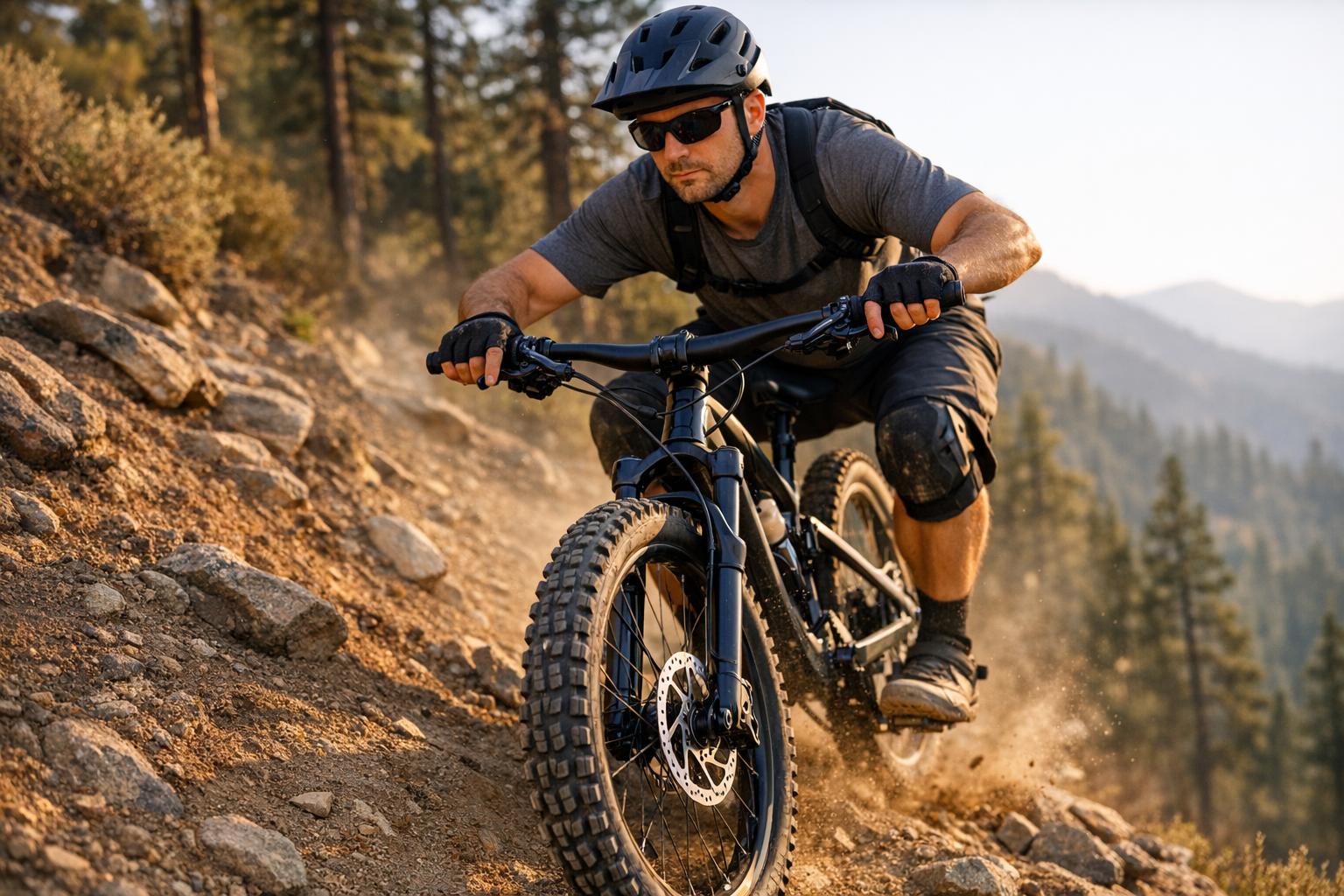
The complexity pays off in performance. With the motor positioned low and centered, the bike achieves a balanced 50/50 weight distribution between the front and rear axles. This setup is especially beneficial for mountain biking, as the motor becomes "sprung" weight. Suspension systems can better absorb impacts compared to the "unsprung" weight of hub motors. Additionally, mid-drive motors utilize the bike’s gears, generating 70–120 Nm of torque – far more than the 30–60 Nm typical of hub motors. This makes them ideal for steep climbs and challenging terrain.
Benefits of Mid-Drive Motors
The central placement of the motor enhances cornering and traction on tricky trails. Mountain bike frames benefit significantly because the motor doesn’t interfere with suspension travel. This allows the bike to handle bumps and rough terrain more effectively than a hub motor setup. The design not only boosts performance but also complements frame geometry that prioritizes balanced weight.
"Avid mountain bikers prefer mid-drive motors for technical riding because the centre of gravity is weighted at the lower-middle of the bike, which is preferable when navigating technical trails." – EbikeBC
Mid-drive motors are also 20–30% more efficient than hub motors, as they use the bike’s gears to keep the motor operating in its optimal RPM range. This efficiency translates to extended range, with mid-drive bikes offering 10–15 miles more per charge compared to hub motor models with the same battery size. For instance, the EVELO Atlas can deliver 60 miles on a single battery and up to 100 miles with a dual-battery setup.
Another plus? Wheel maintenance is easier. Since the motor isn’t part of the wheel, replacing tires or fixing flats is just like working on a standard bike. Mid-drive systems also shine in cargo or heavy-duty applications, as they can use low gears to generate high torque for carrying heavy loads without overheating.
Despite their perks, mid-drive motors come with some specific challenges.
Drawbacks of Mid-Drive Motors
One major downside is the need for specialized frames. Most standard bikes can’t be retrofitted with mid-drive motors, especially those with press-fit bottom brackets or carbon fiber frames, which aren’t compatible with the clamping forces required by conversion kits. If you’re considering a conversion, professional fabrication can cost around $1,600, not including the battery.
Drivetrain wear is another issue. Because the motor powers the bike through the chain, components like chains and cassettes wear out 50–100% faster than on non-electric bikes. Chains may need replacing every 930–1,860 miles, with annual drivetrain maintenance costing around $90–$130. These factors highlight the importance of using frames specifically designed for mid-drive systems.
"Failure in mid-drive system or bicycle transmission means you are stuck with a bike that may not move and it’s heavier than hub motor bikes so not that portable." – EbikeBC
Proper shifting is crucial to avoid chain damage. Riders need to ease pedaling pressure during gear changes, as high-end mid-drive systems can produce up to 160 Nm of torque, which can strain the chain under full power. Maintenance can also be more complicated, as the motor unit houses the controller and sensors, requiring more disassembly than hub motor systems.
For those tackling steep grades or technical terrain, the performance benefits often outweigh these challenges. However, if you’re converting an existing bike or prefer a low-maintenance option, the specialized frame needs and increased drivetrain wear are key factors to consider.
Hub Motors vs. Mid-Drive Motors: Frame Compatibility Comparison
When deciding between hub and mid-drive motors, understanding frame compatibility is essential. Hub motors are designed to fit standard frames, while mid-drive systems require frames with specific bottom bracket designs to accommodate their mounting. One key limitation of hub motors is that they generally don’t work with thru-axle forks, whereas mid-drive motors, which mount directly to the frame, are compatible with such setups.
This difference in frame requirements influences not only the installation process but also the overall cost and upkeep. Installing a hub motor typically takes 20–30 minutes and costs between US$300 and US$600. In comparison, mid-drive motor installations take a bit longer – around 30–40 minutes – and cost between US$800 and US$1,200. Similarly, complete e-bikes with hub motors are generally US$600–US$1,000 cheaper than their mid-drive counterparts.
Weight distribution is another critical factor. Hub motors add 10–20 lbs of unsprung weight to the bike, which can affect suspension performance. On the other hand, mid-drive motors are lighter by 2–10 lbs and are centrally mounted, creating a balanced weight distribution. This central placement allows suspension systems to respond more effectively to rough terrain.
The drivetrain connection also sets these systems apart. Hub motors operate independently of the chain and gears, meaning they don’t contribute to drivetrain wear. Mid-drive motors, however, drive the bike through the chain, leading to increased wear and the need for more frequent maintenance. Chains on mid-drive setups typically need replacing every 930–1,860 miles, with annual maintenance costs ranging from US$90 to US$130. Additionally, tire changes can be more cumbersome with hub motors because the motor is integrated into the wheel. In contrast, mid-drive systems allow for standard wheel maintenance, making tire changes more straightforward.
These distinctions highlight the importance of matching your motor choice to your bike’s frame and intended use for the best performance and ease of maintenance.
Comparison Table
Here’s a breakdown of the key differences between hub motors and mid-drive motors:
| Feature | Hub Motor | Mid-Drive Motor |
|---|---|---|
| Frame Requirement | Standard dropouts (100/135/165 mm) | Threaded BB (68/73 mm) or proprietary frame |
| Thru-Axle Support | Generally incompatible | Compatible (motor is frame-mounted) |
| Weight Balance | Front or rear heavy; unsprung weight | Centralized and low; suspended weight |
| Drivetrain Connection | Independent (direct wheel drive) | Integrated (powers chain/gears) |
| Installation Time | 20–30 minutes | 30–40 minutes |
| Conversion Kit Cost | US$300–US$600 | US$800–US$1,200 |
| Maintenance Needs | Low (sealed motor); more challenging tire changes | Higher (drivetrain wear); standard wheel maintenance |
| Wheel Compatibility | Specific motor–rim combo | Any standard wheelset |
| Chain Break Scenario | Motor can still propel the bike | Bike becomes immobilized |
Conclusion
Choose the motor type – hub or mid-drive – that aligns with your bike frame, riding habits, and budget. Hub motors are compatible with almost any standard bicycle frame, making them an excellent choice for converting an existing bike or keeping expenses low. If your rides involve mostly flat terrain, urban commutes, or you prefer minimal upkeep, a hub motor offers consistent performance without causing extra wear on your drivetrain.
On the other hand, mid-drive motors are designed for purpose-built frames with threaded 68mm or 73mm bottom brackets and typically cannot be retrofitted onto traditional bikes. If you’re facing steep hills with grades over 15%, tackling technical mountain trails, or looking for a more natural pedaling experience, the mid-drive’s centralized weight and ability to leverage gears make it worth the higher initial cost and added maintenance. Keep in mind that mid-drives often require chain replacements every 930–1,860 miles, with annual drivetrain maintenance running between $90 and $130.
To ensure your e-bike performs well and lasts longer, always verify your frame’s compatibility. Check the dropout spacing for hub motors or the bottom bracket type for mid-drives before making a purchase. Avoid using mid-drive kits on carbon fiber frames unless they’re specifically designed for it, as the mounting stress can damage the material. For high-powered hub motors, installing torque arms is essential to prevent dropout failure.
For more expert advice on e-bike components, maintenance tips, and gear tailored to your riding style, visit Intermountain Bikes. Whether you’re converting your first bike or upgrading to a high-performance e-MTB, understanding frame compatibility ensures you’ll enjoy the performance and reliability you need.
FAQs
How can I check if my bike’s dropouts are compatible with a hub motor?
To see if your bike’s dropouts will work with a hub motor, measure the rear dropout spacing – it’s typically 135mm for most standard hub motors. Look for slotted dropouts, as they make installation much simpler. If your bike has a non-standard design, like thru-axles, you may need to make adjustments, or it might not be compatible at all. Bikes made between the late ’80s and early 2000s often fit these requirements.
Can I install a mid-drive on a press-fit or carbon frame?
Installing a mid-drive motor on a press-fit or carbon frame can be tricky because of potential compatibility challenges. These types of frames often have unique design features that might not work well with mid-drive systems. It’s crucial to double-check whether the motor and frame are a good match before starting the installation process.
Do I need torque arms for a hub motor conversion?
Torque arms are generally a good idea when using hub motors, particularly if the motor’s power exceeds 500 watts or your bike has aluminum dropouts. Their main job is to stop the axle from spinning out, which adds an extra layer of safety while riding.