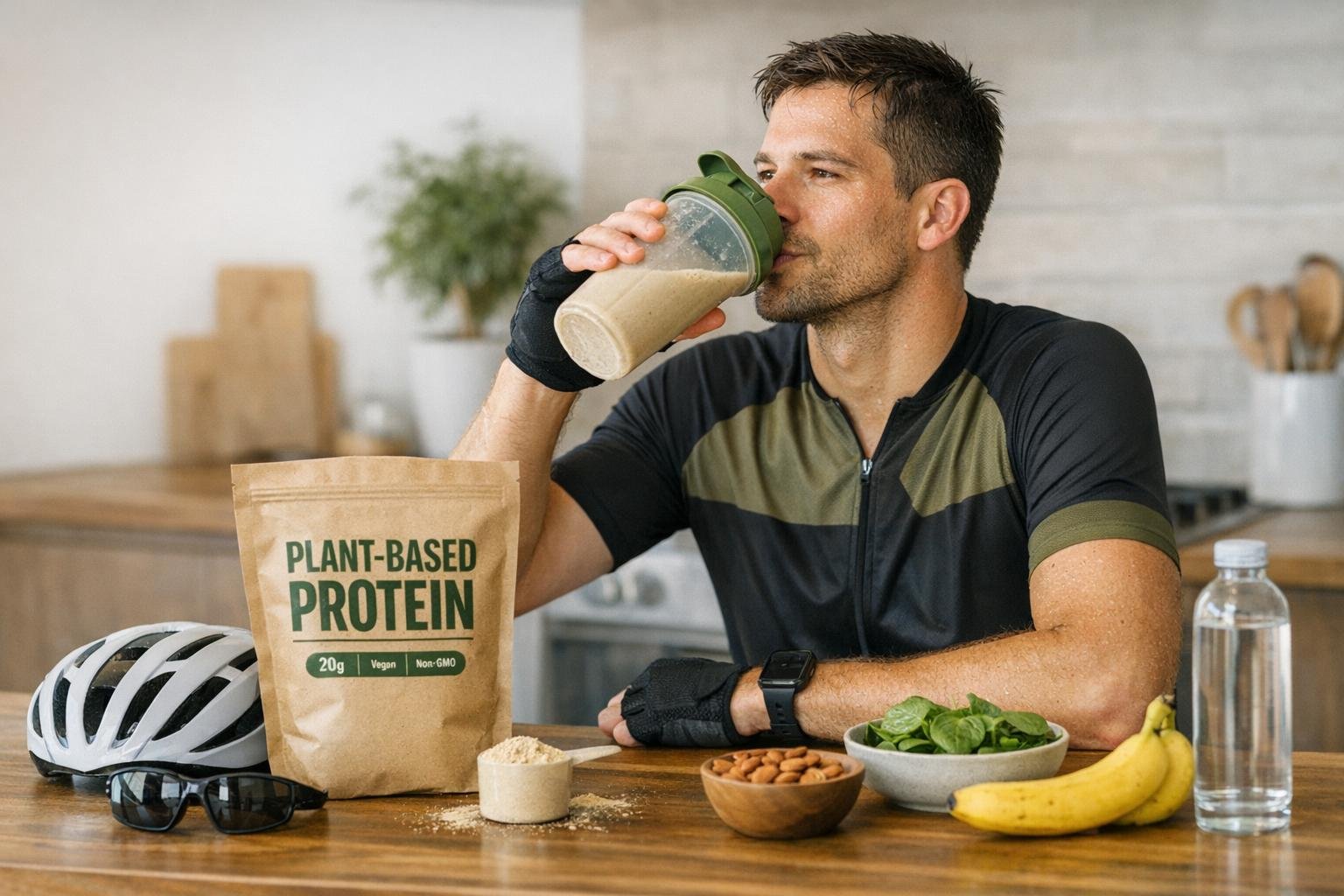
Recovering after a ride is just as important as the ride itself. Your muscles need fuel to repair and grow stronger, and vegan protein is an excellent option to help you bounce back. Here’s why and how you can use it effectively:
- Why Vegan Protein? It supports muscle recovery, reduces inflammation, and provides essential nutrients like fiber, antioxidants, and omega-3s. Unlike animal proteins, it’s lower in saturated fat and better for long-term health.
- How Much Do You Need? Aim for 1.3–2.4 grams of protein per kilogram of body weight daily. For a 165-pound rider, that’s 99–181 grams per day. Post-ride, consume 20–30 grams of protein within 30–60 minutes.
- Best Sources: Soy-based options like tofu and tempeh, pea and rice protein blends, hemp and chia seeds, and legumes like lentils are all excellent choices.
- Quick Ideas: Smoothies, protein balls, and recovery bowls are easy ways to incorporate vegan protein into your routine.
Start by adding one or two plant-based protein sources to your meals, and you’ll notice better recovery and energy for your next ride.
Post Workout / Cycling Recovery Drink 4:1 Carb Protein Ratio (non-dairy, vegan) – One Minute Recipes
Why Vegan Protein Works for Recovery
After a tough ride, your muscles need specific amino acids to repair and grow stronger. Plant-based proteins provide these essential building blocks, particularly leucine. Leucine is a branched-chain amino acid that plays a key role in muscle protein synthesis – the process your body uses to rebuild muscle tissue after exercise. Since your body can’t produce leucine on its own, replenishing it post-ride is crucial for recovery.
For optimal results, aim for 30 grams of a plant-based protein blend that includes about 2.5 grams of leucine. This combination can stimulate muscle repair just as effectively as whey protein. Blends made from sources like pea, rice, and hemp are especially beneficial because they provide all nine essential amino acids your muscles need to recover from those grueling climbs. Beyond muscle repair, these proteins also help reduce inflammation, which aids in overall recovery.
Take black lentils, for example. They pack 13 grams of protein per 1/4 cup (dry) and are rich in anthocyanins – antioxidants that help combat oxidative stress caused by intense exercise.
What’s in Vegan Proteins
Plant-based proteins offer more than just amino acids – they’re nutritional powerhouses. For instance, a 3-ounce serving of seitan delivers 21 grams of protein and has a protein-to-fat ratio similar to many meats. Tempeh, another great option, provides 17 grams of protein per half cup, along with probiotics, magnesium, and iron. These nutrients not only support muscle recovery but also improve gut health and oxygen transport. Hemp seeds are another standout, offering 10 grams of protein per 3 tablespoons, plus omega-3 fatty acids to help reduce inflammation.
Unlike animal proteins, plant-based options are packed with fiber – both soluble and insoluble – which supports gut health and provides sustained energy. Many plant proteins also contain chlorophyll, which can help balance your body’s pH levels after intense activity. This alkalizing effect, combined with their nutrient density, makes plant proteins a smart choice for recovery. Plus, for eco-conscious riders, they offer an added bonus: a lighter environmental footprint.
Environmental Benefits of Plant-Based Proteins
Choosing plant-based proteins isn’t just good for your body – it’s better for the planet too. Take pea protein, for example. Its production doesn’t rely on nitrogen fertilizers or irrigation systems, resulting in a cleaner, more sustainable supply chain compared to animal proteins. For riders who value the natural landscapes where they train and explore, this makes plant-based proteins a meaningful choice.
Best Vegan Protein Sources for Post-Ride Recovery
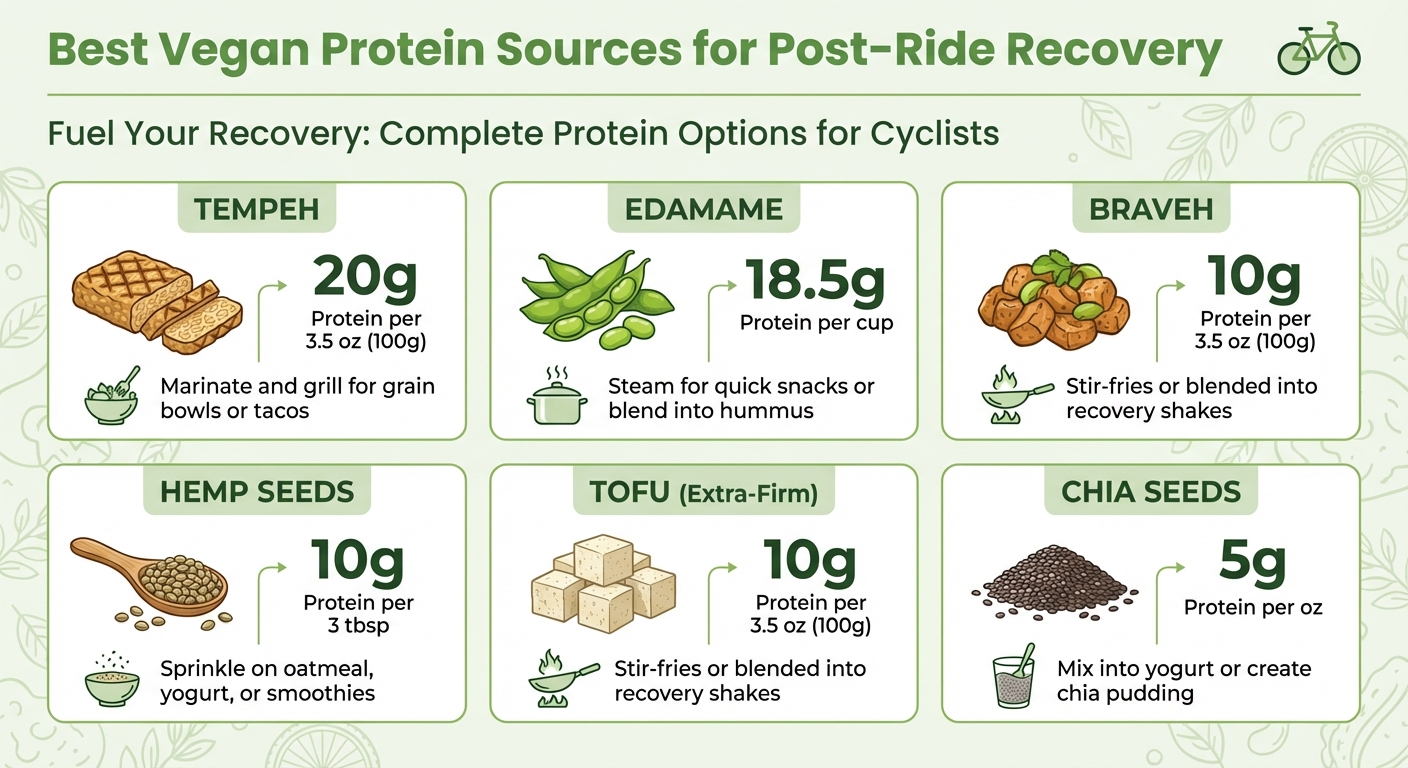
Vegan Protein Sources for Cyclists: Protein Content and Recovery Uses
Soy-Based Proteins
Soy-based foods like tofu, tempeh, and edamame are powerhouse proteins that pack all nine essential amino acids. For instance, tempeh boasts about 20 grams of protein per 3.5-ounce serving, while a cup of edamame delivers 18.5 grams. Plus, soy’s high leucine content makes it particularly effective at supporting muscle repair after a tough ride.
"In general, soy proteins like tempeh typically have a higher protein content compared to other plant-based proteins." – Kayla Slater, MS, RDN
You can get creative with soy in the kitchen. Toss extra-firm tofu into a veggie stir-fry with brown rice, or blend silken tofu into your post-ride smoothie for a creamy boost. Tempeh is another versatile option – marinate and grill it for a hearty addition to tacos or grain bowls. Even a quick snack of steamed edamame (half a cup provides around 9 grams of protein) can help you refuel. These soy-based options are excellent for meeting your recovery needs.
Pea and Rice Protein Blends
Pea and rice protein blends are another great option for recovery. By themselves, plant proteins can sometimes lack certain amino acids, but when combined, pea and rice proteins form a complete amino acid profile that’s as effective as whey protein. Pea protein is rich in leucine, while rice protein adds lysine to the mix, creating a well-rounded recovery option.
These blends are particularly popular in recovery shakes because they’re easy on the stomach and highly digestible, making them a great alternative to dairy-based proteins. Try mixing a scoop of pea protein powder with soy milk (which adds 8–9 grams of protein per cup) and a tablespoon of hemp seeds. This simple shake packs about 17 grams of protein and provides the amino acids your body needs during the crucial 30- to 60-minute post-ride recovery window.
Hemp, Chia Seeds, and Other Protein-Rich Seeds
Hemp and chia seeds are small but mighty when it comes to protein and recovery benefits. Both are complete proteins and rich in anti-inflammatory omega-3 fatty acids. Hemp seeds, for example, offer about 9.5 to 10 grams of protein in just 3 tablespoons, along with alpha-linolenic acid, which supports heart health and helps combat oxidative stress caused by intense rides.
These seeds are incredibly versatile and easy to incorporate into your meals. Sprinkle hemp hearts over oatmeal, stir chia seeds into yogurt, or add them to homemade energy balls for a portable snack. For a quick and satisfying option, spread almond butter on whole-grain toast and top it with hemp seeds – this simple combo delivers around 10 grams of protein. Their convenience and versatility make them a fantastic addition to your recovery routine.
| Protein Source | Protein per Serving | Best Recovery Use |
|---|---|---|
| Tempeh | 20g per 3.5 oz | Marinate and grill for grain bowls or tacos |
| Edamame | 18.5g per cup | Steam for quick snacks or blend into hummus |
| Hemp Seeds | 10g per 3 tbsp | Sprinkle on oatmeal, yogurt, or smoothies |
| Tofu (Extra-Firm) | 10g per 3.5 oz | Stir-fries or blended into recovery shakes |
| Chia Seeds | 5g per oz | Mix into yogurt or create chia pudding |
sbb-itb-9d75ae1
When and How Much Vegan Protein to Consume
The 30-60 Minute Post-Ride Window
Right after you finish a ride, your body is in recovery mode and ready to rebuild. Eating a mix of protein and carbohydrates within 30 to 60 minutes post-ride can jumpstart muscle repair and replenish glycogen stores. This timing is especially important if you’re planning to ride again within 24 hours. If not, focus on hitting your overall daily nutrition goals.
"It’s best to get something in your system between 30 to 60 minutes after exercise." – Melissa Majumdar, M.S., R.D., Emory University Hospital Midtown
For optimal recovery, aim for 20 to 30 grams of protein combined with carbohydrates in that first hour. Endurance athletes often benefit from a 4:1 ratio of carbs to protein in their recovery meal. For example, if you weigh 150 pounds, you’d need about 70 to 75 grams of carbs and 17 to 19 grams of protein. Not feeling hungry after your ride? A fruit smoothie with plant-based protein powder can be a quick and easy option to get those nutrients.
While this immediate refueling helps kick off recovery, meeting your daily protein needs is key for long-term muscle repair.
Daily Protein Needs for Mountain Bikers
Mountain bikers generally require 1.3–1.7 grams of protein per kilogram of body weight each day to maintain muscle. If you’re training hard, you might need even more – between 0.7 and 1.1 grams per pound of body weight. And if you’re over 30, aiming for 1.6 to 1.8 grams per kilogram can help counteract muscle loss tied to aging.
Here’s how that translates into daily protein targets:
| Rider Weight | Daily Protein Goal (1.3g/kg) | Daily Protein Goal (1.7g/kg) |
|---|---|---|
| 132 lbs (60 kg) | 78g | 102g |
| 154 lbs (70 kg) | 91g | 119g |
| 176 lbs (80 kg) | 104g | 136g |
| 198 lbs (90 kg) | 117g | 153g |
Spread your protein intake across the day in portions of 25–30 grams. Make sure to include protein with breakfast and try a vegan snack before bed – like a handful of almonds or a serving of soy yogurt – to help your muscles recover while you sleep.
Simple Vegan Protein Recipes for Recovery
Quick Smoothies and Shakes
Smoothies are a fast and efficient way to refuel with protein and carbs after a ride. To make things easier, prepare "smoothie bags" in advance by filling freezer bags with your favorite fruits, seeds, and protein powder. When you’re ready, just toss the contents into a blender and you’re good to go.
For a Banana Berry PB smoothie that delivers 38 grams of protein, blend together:
- 1 large banana
- 1 cup frozen blueberries
- 30 g soy protein powder
- 2 teaspoons peanut butter
- ½ cup soy milk
Soy protein is excellent for muscle repair, but if you’re avoiding soy, try the Green Power smoothie instead. Blend 1 frozen banana, 1 cup almond milk, a handful of spinach, 1 tablespoon hemp seeds, and 1 scoop of vegan protein powder. This option provides 29 grams of protein along with a boost of omega-3s.
"With the right ingredients, smoothies can jump‐start recovery by providing carbs, protein, essential fatty acids, electrolytes, and antioxidants."
- Marni Sumbal, MS, RD, Owner of Trimarni Coaching and Nutrition
For creamier smoothies, use frozen fruit and layer your ingredients: liquids first, then soft items, followed by frozen ones. Want to speed up glycogen recovery? Add a splash of coffee, as caffeine combined with carbs can help replenish glycogen faster. You can also sneak in greens like spinach or zucchini for extra nutrients without altering the flavor.
If you’re looking for something portable and easy to grab, protein balls and bars are a great choice.
Protein Balls and Bars
No-bake protein snacks are perfect for recovery when you’re on the go. For Oat & Flax Balls, which provide about 6 grams of protein each, mix rolled oats, ground flax, peanut butter, and maple syrup until the mixture reaches a cookie-dough consistency. If the mix feels too dry, add a splash of plant milk or a couple of extra tablespoons of nut butter.
For a higher-protein option, try Date & Chia Bars, which pack around 11 grams of protein per bar. Blend Medjool dates, oats, and nut butter in a food processor. Then, mix in vegan protein powder and chia seeds. To avoid clumps, combine the protein powder with the dry ingredients before adding them to the wet mixture. Since these bars soften at room temperature, store them in the fridge or freezer and take them out shortly before your ride.
"When you make your own [protein bars], you can leave those things [chemicals] out in favor of healthy whole foods as ingredients."
- Mike Roussell, Ph.D., Nutritional Consultant
If you’re craving something more filling, recovery bowls are an excellent post-ride meal.
Recovery Bowls
Recovery bowls pack a punch by combining complete proteins, legumes, and complex carbs. Start with a base of quinoa or kasha (toasted buckwheat), both of which are complete proteins containing all essential amino acids. Add a protein-rich topping like tempeh (19 grams of protein per 100 grams) or lentils (8 to 9 grams per 100 grams). For carbs, roasted sweet potatoes or corn are great options to replenish glycogen, and avocado adds a dose of healthy fats.
A well-balanced plant-based bowl can easily provide over 31 grams of protein from whole foods. To save time after a tough ride, prep ingredients in advance by roasting sweet potatoes and cooking grains in bulk over the weekend. If you’re using unflavored vegan protein powder in savory dishes, mix it with cool water first to create a smooth slurry that avoids clumping. For a protein-packed dressing, blend together:
- 1 cup soaked sunflower seeds
- ½ cup water
- 1 tablespoon lemon juice
- 2 teaspoons apple cider vinegar
- A pinch of salt
"The harder the workout, the higher the protein requirements for full recovery."
- Pamela Fergusson, Registered Dietitian
Conclusion
Vegan protein plays a key role in post-ride recovery. By incorporating a variety of plant-based protein sources throughout your day, you can ensure your body gets all nine essential amino acids needed for muscle repair. This approach not only helps in building lean muscle but also brings added benefits like fiber, antioxidants, and nutrients that support heart health – elements often less present in animal-based proteins.
While the timing of protein intake matters, your total daily intake is just as important. For a 150-pound rider, that means aiming for about 100–140 grams of protein daily (1.3–2.4 g/kg) .
Convenient options like smoothies and recovery bowls make refueling simple and effective. Smoothies provide a quick, liquid source of recovery right after your ride, while grain bowls offer sustained energy for the hours ahead.
"We don’t get stronger when we’re training and working out, we get stronger when we recover."
- Uriell Carlson, RDN, Owner of Inner Wild Nutrition
To put these tips into action, try incorporating one or two new plant-based protein sources into your meals this week and pay attention to how your body responds. Signs like reduced soreness, better energy on your next ride, and quicker recovery times indicate you’re on the right track. Embracing plant-based recovery not only enhances your performance but also supports your long-term health.
FAQs
What makes vegan protein a good choice for post-ride recovery?
Vegan protein works wonders for post-ride recovery, offering the same muscle repair benefits as animal protein but with some added perks. It can help ease inflammation, enhance blood flow, and improve muscle function – key factors for bouncing back after a tough ride.
On top of that, many plant-based proteins are packed with antioxidants and fiber, which support overall health and speed up recovery. They’re also gentler on the stomach for many people, making them a more comfortable option after intense physical activity.
How can I make sure I’m getting enough leucine from vegan protein after a ride?
Leucine, an essential amino acid, is crucial for muscle recovery and repair – especially after activities like biking. If you’re following a vegan diet, it’s important to focus on plant-based foods that naturally contain this nutrient. Some excellent options include soy-based products like tofu, tempeh, and edamame. Other leucine-rich choices are lentils, chickpeas, quinoa, and pumpkin seeds.
To give your recovery an extra edge, you might also try vegan protein powders made from pea or rice protein. Many of these are fortified with leucine, making them a convenient way to support muscle repair. Pairing these protein-packed foods with a variety of whole, plant-based ingredients can help you effectively meet your post-ride recovery goals.
What are some easy vegan protein recipes to help with recovery after a ride?
For a quick and easy recovery after your ride, here are some tasty vegan protein-packed options to try:
- Protein Balls: Combine rolled oats, ground flaxseed, chia seeds, cinnamon, chopped dried fruit (like dates or raisins), and either almond butter or maple syrup. Roll the mixture into bite-sized balls and chill them in the fridge. These little snacks are loaded with protein and omega-3s, making them perfect for a quick energy boost.
- Quinoa and Black Bean Chili: Start by sautéing diced onion and garlic, then mix in cooked quinoa, rinsed black beans, diced tomatoes, corn, chili powder, cumin, and a pinch of salt. Let it simmer until warmed through. This hearty dish is a great way to refuel with a balance of protein and carbs to restore your energy.
- High-Protein Smoothie: Blend together vegan protein powder, a banana, frozen berries, almond milk, spinach, and a dollop of almond butter. This smoothie is packed with protein, electrolytes, and antioxidants, making it a refreshing and nutrient-rich recovery drink.
According to Intermountain Bikes, these recipes are not only quick and affordable but also an excellent way to support muscle recovery without relying on animal products. Simple to make and easy on your wallet, they’re perfect for keeping you fueled and ready for your next ride.