
Mountain biking in the rain requires waterproof gear that keeps you dry, comfortable, and protected. Here’s what you need to know:
- Key Ratings: Look for jackets with a waterproof rating of 10,000 mm or higher (20,000 mm+ for heavy rain) and breathability of 20,000 g/m²/24hr or more to manage sweat during intense rides.
- Materials: Gore-Tex, Pertex Shield, and Endura’s ExoShell are excellent options for balancing waterproofing and breathability.
- Fit and Features: Opt for cycling-specific designs like dropped tails, long sleeves, and articulated elbows for better mobility and coverage. Over-helmet hoods and pit zips improve protection and ventilation.
- Durability: Fully taped seams and DWR coatings are essential to prevent leaks and maintain performance. Regular maintenance keeps your gear in top shape.
- Price Range: Expect to spend $150–$475 for reliable waterproof jackets.
Investing in the right outerwear ensures you stay dry and comfortable, no matter the trail or weather.
Waterproof Ratings and Materials
Hydrostatic Head (HH) Ratings Explained
The Hydrostatic Head (HH) rating measures how much water pressure a fabric can handle before it starts leaking. It’s expressed in millimeters (mm), which represents the height of a water column the fabric can hold back. For instance, a 10,000 mm rating means the material can resist pressure from a 10-meter column of water.
When it comes to mountain biking, the pressure isn’t just from rainfall. Wind-driven rain typically falls below 500 mm, but added forces – like the pressure from backpack straps – can strain fabrics with lower HH ratings. Riders carrying gear or tackling tough trails should look for waterproof ratings of 20,000 mm or higher to ensure reliable protection.
Fabric construction also plays a key role. Three-layer fabrics offer excellent protection and breathability, making them ideal for high-energy rides. On the other hand, 2.5-layer fabrics are lightweight and easy to pack, making them great for emergencies. Two-layer fabrics, while common, often require a separate liner for added performance.
Fully taped seams are a must to prevent water from seeping through. Also, if the outer fabric loses its water-repellent coating, breathability may suffer. Regular maintenance, such as cleaning and reapplying DWR coatings, helps keep garments performing at their best. Up next, let’s dive into the standout waterproof materials crafted for cycling.
Common Waterproof Fabrics
Gore-Tex leads the way in cycling-specific waterproof technology. One standout product is Gore-Tex Shakedry, which eliminates the need for a separate face fabric. Instead, the membrane itself acts as the outer layer, delivering a waterproof rating of 28,000 mm. This design ensures permanent water beading without requiring DWR treatments. However, Shakedry’s delicate nature makes it less suitable for rugged mountain biking or use with backpacks. For a more versatile option, Gore-Tex Paclite offers a lightweight 2.5-layer design that’s compact and easy to carry for unexpected weather.
Other notable technologies include Patagonia’s H2No and Endura’s ExoShell, featured in the MT500 range. Both are designed to balance waterproofing with high breathability, even during intense rides. Pertex Shield takes a different approach with its hydrophilic PU membrane, which adjusts breathability dynamically as your effort increases. Looking ahead, Gore-Tex plans to introduce expanded Polyethylene (ePE) membranes by 2025, aiming to maintain waterproof performance while eliminating PFAS "forever chemicals".
For mountain bikers facing heavy rain, garments with three-layer construction, a waterproof rating of at least 20,000 mm, and breathability ratings above 20,000 g/m²/24 hrs are ideal. Additionally, check the fabric’s denier rating – 70D or 80D face fabrics offer better resistance to abrasions caused by crashes or trail debris.
Breathability and Ventilation Features
Moisture Vapor Transmission Rate (MVTR)
When it comes to managing sweat during intense rides, MVTR (measured in g/m²/24hr) plays a big role. This metric tells you how effectively sweat vapor can escape through a jacket. The higher the MVTR, the better the jacket is at keeping you dry and comfortable during high-effort activities. For mountain biking, look for jackets with an MVTR of at least 20,000 g/m²/24hr. If you’re racing or tackling intense backcountry trails, aim for models rated above 30,000 g/m²/24hr. On the other hand, jackets with ratings below 10,000 g/m²/24hr are more suitable for casual commutes or less demanding rides.
"High breathability-rated clothes won’t stop you from sweating, but they will make sure you stay warm and comfortable even when you are racing up a steep hill." – Suvi Loponen, Tech Writer, off.road.cc
However, comparing MVTR numbers between brands can be tricky because testing methods vary. Another factor to consider is fabric saturation – when the material gets too wet, its pores can clog, reducing breathability. To maintain performance, it’s important to regularly care for the Durable Water Repellent (DWR) finish. Beyond MVTR, features like mechanical ventilation can further improve comfort, especially during tough climbs.
Ventilation Features That Matter
Even with a high MVTR, intense efforts like steep ascents can generate heat faster than breathable membranes can handle. That’s where mechanical ventilation steps in. Features like pit zips allow you to quickly release heat without taking off your jacket. Two-way zippers offer another option, letting you unzip from the bottom to boost airflow while still keeping the rain out from above.
Other helpful ventilation elements include mesh-lined pockets, chest or side vents, and a dropped tail. These features work together to promote airflow and help prevent overheating during demanding climbs.
2025 Rain Jacket Buyers Guide | Best Jackets For Staying Warm & Dry!
Fit, Mobility, and Helmet Compatibility
When it comes to comfort and performance on the trail, the fit and design of a jacket are just as important as the materials and ventilation. A well-fitting jacket not only feels better but can also make a noticeable difference in how you perform on challenging terrain.
Athletic vs. Relaxed Fit
The way a jacket fits can have a big impact on your ride. Jackets with an athletic fit, like the Rab Cinder Borealis, hug your body to reduce wind resistance – perfect for fast, aggressive rides where aerodynamics matter. On the flip side, jackets with a more relaxed fit, such as the 7Mesh CoPilot or Endura Singletrack II, provide extra room for layering, making them a great choice for bikepacking or wearing over protective armor.
When trying on a jacket, mimic your riding position to see how it performs. Make sure the sleeves cover your wrists, and the back stays protected when you’re leaning forward. The jacket should be snug enough to avoid flapping in the wind but still leave room for a base layer and allow full range of motion. Look for articulated designs that follow the natural shape of your body. As BikeRadar‘s Alex Evans explains:
"A design of this type [articulated] enables free movement without the need to be baggy, but may be less suitable for use off the bike."
Stretch fabrics can further improve mobility, while features like dropped tails keep your lower back covered when you’re leaning forward. Dropped cuffs are another smart addition, helping to direct rain over your gloves. Keep in mind that waterproof jackets generally range from $150 to $500, with athletic fits often sitting at the higher end of the price spectrum. Choosing the right fit, combined with reliable waterproof materials, ensures you’re ready for whatever the trail throws at you.
Hood Design and Arm Movement
A jacket’s hood design is another key factor, especially for trail riders. Many mountain bike jackets come with over-helmet hoods, offering quick protection without the hassle of removing your helmet. When testing a jacket, try pulling the hood over your helmet to make sure it fits securely. Check that the drawstrings are easy to adjust with gloves on and that they cinch tightly to prevent the hood from flapping in the wind.
Look for hoods with multiple adjustment points for a snug fit over your helmet. A stiffened peak or brim can help keep rain out of your eyes and maintain the hood’s shape in windy conditions. A well-designed hood should also allow you to turn your head without restricting your peripheral vision. Some jackets, like the Scott Explorair Light Dryo, feature dual-purpose hoods that work well both under and over helmets.
For unrestricted arm movement, prioritize jackets with gusseted underarms and articulated elbows. These features ensure the hem stays in place when you raise your arms, and two-way zippers can provide extra mobility and ventilation when needed. A thoughtful design like this keeps you comfortable and protected, no matter how demanding the trail gets.
sbb-itb-9d75ae1
Additional Features for Wet Riding
When you’re riding in the rain, having more than just waterproofing and a good fit can make all the difference. Smart design features can elevate your experience, helping you stay dry, comfortable, and focused without needing constant adjustments.
Packability and Pocket Placement
A lightweight, packable jacket is a must-have for those unpredictable weather days. Look for a jacket that can fold down small enough to fit into a jersey pocket or attach to your bike frame. Many jackets come with built-in storage solutions, such as an integrated pocket on the chest or back, making it easy to keep your rain gear handy.
Take the 7Mesh Oro jacket, for example. Weighing less than 100 grams, it’s compact enough to slip into a jersey pocket – or even a sock. Another great option is the Velocio Ultralight Trail Hooded Jacket, made with 50gsm Pertex fabric, which keeps its weight down to just 127 grams. For even better packability, consider jackets with a 2.5-layer construction and an athletic fit. These are less bulky than 3-layer designs and are easier to roll up tightly. Some models, like the 7Mesh CoPilot, even feature straps on the stow pocket so you can attach the jacket directly to your bike frame.
Pocket placement is another detail worth paying attention to. Chest pockets provide quick access to essentials like your phone or a multi-tool, while rear pockets offer more storage space. Internal or waistband pockets are ideal for keeping valuables like keys or electronics secure. Make sure your jacket has water-resistant zippers – often called "aquaguard" – to keep your gear dry. Some jackets even include rear zippers that let you reach the pockets of your jersey underneath without having to remove the waterproof layer.
By combining packability with well-thought-out pocket placement, you can ensure your jacket is both functional and easy to use on the go.
DWR Coatings and Seam Sealing
A lightweight jacket is great, but maintaining its water repellency is just as important for staying comfortable on the trail. Durable Water Repellent (DWR) coatings prevent the fabric from soaking up water, which can compromise breathability. When the coating wears off and the fabric becomes saturated – a phenomenon called "wetting out" – the jacket can feel heavy, cold, and uncomfortable.
"A DWR finish is critical to maintain breathability. If the DWR finish wears off, then a jacket’s fabric can get saturated… that saturated face fabric now has become a water barrier that impairs breathability." – Ken Knapp, Editor Emeritus, REI
To keep your jacket performing at its best, wash it with a technical wash (avoid regular detergents and fabric softeners) and reactivate the DWR coating with heat. A quick tumble in the dryer for 20 minutes or a warm iron (with a towel in between) can do the trick. Many brands are now moving to PFC-free coatings, which are better for the environment while still offering reliable water resistance.
Seam sealing is another critical feature to look for. Every seam creates tiny holes where water can seep through, so fully seam-sealed jackets are ideal. Taped seams use waterproof backing to cover the stitching, while welded seams use heat and glue to join fabric edges without needle holes. This not only keeps water out but also reduces bulk and improves durability.
"If you’re looking for a waterproof for wet-weather riding, double-check that the seams are taped: otherwise, these are weak points for waterproof garments." – Alex Evans, BikeRadar
Waterproof Jacket Comparison
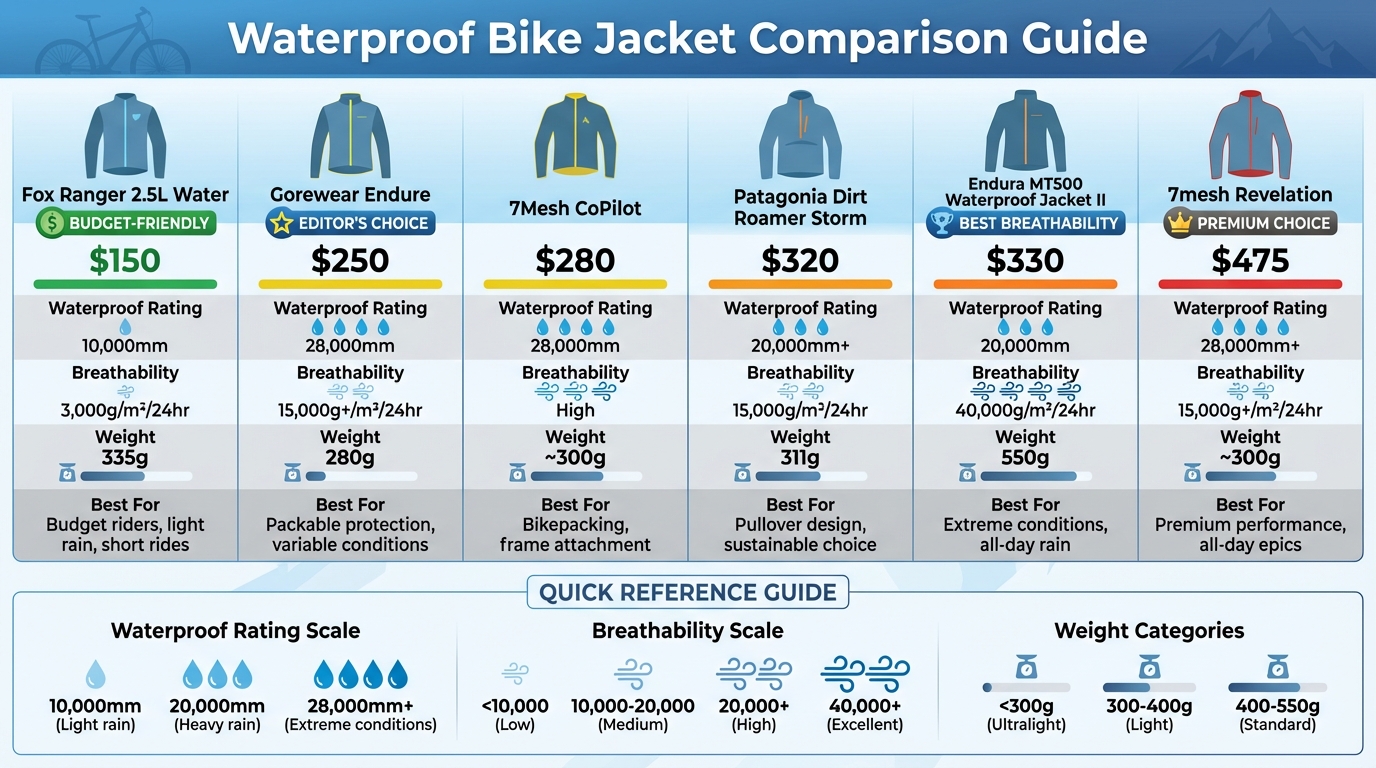
Waterproof Bike Jacket Comparison: Ratings, Features, and Prices
Jacket Comparison Table
Choosing the right waterproof jacket means considering factors like protection, breathability, weight, and price. Below is a handy comparison of six jackets, summarizing their key features to help you find the best match for your riding needs and budget.
| Jacket Model | Price | Waterproof Rating | Breathability (MVTR) | Weight | Best Use |
|---|---|---|---|---|---|
| Fox Ranger 2.5L Water | $150 | 10,000mm | 3,000g/m²/24hr | 335g | Budget-conscious riders, light rain, short rides |
| Gorewear Endure | $250 | 28,000mm | 15,000g+/m²/24hr | 280g | Packable protection, ideal for variable conditions |
| 7Mesh CoPilot | $280 | 28,000mm | High | ~300g | Bikepacking, frame attachment, versatility |
| Patagonia Dirt Roamer Storm | $320 | 20,000mm+ | 15,000g/m²/24hr | 311g | Pullover design, sustainable choice, hip pack users |
| Endura MT500 Waterproof Jacket II | $330 | 20,000mm | 40,000g/m²/24hr | 550g | Extreme conditions, all-day rain, e-bike riders |
| 7mesh Revelation | $475 | 28,000mm+ | 15,000g+/m²/24hr | ~300g | Premium performance, all-day epics, best fit |
The Fox Ranger 2.5L Water, priced at $150, is the most affordable option on this list. It’s great for riders on a budget or those who only venture out in light rain. However, its breathability rating of 3,000g MVTR may make it less comfortable during intense rides.
For a well-rounded option, the Gorewear Endure stands out. Weighing just 280g, it’s highly packable and earned top marks from MBR for its excellent weatherproofing abilities. It’s perfect for riders dealing with unpredictable conditions.
If you’re up against relentless rain, the Endura MT500 Waterproof Jacket II is a solid choice. With a breathability rating of 40,000g/m²/24hr and a heavier build at 550g, it’s designed for long, torrential rides and demanding environments.
The Patagonia Dirt Roamer Storm offers a pullover design that reduces the risk of leaks from the front zipper. Meanwhile, the 7mesh Revelation is a premium option, featuring advanced materials and design for riders tackling all-day adventures. Regardless of your choice, proper care and maintenance will help your jacket deliver peak performance for years to come.
Conclusion
When choosing waterproof outerwear, it’s all about finding the right balance between material performance, functional features, and a proper fit.
For reliable protection, opt for a waterproof rating of at least 10,000mm (or 20,000mm+ for tougher conditions) and a breathability rating between 10,000–20,000 g/m²/24hr to help manage sweat during high-effort rides.
"The key challenge in creating the perfect waterproof is balancing two opposing forces: keeping rain out while letting sweat escape." – Sigma Sports
Make sure the seams are fully taped or welded, and don’t forget to maintain the DWR coating – this keeps water out while preserving the jacket’s breathability. Look for cycling-specific details like a dropped tail to shield your back, long sleeves that stay in place when reaching for handlebars, and ventilation options like pit zips for manual temperature control. These features not only improve performance but also add comfort, even in the toughest conditions.
Expect to spend between $150 and $475 for a quality waterproof jacket. While the upfront cost might seem steep, investing in a well-made jacket ensures you stay dry and comfortable for countless rides, making it a smart choice for regular cyclists.
FAQs
Why is the Hydrostatic Head rating important when choosing a waterproof biking jacket?
The Hydrostatic Head rating measures how much water pressure a jacket’s fabric can endure before it starts to let water through. This rating, expressed in millimeters, is a key indicator of how waterproof a jacket is – the higher the number, the better it can protect you from rain.
If you’re into mountain biking, aim for a jacket with a Hydrostatic Head rating of at least 10,000 mm. This level of waterproofing is essential for tackling wet, muddy trails while keeping you dry and comfortable, so you can stay focused on your ride regardless of the weather.
How can I maintain the water-repellent coating on my biking jacket?
To keep your waterproof jacket working like new, it’s important to clean and re-treat the Durable Water Repellent (DWR) coating on a regular basis. Start by washing the jacket using a specialized technical fabric cleaner – steer clear of regular detergent, as it can harm the coating. Wash with warm water (around 105°F) on a gentle cycle, and skip the fabric softener entirely. Make sure to rinse thoroughly to get rid of any leftover soap.
After washing, apply a DWR re-treatment product while the jacket is still damp. Spray or coat the outer fabric lightly, following the instructions provided with the product. To activate the treatment, toss the jacket in the dryer on a low-heat setting for 20–30 minutes. If the care label permits, you can also use a medium-heat iron for activation. Store your jacket properly to avoid unnecessary wear, and reapply the DWR treatment whenever you notice water no longer beads up on the surface. Taking these steps will ensure your jacket keeps you dry and ready for all your adventures!
What should I look for in a waterproof jacket to stay cool while biking?
When picking a waterproof jacket for biking, it’s important to find one that keeps rain out while letting you stay cool and comfortable. Jackets made with breathable waterproof fabrics, like Gore-Tex®, are a solid choice – they help sweat escape while keeping you dry. Features like zippered vents, typically located under the arms or along the sides, can boost airflow during those tough, sweaty rides. You might also want to consider jackets with mesh panels or laser-cut perforations for added ventilation without sacrificing water resistance. And don’t overlook adjustable cuffs and hems, which give you control over airflow and warmth, making wet and demanding trails a lot more manageable.