Breathable protective layers are essential for outdoor activities like mountain biking, where managing sweat, regulating temperature, and staying protected from weather and debris are key. These systems typically include a base layer for moisture wicking, a mid-layer for insulation, and an outer shell for weather protection. Modern fabrics like Gore-Tex and Polartec NeoShell allow sweat vapor to escape while blocking wind and rain, ensuring comfort and safety during intense activities.
Key takeaways:
- Moisture Management: Base layers wick sweat; materials like merino wool and synthetics handle moisture differently.
- Temperature Regulation: Mid-layers trap warmth, while outer shells release excess heat and block wind.
- Weather Protection: Outer layers use advanced membranes to repel water and shield against debris.
- Material Choices: Options include Gore-Tex for waterproofing, merino wool for odor resistance, and synthetics for durability.
- Care Tips: Regular washing with specialized cleaners and reactivating water repellency extend gear life.
Choosing the right fit, ventilation features, and weight ensures your gear performs well on the trail. Proper maintenance, like cleaning and storage, keeps your layers functional for years.
What To Wear Mountain Biking | How To Ride In Comfort Year-Round
Benefits of Breathable Protective Layers
These features are designed to keep you comfortable and safe on every ride.
Moisture Management
Breathable layers are all about keeping sweat under control. Base layers work by wicking moisture – essentially pulling sweat away from your skin and moving it to the fabric’s outer surface. Different materials handle this process in unique ways. Synthetic fabrics like polyester and nylon are hydrophobic, meaning they repel water and dry quickly. On the other hand, merino wool can absorb moisture into its core – up to 35% of its weight – before it starts to feel damp. Mid-layers often use materials like Polartec Alpha, which feature open-structured insulation to further enhance moisture transport, especially during intense climbs.
Temperature Regulation
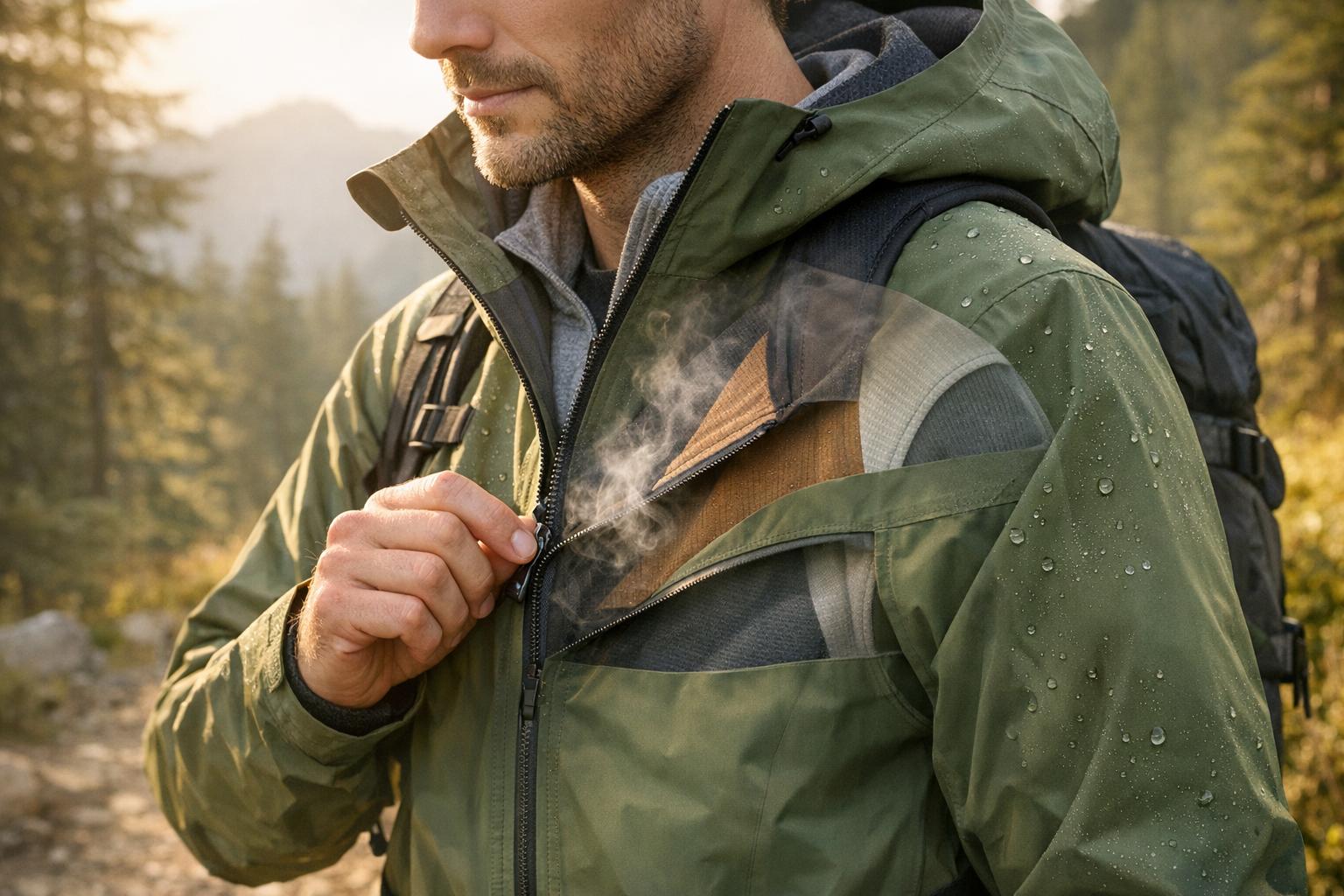
Mountain biking can take you through extreme temperature changes – intense heat on climbs and sudden chills during descents or breaks. Breathable layers help maintain a steady microclimate by trapping warm air in mid-layers while allowing excess heat and moisture to escape through base layers and outer shells. This setup prevents the uncomfortable and potentially dangerous cooling effect caused by sweat-soaked clothing. Active insulation materials, such as those with air-permeable face fabrics, allow you to stay comfortable during high-effort activities without overheating. Lightweight windshells, for instance, block about 80–90% of wind, while adjustable vents let you release excess heat when needed. Together, these features create a balance between temperature control and weather protection, ensuring comfort across changing conditions.
Protection from Weather and Trail Hazards
Outer layers are your shield against wind, rain, and trail debris, all while staying breathable. These layers often use membranes with microscopic pores that block water from the outside but still allow sweat vapor to escape. Mountain bike–specific designs frequently include longer sleeves and a dropped tail for better coverage when you’re leaning forward on the bike. Protective gear also incorporates advanced materials like D3O or ReaFlex in knee and elbow pads. These materials stay flexible as you pedal but harden instantly upon impact, offering protection from rocks and branches. This modern approach replaces older, bulkier designs, giving you better mobility and comfort for long rides.
Common Materials in Breathable Protective Layers
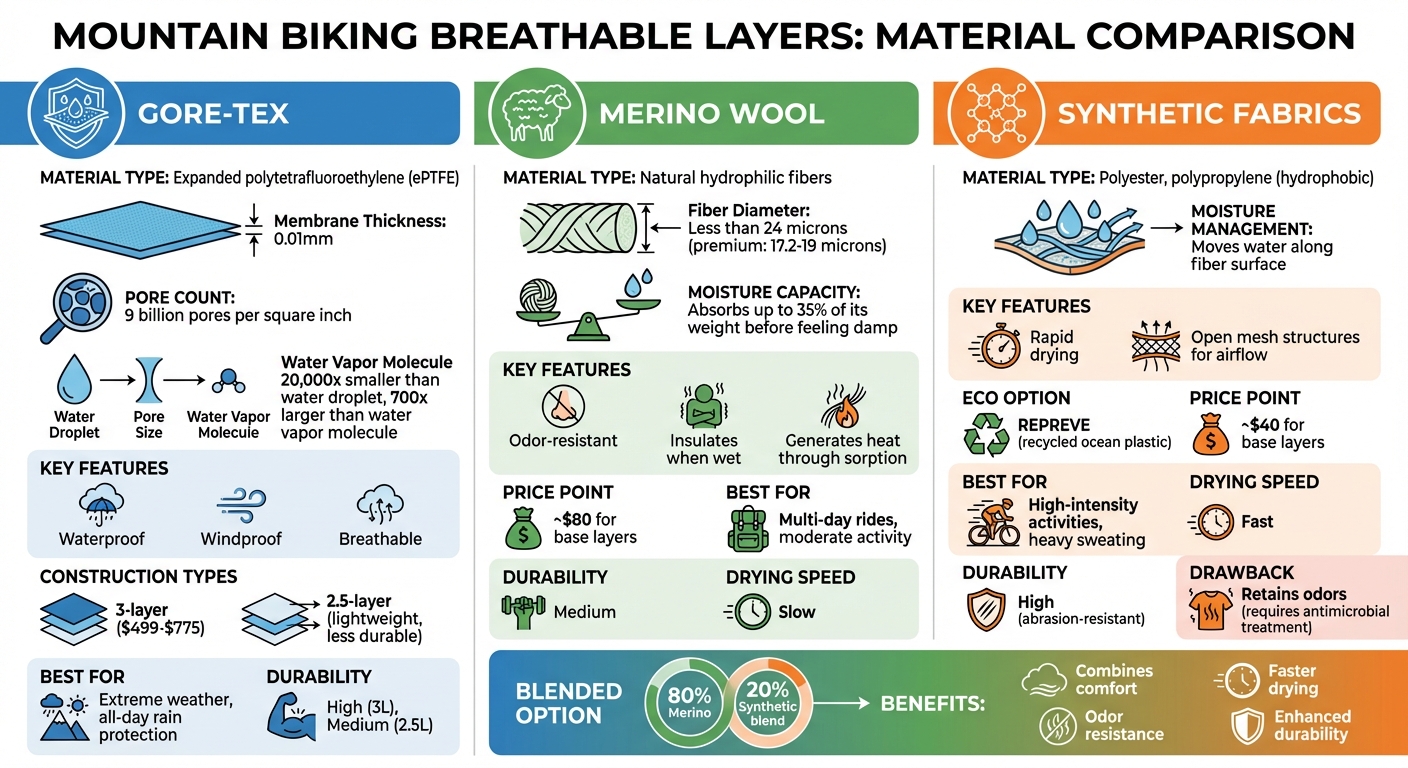
Comparison of Breathable Protective Layer Materials for Mountain Biking
The fabric you choose can make or break the performance of your protective layers on the trail. Each material brings unique strengths in handling moisture, weather resistance, and durability.
Gore-Tex and Waterproof Fabrics

Gore-Tex relies on expanded polytetrafluoroethylene (ePTFE), a synthetic polymer stretched into a microporous structure. This design blocks rain while allowing sweat to escape. The membrane is incredibly thin – just 0.01mm – and is bonded to outer fabrics and inner linings to create a functional garment. Each square inch contains about 9 billion pores, which are 20,000 times smaller than a water droplet but 700 times larger than a water vapor molecule. This balance makes Gore-Tex waterproof, windproof, and breathable all at once.
Gore-Tex comes in different constructions to meet specific needs. 3-layer (3L) shells, for example, sandwich the membrane between an outer fabric and a backer, offering durability and breathability for backcountry adventures. These are typically priced between $499 and $775. On the other hand, 2.5-layer designs use a printed coating instead of a full liner, creating lightweight emergency shells that are easy to pack but less durable. The effectiveness of the membrane depends heavily on the outer fabric’s DWR (Durable Water Repellent) coating. If the coating fails and the fabric becomes saturated, sweat vapor can’t escape, even though the membrane itself remains waterproof.
"Internally, we call this ePTFE membrane ‘the engine,’ as it does the most to make the shell waterproof and breathable." – Mark McKinnie, Gore’s Product Specialist
Merino Wool
Merino wool takes a natural approach to moisture management. Unlike synthetics that repel water, merino fibers are hydrophilic, meaning they absorb moisture into the fiber core. It can hold up to 35% of its weight in moisture before feeling damp, making it ideal for moderate activity. To qualify as merino, fibers must be less than 24 microns in diameter, with premium options ranging from 17.2 to 19 microns for added softness.
This material shines during multi-day rides. Merino resists bacteria growth naturally, trapping odors within its fibers and releasing them only during washing. This means you can wear the same base layer for several days without dealing with unpleasant smells. Even when wet, merino retains its insulating properties and generates a small amount of heat through a chemical process called sorption. However, it dries more slowly and tends to be more expensive – quality merino base layers often cost around $80 compared to $40 for synthetics.
Synthetic Fabrics
Synthetic fabrics like polyester and polypropylene take a different approach to moisture management. Instead of absorbing water, they move it along the fiber surface, allowing for rapid drying. This makes them perfect for high-intensity activities where heavy sweating is inevitable. Many synthetic garments are knitted into open mesh structures to maximize airflow, especially during uphill climbs.
Durability is another advantage. Synthetic fabrics resist abrasion well and maintain their shape after repeated washes. They’re also more budget-friendly and can incorporate recycled materials like REPREVE, which is made from ocean-bound plastic bottles. However, they do have a downside – synthetics tend to retain odors unless treated with antimicrobial solutions. For a balance of benefits, consider blended fabrics that combine 80% merino with 20% synthetic. These blends offer a mix of comfort, odor resistance, faster drying, and enhanced durability.
Each of these materials brings something unique to the table, making it easier to tailor your gear to the specific demands of your trail adventures.
sbb-itb-9d75ae1
How to Choose the Right Breathable Protective Layer
MTB jackets are designed with features tailored to the demands of mountain biking. These include longer sleeves for better reach, a dropped tail to cover your lower back when leaning forward, and a shorter front hem to prevent bunching. Unlike the snug fit of road cycling gear, MTB layers are looser, allowing for technical movements and space for mid-layers or body armor. Picking the right jacket enhances moisture control, temperature regulation, and protection. Let’s break down key aspects like fit, ventilation, and weight.
Fit and Comfort
The right fit depends on what you’ll wear underneath and your riding style. MTB jackets generally come in three fit options:
- Trim fit: Ideal for one or two thin layers.
- Regular fit: Accommodates multiple warm layers.
- Full fit: Designed for bulkier clothing or body armor.
When trying on a jacket, wear the mid-layers or armor you plan to use to ensure it doesn’t restrict movement. Also, check that the sleeves cover your wrists fully, even when your arms are extended.
"MTB jackets’ looser design allows more freedom of movement, and it also makes them useful for off-bike activities like hiking – or post-ride beers." – James Lynch
Once the fit is sorted, focus on ventilation to maintain comfort during your ride.
Ventilation Features
Temperature control is essential for staying comfortable on the trail. Look for features like pit zips, side zippers, and mesh-lined pockets that double as vents during climbs. Two-way front zippers are another great option – they let you vent from the bottom up, cooling your core without exposing you to wind or rain. Adjustable cuffs and drawcord hems also help balance airflow and block drafts.
For hoods, go for helmet-compatible designs with multiple adjustment points. These ensure the hood stays in place while you ride and doesn’t obstruct your peripheral vision. High-performance MTB jackets often boast breathability ratings up to 40,000 g/m²/day and waterproof ratings of 20,000 mm.
Next, consider how weight and packability fit into your riding needs.
Weight and Packability
The weight and packability of your jacket determine whether it’s best for quick weather changes or all-day protection. Lightweight windbreakers, weighing as little as 144 g, are great for unexpected showers. On the other hand, 3-layer waterproof shells – often over 500 g – offer better durability and protection in heavy rain.
The jacket’s construction also plays a role:
- 2.5-layer shells: Use a printed pattern instead of a full liner, making them lighter and easier to pack. These are perfect for stowing in a chest pocket or hip pack.
- 3-layer fabrics: Heavier and bulkier, but they’re more durable and less likely to feel clammy during long rides.
If you need emergency coverage, opt for a jacket that can pack into your jersey. For prolonged downpours, a heavier 3-layer jacket is the way to go, as it resists wetting out.
| Jacket Type | Typical Weight | Best For | Price Range |
|---|---|---|---|
| Emergency Windbreaker | 100 g – 160 g | Light mist, surprise showers | $125 – $130 |
| 2.5-Layer Shell | 230 g – 330 g | Variable conditions, commuting | $200 – $280 |
| 3-Layer Hardshell | 450 g – 550 g | All-day rain, extreme weather | $330 – $400 |
Maintenance and Care Tips
Your breathable protective layer works overtime on the trail, and keeping it clean and maintained ensures it performs at its peak. Dirt, oils, sweat, and sunscreen can clog the fabric’s pores and degrade its DWR (durable water repellent) coating, cutting breathability by as much as 70%. Regular care not only keeps your gear functioning but also ensures it provides the protection and breathability you need on every ride.
Washing Instructions
Before tossing your jacket in the wash, take a few prep steps: close all zippers (including pockets and pit zips), secure Velcro tabs, and loosen any drawcords. This helps prevent snags and damage during the wash. Use a specialized liquid cleaner like Nikwax Tech Wash or Grangers instead of regular detergents, which can leave behind residues that attract water. As Chris Eisenmann, GORE-TEX Brand Garment Technology Developer, puts it:
"It’s not just that you can wash your garment, you should wash your garment, and you should wash it regularly".
Wash your jacket on a delicate cycle in warm water (around 105°F) using the specialized cleaner. Add an extra rinse cycle to ensure no cleaner residue is left behind. After washing, reactivate the DWR coating by tumble drying the garment on low-to-medium heat for about 20 minutes. If a dryer isn’t available, use a low-setting iron with a protective towel. For heavy use, wash your jacket every 5–8 days; for moderate use, aim for every 10–20 days.
Restoring Water Resistance
To check if the DWR coating is still effective, sprinkle some water on the fabric. If the water doesn’t bead up, it’s time for heat reactivation or a re-proofing treatment. Often, just washing and tumble drying the jacket will restore its water-repellent properties. If that doesn’t work, apply a spray-on treatment while the garment is still damp. For jackets with wicking liners, stick to spray treatments to avoid interfering with moisture management. Be sure to apply the treatment to the exterior for the best results.
Once you’ve restored the water resistance, proper storage will help keep your gear in top shape for the long haul.
Storage Guidelines
Before storing your jacket for extended periods, make sure it’s clean and completely dry. Residual sweat, dirt, or moisture can attract pests, cause mildew, or lead to delamination. Hang technical shells and insulated jackets in a cool, dry, and dark closet with consistent temperatures. Avoid storing gear in garages or attics where temperature fluctuations are common. Insulated layers should never be compressed in stuff sacks for long-term storage, as this can damage their loft. Instead, use breathable garment bags or non-airtight plastic bins, and elevate them off the floor. Adding silica gel packets can help absorb any lingering moisture. Once a year, take your gear out, let it air for a few hours, and check for any signs of mold or pests.
With proper care and storage, your gear will be ready to keep you protected and comfortable, no matter where your adventures take you.
Conclusion
Protective outerwear has come a long way, shifting from heavy, cumbersome designs to lightweight, breathable options that still provide excellent safety features. A well-designed jacket not only wicks away sweat but also shields against wind and rain, helping to prevent dangerous heat loss during rides. Modern fabrics like Gore-Tex Paclite Plus and Polartec NeoShell deliver impressive breathability levels, exceeding 10,000g/m²/24h, even under intense activity.
This level of performance isn’t just about comfort – it offers practical advantages. For instance, cutting gear weight by 20% can reduce fatigue significantly, increasing the likelihood that riders will actually wear their protective layers, with compliance rates improving by 30–40%. Whether you’re navigating technical cross-country trails or tackling fast-paced downhill runs, choosing the right layer for your riding style and taking care of it properly ensures it will perform when it matters most.
While rain gear may not always be a daily necessity, experts agree that its effectiveness is unmatched when the weather takes a turn. Opt for a breathable, well-fitting, and easily packable layer – it’ll make all the difference on those long, unpredictable trail adventures.
For detailed gear suggestions and biking advice, check out Intermountain Bikes.