Worried about your bike getting stolen or damaged on your hitch rack? Here’s the reality: A bike is stolen every 30 seconds in the U.S., and most insurance policies won’t fully cover your loss. Hitch racks also come with risks like rack wobbling, scratched frames, or even bikes falling off at high speeds.
Here’s what you need to know:
- Weak locks: Built-in cable locks are easy targets for thieves armed with bolt cutters or grinders.
- Loose racks: Poor hitch connections lead to wobbling, wear, and even theft of the entire rack.
- Unsecured parts: Quick-release wheels, seatposts, and accessories like lights are easy to steal.
- Weather damage: Rust and wear weaken locks and hardware over time.
- Unsafe parking: Leaving your rack in high-risk areas increases theft chances.
Fix it now: Upgrade to heavy-duty U-locks and locking hitch pins, secure individual bike parts, inspect and tighten your rack regularly, and park in well-lit, high-traffic areas. Adding a GPS tracker or motion alarm can also help.
Protect your gear and your peace of mind with these straightforward tips.
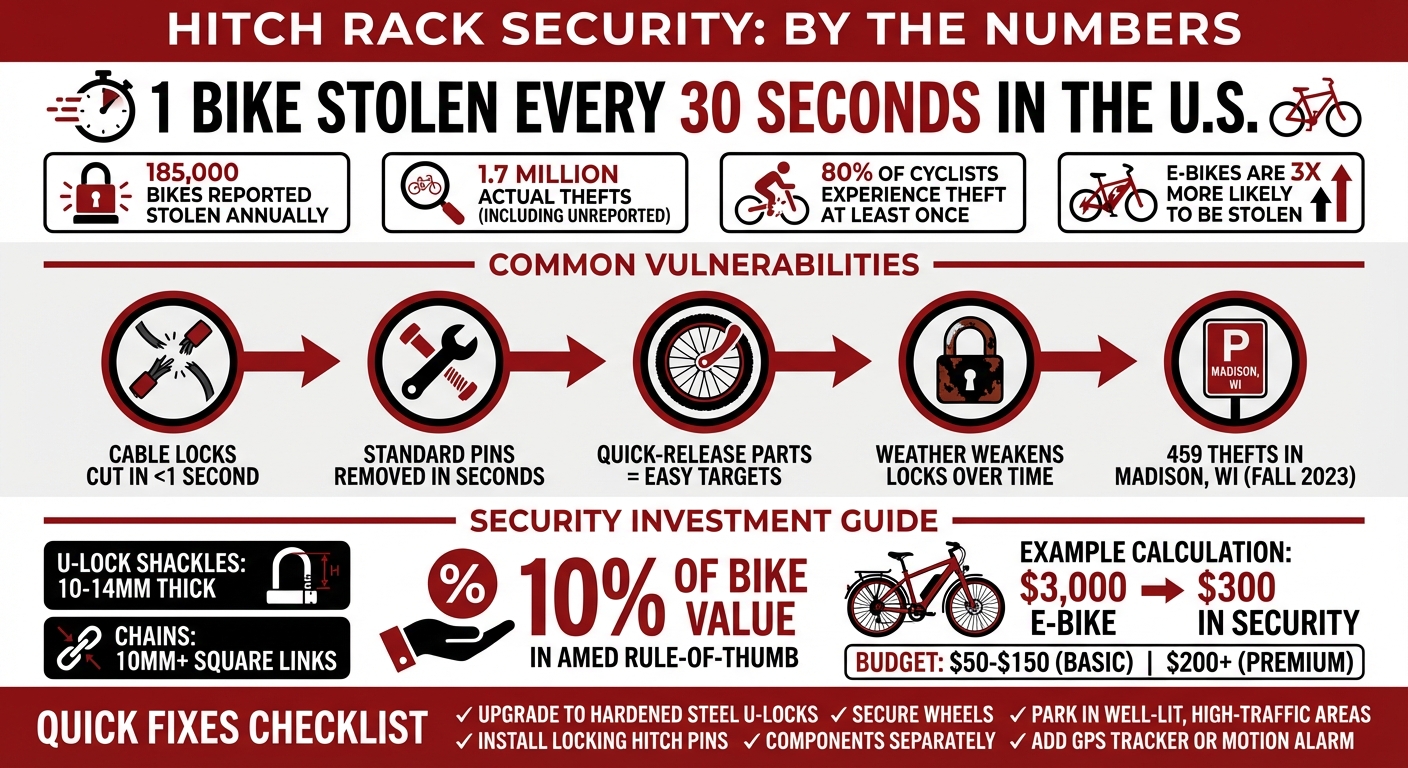
Hitch Rack Security Statistics and Protection Checklist
How to Secure Bikes on a Bike Rack Over Night
sbb-itb-9d75ae1
Common Security Problems with Hitch Racks
Understanding the weak spots in your hitch rack can help you protect your bike from theft. Below, we break down common vulnerabilities and how thieves exploit them.
Poor Bike Locking Systems
Integrated cable locks might seem convenient, but they offer minimal protection. These thin cables can be sliced with small bolt cutters in less than a second. Even some high-end racks include parts that can be dislodged with a hammer. As Remy Rossi from Sundays Insurance cautions:
Cable locks may seem secure enough to protect your bicycle, but they can be easily cut in a mere second.
Another issue is lock placement. Locks positioned low to the ground give thieves the advantage of using the pavement for leverage when cutting. Additionally, standard hex bolts can be removed almost instantly with a basic 4mm or 5mm hex key.
And don’t forget – securing your hitch is just as important as securing your bike.
Loose Hitch Connections
Driving on rough roads can cause hitch components to loosen over time. This not only makes the rack wobbly but also creates opportunities for theft. Travel writer J M explains:
A loose connection is the most common culprit behind bike rack movement.
Using the wrong pin size only makes things worse. For instance, a 1/2-inch pin in a 5/8-inch Class 3 receiver creates extra movement, leading to metal fatigue. Even worse, a thief can remove a standard pin with a spring clip in seconds, stealing the entire rack – and all the bikes on it – faster than cutting individual locks.
Missing Locks for Bike Components
Quick-release wheels and seat posts are easy targets for thieves since they require no tools to remove. Rear wheels, which include pricey gear cassettes, are especially vulnerable. Remy Rossi emphasizes:
Seeing a bike locked up and missing a wheel is a truly sad sight that’s almost worse than stealing the entire bike – do yourself a favor and secure those wheels!.
Accessories like lights, GPS units, and cycling computers are often overlooked when locking up, making them easy to grab. In 2023, the Madison Police Department reported 459 bike thefts by the fall, with many involving stolen components.
Damaged Locks and Hardware
Exposure to moisture and debris can lead to rust and wear, weakening both the receiver and locking mechanisms. Over time, frequent use erodes protective coatings, causing metal-on-metal friction that loosens the connection. Rust on locks makes them easier to break or bypass, turning once-secure setups into easy targets.
Parking in Unsafe Areas
Leaving your vehicle in unsupervised or high-crime areas increases the risk of theft. Displaying high-end accessories or stickers that suggest expensive bikes can also attract unwanted attention.
How to Fix Hitch Rack Security Problems
Now that you know where thieves often strike, here’s how to shore up those vulnerabilities and keep your setup secure. These strategies target the weak spots criminals commonly exploit.
Switch to Heavy-Duty Locks
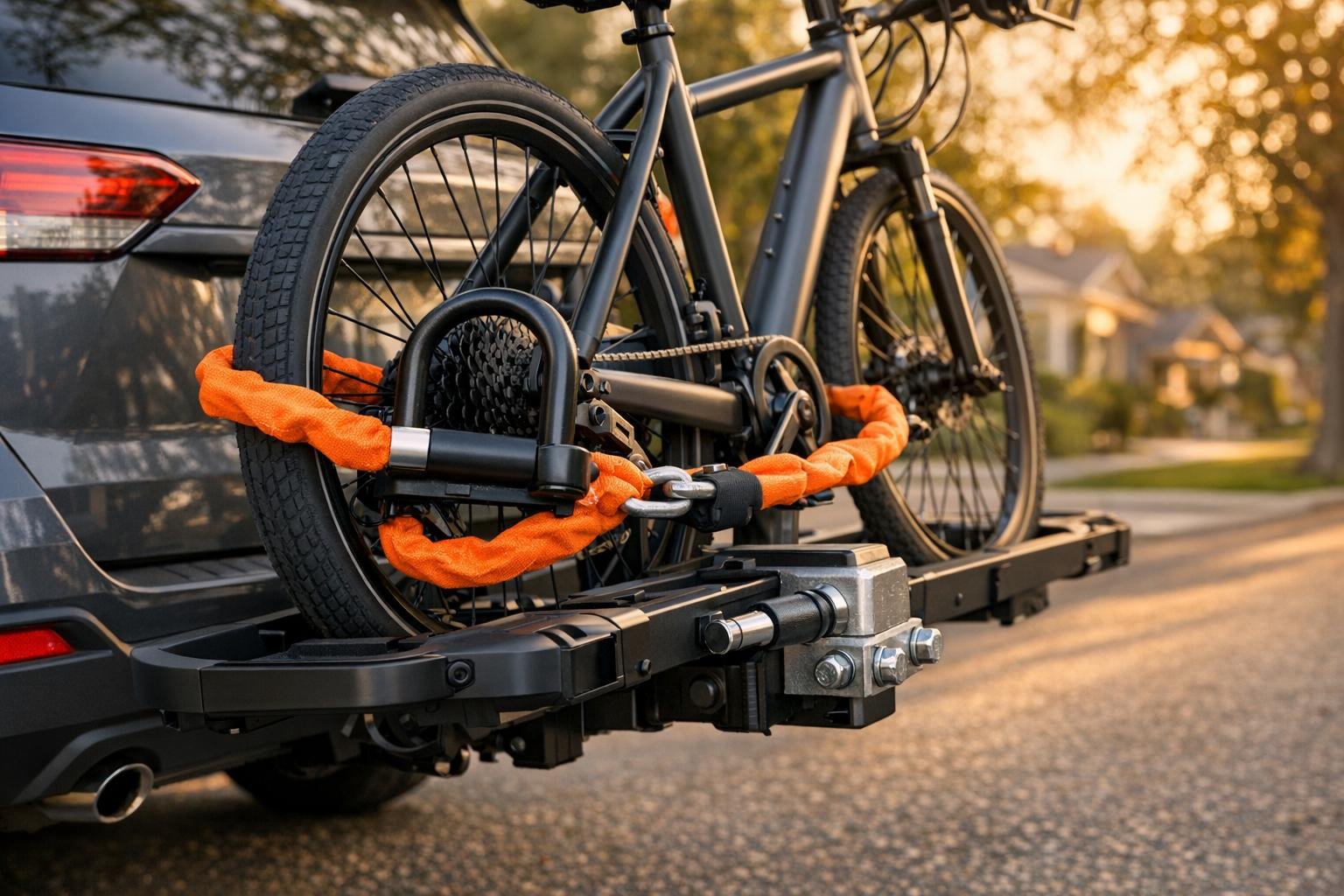
If you’re relying on flimsy cable locks, it’s time for an upgrade. Hardened steel U-locks with dual-locking mechanisms are a much stronger deterrent. These locks require two separate cuts with an angle grinder, which slows down thieves significantly. Aim for U-lock shackles that are 10 mm to 14 mm thick to resist bolt cutters, and for chains, choose square links at least 10 mm thick.
As security experts Ross Robinson and Rylee Sweeney explain:
Every bike lock can be cut. It’s only a matter of what tools a thief has and how much time they have.
For added protection, replace standard hitch pins with locking versions made from forged steel. Receiver locks with 4-pin cylinders are another smart choice, as they’re harder to pick. Expect to spend $50 to $150 for reliable locks, while premium options may exceed $200. A good rule of thumb is to allocate about 10% of your bike’s value to security. For example, if your e-bike costs $3,000, plan to invest around $300 in locks – especially since e-bikes are three times more likely to be stolen.
Urban cycling expert Daniel Kim suggests using multiple lock types for better security:
Two different locks destroy their business model: Angle grinder guy can’t defeat hydraulic jacks.
Pair a U-lock for your bike frame with a heavy chain for the wheels. Once your locks are in place, the next step is to ensure your rack is properly installed.
Install and Maintain Your Hitch Properly
A loose or wobbly rack isn’t just irritating – it’s a security issue. Before installation, clean the vehicle’s receiver and the rack’s mounting arm to remove any rust or debris. This ensures a tight fit. Align the mounting holes, tighten the anti-wobble bolt with a wrench, and test the rack’s stability by applying weight. If it shifts, tighten it immediately. Replace standard hitch pins with locking hitch pins as soon as possible.
Road vibrations can loosen bolts over time, so check all hardware every few weeks. To keep things running smoothly, apply a graphite-based lubricant to moving parts and lock cores. If the rack still wobbles after tightening, consider using an aftermarket anti-rattle device. Here’s a tip from Proven Industries: if your lock won’t seat because of tension, back your vehicle up slightly, then pull forward about half an inch to relieve the pressure. And if you’re not using the rack for a while, remove it to protect it from weather damage.
Add Extra Locks for Components
Securing just the bike frame isn’t enough. Quick-release wheels and seatposts are easy targets. Lock the rear wheel and frame together using a U-lock, and secure the front wheel with a secondary cable or chain. For seatposts, you can run a cable through the rails or replace quick-release clamps with permanent bolts or lockable versions.
E-bike batteries are especially tempting for thieves. Lock them separately or remove them entirely, along with accessories like lights or GPS units. When using U-locks for components, choose sizes that fit snugly with minimal clearance to prevent pry bars from being inserted. Position the locks high on the rack to make them harder to access with tools.
Maintain Your Locks and Hardware Regularly
Locks and hardware can wear down over time, especially with exposure to the elements. Inspect all locking mechanisms monthly for signs of damage. Use a dry, Teflon-based or graphite lubricant on lock cylinders and keyholes, particularly if you drive in wet or salty conditions. Avoid oil-based lubricants, as they attract dirt. To minimize moisture and debris entering the locks, face keyholes downward whenever possible.
Park in Safer Locations
Where you park can be just as important as the locks you use. For overnight or long-term parking, store your bikes indoors or in a secured garage. In areas with high theft rates, even the best locks might only delay a determined thief. For instance, Madison, Wisconsin reported 459 stolen bikes by fall 2023. Combining high-quality locks with thoughtful parking choices is your best defense against theft.
Additional Ways to Improve Hitch Rack Security
Beyond using locks and ensuring proper installation, adding extra precautions can make your hitch rack significantly more secure. These measures create multiple layers of protection, making it harder for thieves to succeed.
Use Hitch Rack Covers
A cover can keep your bikes hidden from view, making it harder for thieves to assess their value. This "out of sight, out of mind" approach is particularly useful at rest stops or gas stations, where distracted owners are often targeted. Plus, covers protect your bikes from dirt, grime, and bad weather during long trips. For added security, pair the cover with sleeved chains made of hardened steel (10 mm or thicker) routed through safety chain loops. This setup makes it more difficult for thieves to use tools effectively.
Layer Multiple Security Devices
Combining different types of security devices increases the effort and tools required for a thief to succeed. As urban cycling security expert Daniel Kim explains:
One lock says ‘secured.’ Two locks scream ‘find an easier target.’
If one lock is compromised, additional devices act as backups. You can even add a hidden GPS tracker, which can help recover your bike if physical barriers are bypassed. Motion-activated alarms and trackers provide an extra layer of protection, going beyond static locks. With an estimated 185,000 bicycles reported stolen annually in the U.S. – and the real number closer to 1.7 million, including unreported thefts – layered security is more important than ever. In fact, one bike is stolen every 30 seconds. These additional defenses, combined with regular checks, make a big difference.
Check Your Equipment During Stops
Every time you stop, take a moment to inspect your setup. Check the rack connection, ensure locks are intact, and confirm that straps or chains remain tight. CURT offers this practical advice:
Making stops along the way is also a perfect opportunity to check your vehicle-trailer connection and any cargo you’re hauling.
When parking, choose well-lit, high-traffic areas, ideally under streetlights or near windows. Position the rack against a wall or another vehicle to limit access. Always keep your keys with you, and make sure GPS trackers and alarms have enough battery life to last the rest of your trip.
Conclusion
Securing your hitch rack isn’t just about avoiding theft – it’s about safeguarding your investment and traveling with peace of mind. With a bike being stolen every 30 seconds in the United States and 80% of cyclists experiencing theft at least once, taking extra precautions can make a huge difference.
The strategies mentioned here work together to improve security. Swapping out weak cable locks for heavy-duty ones with 10mm+ hardened steel chains can thwart quick theft attempts. Ensuring proper hitch installation with anti-rattle devices helps stabilize racks, preventing unnecessary wobbling. Regular maintenance ensures your equipment stays in top shape, and choosing well-lit, busy parking spots adds another layer of deterrence. These steps not only protect your gear but also secure the significant financial investment your equipment represents.
As Chris from USA Today Sports Media Group puts it:
"A well-secured bike rack not only protects your bikes but also provides peace of mind during your trips." – Chris, USA Today Sports Media Group
FAQs
What’s the best way to lock multiple bikes on a hitch rack?
The most effective way to safeguard multiple bikes on a hitch rack is by combining different types of locks. Use a U-lock to secure the bike frames, and pair it with a heavy-duty chain or cable lock to protect the wheels. This multi-layered method makes it harder for thieves, even those with cutting tools, to succeed. Plus, it gives you extra confidence that your bikes are well-protected.
How do I stop my hitch rack from wobbling while driving?
To keep your hitch rack steady, start by ensuring the hitch bolt is properly tightened and installed. If you notice side-to-side movement caused by a loose fit in the receiver, adding shims can help minimize the play. Additionally, secure your bikes firmly to the rack and avoid exceeding the rack’s weight limit. Routine checks of these components will help maintain stability during your drive.
What bike parts should I lock or remove to prevent theft?
To help prevent theft, make sure to lock both the bike’s frame and at least one wheel with a strong lock like a U-lock or a heavy-duty chain. Secure them to something that can’t be moved, such as a fixed object or the hitch rack. For added protection, consider removing a wheel as an extra deterrent.