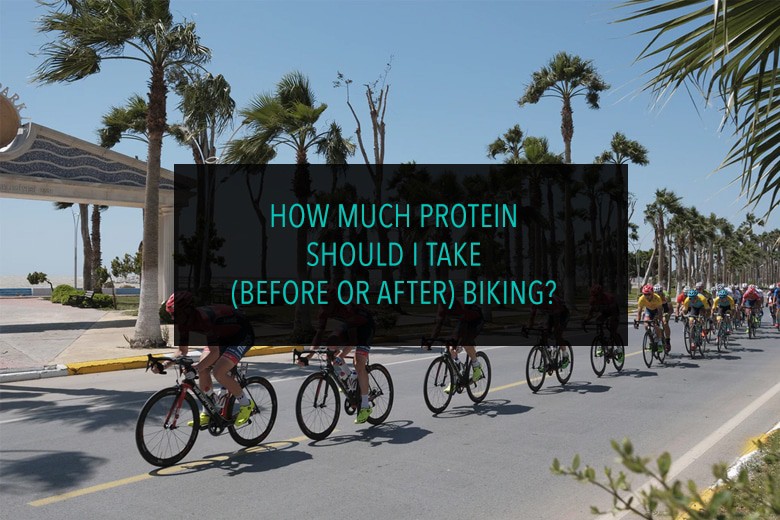
Mountain biking is a fun thing. It might seem dangerous & difficult, but, it is all about doing things the right way & with the right spirit which makes things fun & adventurous. If you are one off those people with the adrenaline rush in your veins & the hunger to take on the challenges of the twists & turns & the crests & troughs of mountain biking in the Intermountain Ranges, you should definitely do a bit of homework on the trip itinerary. The most important things needed during mountain biking are stamina, grit & technique. So, coming to the first step of the three important things, i.e., stamina, we shall cover up one of the most important part of the stamina section, i.e. help you to know on how much protein should you take before hitting the paddles.
Benefits of protein
Since we are talking about protein, it is important to know what protein is alongside a bit of additional acquaintance. Protein is one of the macronutrient essential to building muscle mass. It is commonly found in animal products but that doesn’t mean it isn’t going to be there in other sources as it is also present in other sources like nuts & legumes.
Macronutrients provide calories, or in simple words, energy. The body requires large amounts of macronutrients for its working & smooth functioning of life processes. This is the reason behind usage of the term “macro.” Every single gram of protein contains 4 calories . It might seem surprising but, protein makes up about 15 percent of a person’s body weight. Going with the chemical composition, amino acids form it up together- organic compounds made of carbon, hydrogen, nitrogen, oxygen or sulphur. Amino acids are the building blocks of proteins which in turn forms the muscle mass, as stated by the National Institutes of Health(NIH).
[amalinkspro type=”showcase” asin=”” apilink=”https://www.amazon.com/Optimum-Nutrition-Standard-Protein-Chocolate/dp/B000QSNYGI/ref=as_li_ss_tl?ac_md=0-0-cHJvdGVpbg==-ac_d_rm&cv_ct_cx=protein&keywords=protein&pd_rd_i=B000QSNYGI&pd_rd_r=a71d166e-1cc8-4644-bacb-ab7ab63de162&pd_rd_w=6lzH2&pd_rd_wg=nQA63&pf_rd_p=6d29ef56-fc35-411a-8a8e-7114f01518f7&pf_rd_r=2BXH3NFNFG5NAGSXMV46&psc=1&qid=1578790122&linkCode=sl1&tag=dragonpoh-20&linkId=c1dfd17753239fffce820b08a7ee9745&language=en_US” new-window=”true” addtocart=”false” nofollow=”true” sc-id=”4″ imgs=”%3Ca%20href%3D%22https%3A%2F%2Fwww.amazon.com%2FOptimum-Nutrition-Standard-Protein-Chocolate%2Fdp%2FB000QSNYGI%2Fref%3Das_li_ss_il%3Fac_md%3D0-0-cHJvdGVpbg%3D%3D-ac_d_rm%26cv_ct_cx%3Dprotein%26keywords%3Dprotein%26pd_rd_i%3DB000QSNYGI%26pd_rd_r%3Da71d166e-1cc8-4644-bacb-ab7ab63de162%26pd_rd_w%3D6lzH2%26pd_rd_wg%3DnQA63%26pf_rd_p%3D6d29ef56-fc35-411a-8a8e-7114f01518f7%26pf_rd_r%3D2BXH3NFNFG5NAGSXMV46%26psc%3D1%26qid%3D1578790122%26linkCode%3Dli2%26tag%3Dcewebproperti-20%26linkId%3D4cf17c061cc729d31f94b006b37ba798%26language%3Den_US%22%20target%3D%22_blank%22%3E%3Cimg%20border%3D%220%22%20src%3D%22%2F%2Fws-na.amazon-adsystem.com%2Fwidgets%2Fq%3F_encoding%3DUTF8%26ASIN%3DB000QSNYGI%26Format%3D_SL160_%26ID%3DAsinImage%26MarketPlace%3DUS%26ServiceVersion%3D20070822%26WS%3D1%26tag%3Dcewebproperti-20%26language%3Den_US%22%20%3E%3C%2Fa%3E%3Cimg%20src%3D%22https%3A%2F%2Fir-na.amazon-adsystem.com%2Fe%2Fir%3Ft%3Dcewebproperti-20%26language%3Den_US%26l%3Dli2%26o%3D1%26a%3DB000QSNYGI%22%20width%3D%221%22%20height%3D%221%22%20border%3D%220%22%20alt%3D%22%22%20style%3D%22border%3Anone%20!important%3B%20margin%3A0px%20!important%3B%22%20%2F%3E” link-imgs=”false” specs=”GOLD STANDARD 100% WHEY BLEND~~~OVER 5G OF BCAAS ~~~3-4G CARBS, 1-3G SUGAR, AND 1-1.5G FAT, GLUTEN FREE~~~INSTANTIZED~~~BANNED SUBSTANCE TESTED” btn-color=”#ff9900″ btn-text=”” alignment=”aligncenter” hide-prime=”0″ hide-image=”0″ hide-reviews=”0″ hide-price=”0″ hide-button=”0″ width=”750″]Optimum Nutrition Gold Standard 100% Whey Protein Powder[/amalinkspro]
Most importantly, protein wasn’t initially on the list of good-foods until recently before which its reputation was a bit smeared with the pockmarks. Later it was found that protein is essentially important. Compared to previous times when protein was considered below carbohydrates & was regarded as an energy source that could result in the addition of unnecessary bulk for an individual. The tables have turned now as it has become nutritionally fashionable to raise protein intake in order to lower carbohydrates & thus lose weight.
The benefits of protein are many & we have stated its benefits here:
- Reduction In Appetite & Hunger Levels
The three macronutrients namely fats, carbs & protein affect the body differently. Studies have pointed that protein helps us feel more full by reducing the level of the hunger hormone ghrelin whilst boosting the levels of peptide YY – a hormone that induces the “full” feeling.
It helps greatly in weight loss or belly fat reduction. All it takes is replacing some carbs & fats with protein. Example? Reduce potato or rice serving & adding some more meat or fish to the diet.
- Muscle Mass & Strength
As mentioned earlier, protein is the building block of muscles. Therefore, eating protein properly aids in maintenance of muscle mass & promotes muscle growth. For those who train like lifting weights or do muscle gain activities, providing your body with enough protein is important.
- Reduces Cravings & Desire for Late-Night Snacking
An interesting thing between craving & hunger is that they are both different. While craving is the body’s need for energy, food craving is the need of the brain. By increasing the protein intake, cravings can be controlled. A study in overweight men showed that increasing protein in the diet to certain levels reduced cravings by up to 60% & the desire to snack at night by half.
- Boosts Metabolism & Increases Fat Burning
Our body uses energy or calories to digest & use nutrients in food. This is called Thermic Effect of Food (TEF). Protein has a much higher thermic effect than other macronutrients at an astounding 20–35% compared to 5–15%. Higher TEF means better metabolism & increased fat burning.
- Lowers Blood Pressure
High blood pressure is a major cause of many problems. Interestingly, higher protein intake lowers blood pressure.
- No Harm To Healthy Kidneys
It is a fact that restricting protein intake help people with pre-existing kidney diseases. However, there’s no problem to people with healthy kidneys.
- Repairing Body Post Injury
Since protein forms the foundation for tissues & organs in our body, it helps the body to heal & repair after an injury. Countable studies have stated that more protein intake after injury helps speed up recovery.
- Keeping Aging away from Fitness
As we age, our muscles weaken & this weakness grows with age. Serious cases may lead to age-related sarcopenia in which frailty, bone fractures & reduced quality of life is seen among older adults. Increased protein in diet reduces age-related muscle deterioration & can help prevent sarcopenia.
Why protein is important in biking?
What differentiates protein from its other macronutrient counterparts is the body’s inability to store it. Thus, there is no bench strength for back-up. From this, one might think that the best solution is to eat protein all day long. But, nutritionists strictly oppose it. As weird as it gets, protein has recently acquired a good reputation for weight maintenance & muscle building. But, amidst the commotion on the role of protein in weight gain & loss, the most important function of it has been lost, i.e., its role in the process of muscle protein synthesis as described by scientists who looked into the link between the processes & relation of nutrition & exercise.– the “driving force behind adaptive responses to exercise.”
When it comes to athletes & bikers, a bit of a lessening down on protein intake leads the body to borrow proteins from the muscles to fulfill its needs of the moment. “Getting enough protein protects your lean mass,” says Roberta Anding, RD, a sports dietitian & spokesperson for the American Dietetic Association. “And that’s where the power in your ride comes from.”
Protein is a boon for all mountain-bikers as it helps them to run the battery efficiently on power-saving mode. In other words, protein slows digestion & lowers a food’s rating on the glycemic index. This prevents high-energy carbs from raising the blood sugar graphs high followed by a crash. This is especially valuable during longer duration of biking where energy conservation is of utmost importance. If one wants to avoid bonking, protein intake can help as it will reduce the rate of digestion. Also, during carb deficiency, the body directs protein to the liver where it is processed into backup carbs.
The charm is still not over. The amino acids that constitute protein act like recovery agents that refresh the body for the next round. After an intensive ride with load on the muscles, protein rebuilds tissues & readies them for the next episode. Besides, it charges up the immune system by aiding in the manufacture of white blood cells.
How much to be included in your diet before & after biking?
Coming to the amount of protein to be included in the diet before & after cycling, as experts opine, cyclists should consume daily a dose between 0.5 to 0.6 grams of protein per pound of body weight. This is about 85 grams for a 170-pound rider. Eating 15 to 25 grams of this share during recovery, i.e. within an hour of finishing a ride. Experts also advice to skip animal proteins which are loaded with saturated fats like full-fat cheeses & burgers & go instead with reduced-fat dairy or lean meats.
Below is the breakup for protein intake based on breakfast, lunch & dinner:
- After an early morning ride
2 eggs on toast with a large skinny latte
Cereal with 250mL milk with 250g yoghurt
- Lunchtime
1 sandwich with 2 slices of ham or chicken (& salad) with 600mL flavoured milk
2 curried egg sandwiches (1 egg in each) with a large latte
1 small can tuna or 100g chicken with salad & 300g yoghurt
- Dinner
200g meat, fish or chicken with any chosen combination of starch (rice, pasta, etc.) & vegetables / salad
150g tofu with 1 egg & rice/noodles & vegetables, with 250g yoghurt
1 cup red kidney beans or lentils plus 500mL milk (plain or flavoured)
- Convenient options / snacks
30g whey protein isolate with water
20g whey protein isolate with 200mL milk
65g PowerBar Protein Plus or Sustagen Sport with 300ml milk
DIY Protein drink – 60g skim milk powder, 300mL milk plus flavouring of your choice
80g beef jerky
1 sandwich with 2 slices of ham or chicken (plus salad) alongside 600mL flavoured milk
Conclusion
With all this said, the idea on mountain-biking with respect to protein intake is sure to clear your clouds of confusion & help you ahead with a good biking experience. Not to forget, it isn’t just protein which will help you go ahead alone. Mountain-biking needs strength, stamina & endurance which is developed over a course of time through good training & exercise. Protein is an important catalyst but not the leader of the troupe. So, have fun on your mountain-biking trip!