Keeping your bike’s drivetrain clean and lubricated is essential for smooth performance, efficiency, and extending the life of your components. Here’s a quick breakdown:
- Dry Conditions: Clean every 100–200 miles (road) or 3–5 dry rides (trails). Use dry or wax-based lubes for less dirt buildup.
- Dusty or Gravel Paths: Clean every 2–3 rides or 75–100 miles. Dust mixes with lube to form abrasive grime.
- Wet or Muddy Rides: Always clean and lube after every ride to prevent rust and wear.
- E-Bikes: Clean and lube every 50–100 miles due to higher torque stress.
Key Tip: Always re-lubricate after cleaning to protect against friction and rust. Proper maintenance can save you money by prolonging the life of your chain (2,000–3,000 miles) and drivetrain.
Let’s dive into specific schedules and tips for various riding conditions.
Bike Drivetrain Cleaning and Lubrication Schedule by Riding Type
10 Minute Bike Drivetrain Cleaning & Lubrication Tutorial!
sbb-itb-9d75ae1
How Often to Clean Your Drivetrain by Riding Conditions
Keeping your drivetrain in top shape requires adjusting your cleaning routine based on where and how you ride. Different terrains and weather conditions expose your bike to unique challenges, so tailoring your maintenance schedule is key.
Dry and Dusty Trails
On typical dry trails, aim to clean your drivetrain every 3–5 rides. However, if you’re riding on dusty or gravel-heavy paths, shorten that to every 2–3 rides or about every 75–100 miles. Dust can mix with lubricant, creating a gritty paste that wears down your components like sandpaper.
After any dusty ride, take a moment to wipe down the chain with a damp rag or use compressed air to remove loose particles. This quick step can prevent dirt from turning into an abrasive mess.
For lubrication, stick to dry or wax-based lubes, as these attract less dirt compared to wet, oil-based options. After applying, backpedal and wipe off any excess from the chain’s outer plates, leaving only the internal rollers and pins lubricated. This combination of cleaning and proper lubrication keeps your drivetrain running smoothly in dusty conditions.
Muddy or Wet Trails
Riding through mud or water requires immediate post-ride attention. Clean and lube your drivetrain after every ride in these conditions. Mud accelerates wear on components, while water strips away lubricant and exposes metal parts to rust.
To clean up after a muddy ride, use a bike-specific degreaser to remove grime before it hardens. Dry the drivetrain with a lint-free rag or compressed air, then apply fresh lubricant.
"Once the drivetrain is dirty and not optimally lubricated the efficiency drops well below 80%." – Pedal Chile
Road and Urban Riding
Road and urban riding generally expose your bike to less dirt than off-road trails, so you can stretch out your cleaning intervals. For dry road rides, clean your drivetrain every 100–200 miles. If you’re commuting in mixed weather, a weekly maintenance check is a good rule of thumb.
For wet road conditions, wipe down and lubricate your drivetrain after every rainy ride and clean it every 75–100 miles. If you notice the chain looking black, greasy, or gritty, it’s a clear sign it needs cleaning, even if you haven’t hit the mileage mark yet.
By following these cleaning schedules, you’ll not only maintain your drivetrain’s efficiency but also extend its lifespan.
| Riding Environment | Condition | Cleaning Frequency |
|---|---|---|
| Road / Urban | Dry | Every 100–200 miles |
| Road / Urban | Wet / Rain | Every 75–100 miles (or after wet rides) |
| Dry Trails | Standard | Every 3–5 rides |
| Dusty / Gravel | Dry & Dusty | Every 2–3 rides or 75–100 miles |
| Mountain Bike | Muddy / Wet | After every ride |
How Often to Lubricate Your Drivetrain
Lubrication After Cleaning
Always reapply lubricant right after cleaning your drivetrain. Cleaning products like degreasers and soaps strip away all protective oils, leaving your bike’s metal parts exposed to friction and rust. Skipping lubrication after cleaning can lead to faster wear and tear on your drivetrain.
When applying lube, focus on the chain rollers (the internal pins) rather than coating the outer surface. Let the lube sit for a few minutes to penetrate, then wipe off any extra with a clean rag. Excess lubricant on the outside won’t improve performance – it just attracts dirt, which can form an abrasive paste that damages components. Proper lubrication is essential for keeping your bike running smoothly and extending the life of its parts.
"Any time you clean your bike you MUST re-lubricate your chain, as the lubricant will have washed off during the washing." – Jesse, Director of Pedal Chile
From here, adjust your lubrication routine based on the type of lube you’re using and the conditions you ride in.
Lubrication Schedule by Lube Type
Different lubricants require different reapplication schedules. Dry lubes typically last for 60–150 miles before needing a reapplication. These are ideal for dusty environments since they attract less grime, but they don’t hold up well in rainy conditions.
Wet lubes, on the other hand, are more durable, lasting 100–300 miles, and they’re excellent at resisting water. However, they tend to attract more dirt in dry conditions, meaning you’ll need to clean your drivetrain more often. For mountain bikers, it’s a good idea to reapply lube every 2–3 hours of riding due to the increased exposure to dirt and debris.
Wax-based lubes offer the longest-lasting protection – usually 200–300 miles between applications. Premium options like Silca Synergetic can last up to 500 miles on dry roads but only around 140 miles on gravel. Rex Black Diamond Hot Wax can even stretch to 660 miles in clean conditions. The downside? Wax-based lubes require a completely grease-free chain for proper adhesion.
If you’re riding in wet or muddy conditions, you’ll need to lube your chain immediately after every ride, regardless of the type of lubricant you use. Water strips away the protective layer and introduces grit, which can accelerate wear. E-bike chains, due to their higher torque stress, need even more frequent attention – about every 50–100 miles. The best time to apply lube is right after a ride, allowing it to fully penetrate before your next outing.
Quick Maintenance for Busy Riders
Quick Chain Wipe-Downs
If you’re short on time, a simple chain wipe-down can keep your drivetrain in good shape. It only takes 10–30 seconds. Use a dry microfiber cloth to clean the chain while backpedaling. For stubborn dirt, slightly dampen the cloth with degreaser. After wet or muddy rides, make sure to wipe the chain immediately to ward off rust. Regularity matters – a quick wipe after each ride prevents grime buildup that could lead to more intensive cleaning later.
For those hard-to-reach cassette cogs, try flossing them with a rag or even a shoelace to clear out any stuck debris. Once you’re done, take a moment to visually inspect the drivetrain for any lingering dirt or issues.
Visual Checks for Dirt and Wear
Incorporating quick visual checks into your routine can help you spot early signs of trouble. Backpedal the cranks while your bike is on a kickstand to watch the chain move through the jockey wheels. Pay attention to any "tight links" that don’t bend smoothly – this could point to dirt buildup or internal wear.
"Your bike chain often signals issues. If you notice any squeaks, creaks, or grinding noises while you’re pedaling, it’s probably time to break out the lube." – Evo
Check the derailleur jockey wheels and the gaps between cassette cogs for visible grime. If you see orange or brown discoloration on the chain’s side plates, it’s a sign that the lubricant has worn off, and rust might be forming. Sluggish or imprecise shifting is another red flag that your drivetrain needs attention. These quick checks, both visual and auditory, can save you from expensive repairs down the line.
Deep Cleaning Your Drivetrain
When to Deep Clean
A deep clean for your drivetrain should be done every 3–6 months or after riding 750–1,000 miles, depending on your conditions and riding style. If you’re a mountain biker or frequently ride at high intensity, you might need to clean it more often. Signs that you’ve waited too long include heavy grime on the derailleur, black buildup between cogs, visible rust or pitting on the chain, grinding noises, or shifting that feels rough and "crunchy." Before you start, use a chain wear indicator tool to check if the chain needs replacing. Once you’re ready, follow these steps to bring your drivetrain back to peak condition.
Deep Cleaning Steps
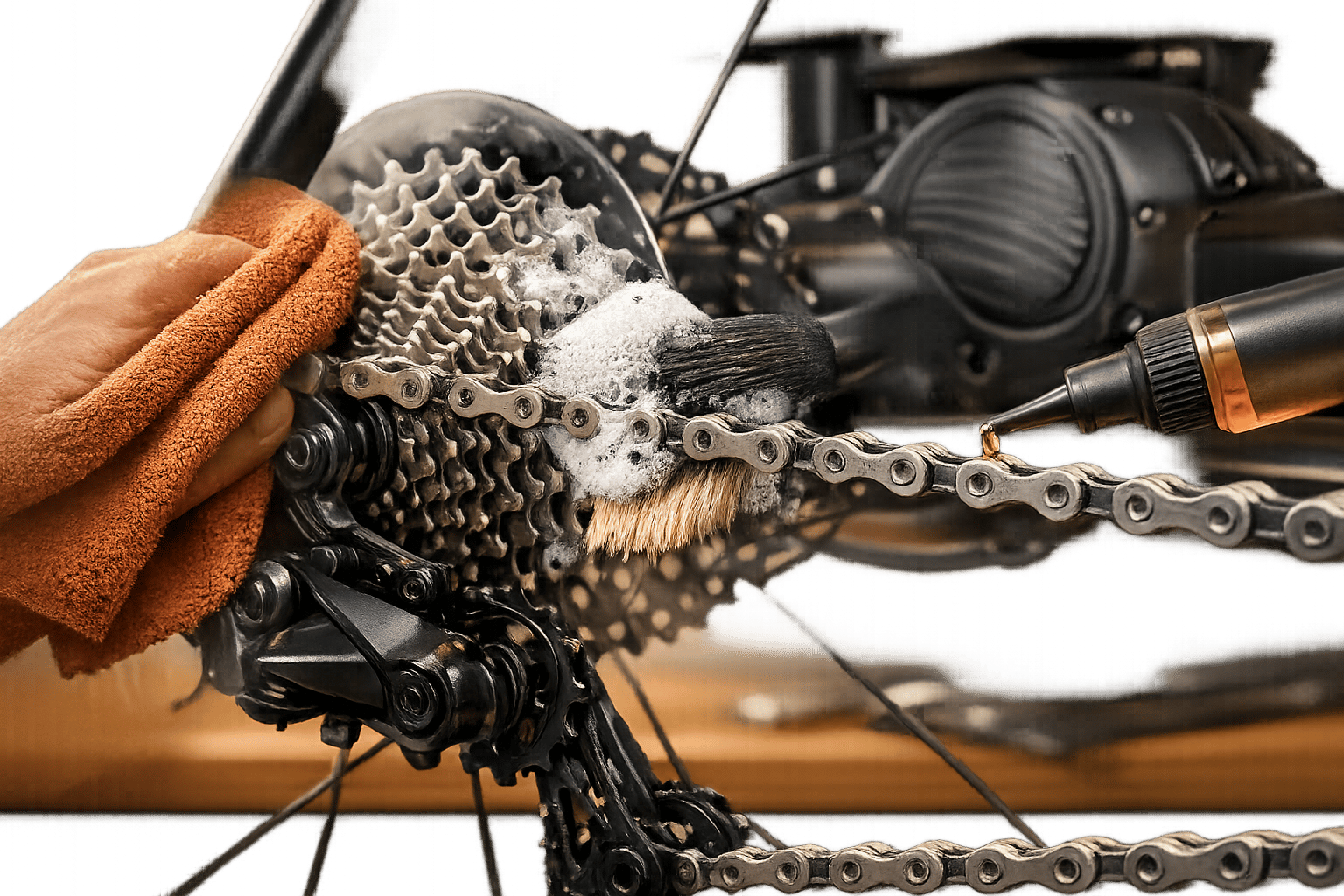
Start by getting your bike set up for easy access. Shift into the smallest chainring and rear cog to create slack in the chain, and mount your bike on a repair stand. For a full clean, remove the chain using chain link pliers and place it in a plastic tub filled with biodegradable degreaser. This process not only removes stubborn grime but also helps extend the life of your drivetrain. While the chain is soaking, focus on other components.
Clean the cassette by applying degreaser and scrubbing it with a stiff brush while rotating the pedals. For tight spaces between sprockets, use a shoelace or the edge of a rag to "floss" out the grime.
"Bicycle-specific degreaser is formulated to cut through the thick buildup of grime and oil usually found on well-used bicycle chains." – Park Tool
Move on to the chainring teeth, scrubbing them with a firm brush, and use an old toothbrush for the derailleur jockey wheels. For a deeper clean, you can remove the cassette with a chain whip and cassette tool and detach the jockey wheels from the derailleur for individual cleaning.
Once everything is scrubbed, rinse with low-pressure water or wipe down with a damp cloth. Avoid pressure washers, as they can push dirt and water into sealed bearings. Thoroughly dry all parts with a rag or compressed air to eliminate moisture. Finally, apply one drop of lubricant to each chain roller. Let the lubricant sit for 5–10 minutes to soak into the links, then wipe off any excess to prevent it from attracting more dirt.
Drivetrain Maintenance Schedule
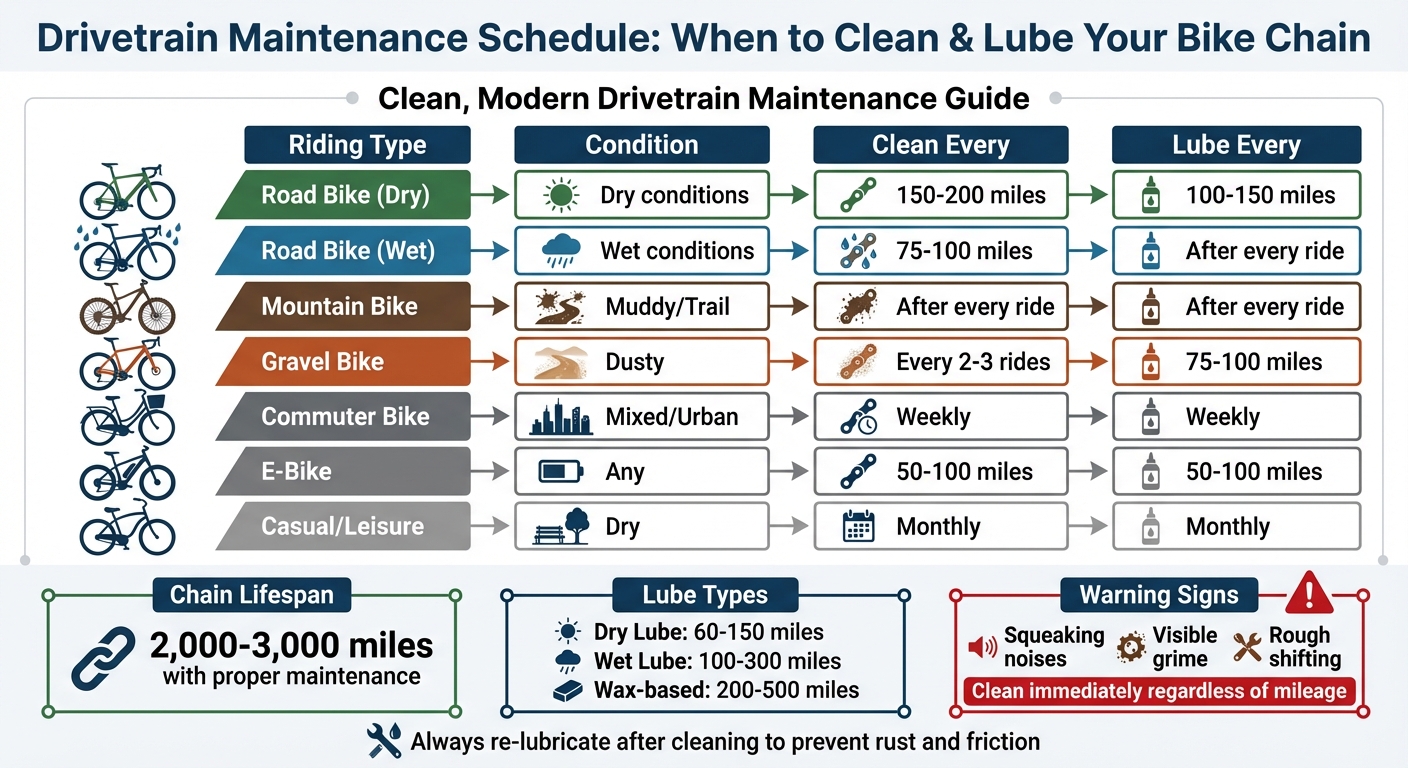
To keep your drivetrain in peak condition, here’s a quick-reference schedule for cleaning and lubrication based on different riding types and conditions:
| Riding Type | Condition | Clean Every | Lube Every |
|---|---|---|---|
| Road Bike | Dry | 150–200 miles | 100–150 miles |
| Road Bike | Wet | 75–100 miles | After every ride |
| Mountain Bike | Muddy/Trail | After every ride | After every ride |
| Gravel Bike | Dusty | Every 2–3 rides | 75–100 miles |
| Commuter Bike | Mixed/Urban | Weekly | Weekly |
| E-Bike | Any | 50–100 miles | 50–100 miles |
| Casual/Leisure | Dry | Monthly | Monthly |
This table offers a straightforward checklist to pair with your regular drivetrain inspections. Remember, these intervals are general recommendations. You may need to adjust based on how often and where you ride.
If you notice your chain squeaking, looking excessively dirty, or experiencing rough shifting, clean and lube it immediately – no matter the mileage.
"The key words are ‘lightly’ and ‘frequently’" – Todd Downs
With proper care, a chain can last between 2,000 to 3,000 miles before needing replacement. Plus, consistent maintenance can extend the life of your entire drivetrain by up to 50%.
E-bike owners should pay extra attention due to the higher torque stresses. Keeping up with maintenance not only protects your chain but also helps prevent unnecessary wear on the motor.
Conclusion
Sticking to a cleaning and lubrication routine that matches your riding conditions can save both your bike’s performance and your wallet. For dry conditions, you might stretch maintenance to every 100–150 miles. But if you’re riding in wet, muddy, or dusty environments, you’ll need to clean and lubricate more often. Pay attention to the signs – squeaky noises, rough shifting, or visible grime mean it’s time for some care.
The benefits of regular maintenance are undeniable. It keeps your bike running smoothly and prevents costly wear and tear. A well-maintained chain, for instance, can last anywhere from 2,000 to 3,000 miles. Skipping maintenance, on the other hand, can lead to performance issues and expensive repairs.
Greg Kaplan puts it perfectly:
"A clean bike is a fast bike, and by keeping it clean, you’ll extend the life of the most wearable parts, like your chain and cassette." – Greg Kaplan, Freelance Writer
The key is simple: lubricate lightly and often, wipe off any excess, and clean before dirt turns into a damaging paste. This habit ensures your bike remains dependable and enjoyable to ride. Whether you’re commuting, tackling rugged trails, or racking up road miles, a consistent maintenance routine keeps your bike performing at its best while avoiding unnecessary repairs.
FAQs
How do I know my chain needs lube right now?
Your bike chain might need lubrication if it feels dry to the touch or starts making squeaking noises while you ride. These are clear signs that it’s time to apply lube to keep your chain running smoothly and efficiently.
What’s the quickest way to clean a drivetrain after a ride?
The quickest way to clean your drivetrain after a ride is with a simple spot-clean. Start by spraying your chain with a bike-specific degreaser. Then, spin the pedals backward about 30–40 times to help loosen any grime. Use a stiff brush to scrub away dirt and finish by wiping the chain down thoroughly. This method is fast and efficient, sparing you the hassle of taking everything apart.
Which lube type is best for my riding conditions?
When choosing the right lube for your bike, it’s all about matching it to your riding conditions. Dry lube works best in dusty or dry environments, while wet lube is ideal for rainy or wet weather. If you’re looking for a quieter and lower-maintenance option, wax-based lube might be your go-to. Just keep in mind that wax-based lubes might need to be applied more often and can occasionally create more noise.