Riding hard on mountain trails can leave your body sore, muscles tired, and energy drained. Recovery is the key to bouncing back stronger and avoiding burnout. Here’s what you need to know to recover effectively:
- Cool Down: Light pedaling or walking for 5–10 minutes helps your heart rate return to normal and reduces muscle fatigue.
- Stretch: Target tight areas like quads, hamstrings, and hip flexors with simple stretches.
- Rehydrate: Replace lost fluids with water and electrolytes. For longer rides, consider recovery drinks or even chocolate milk.
- Refuel: Eat within 30–60 minutes post-ride. Combine carbs (like sweet potatoes or oatmeal) with protein (like chicken or yogurt) for muscle repair.
- Foam Roll: Loosen tight muscles and improve circulation by rolling key areas such as quads, calves, and glutes.
- Sleep: Aim for 7–9 hours of sleep to allow your body to repair and rebuild.
- Active Recovery: On rest days, do light activities like yoga, swimming, or easy cycling to keep blood flowing.
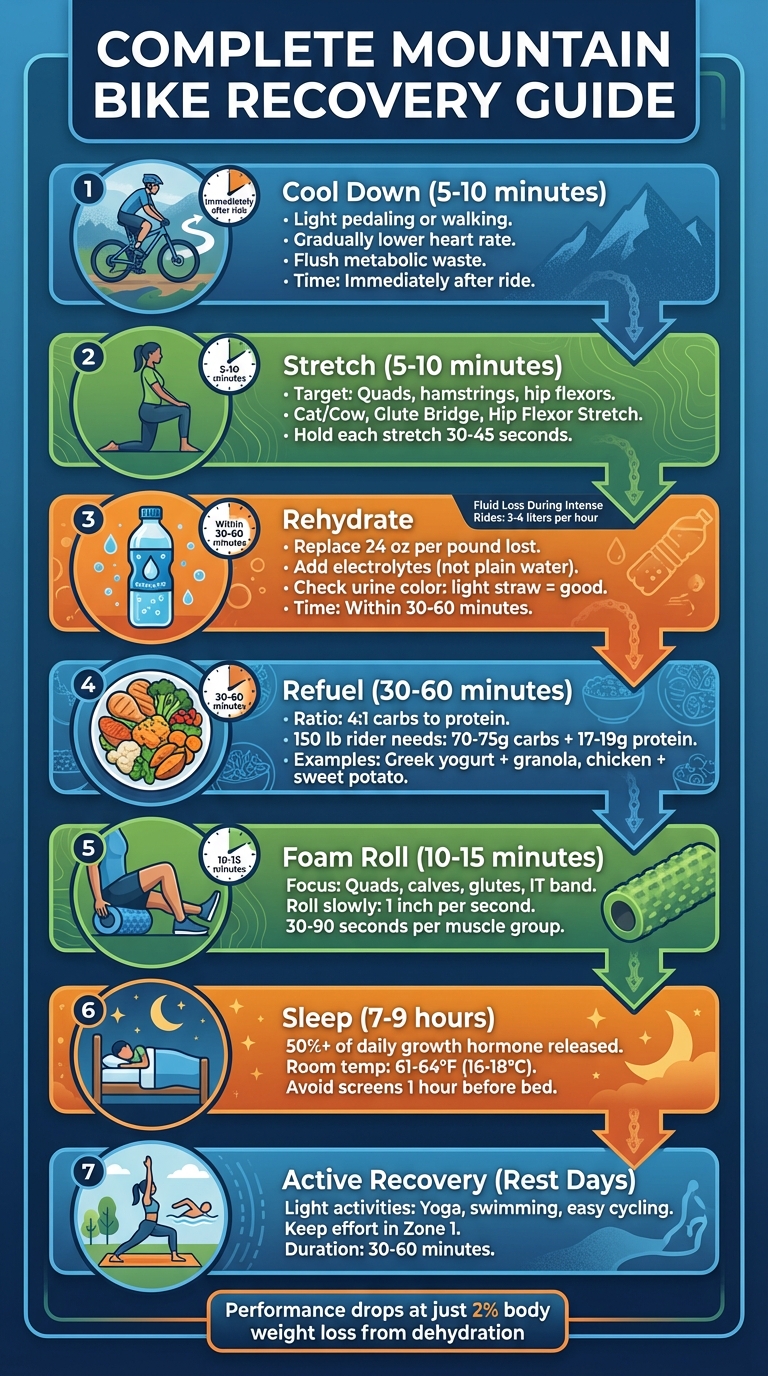
7-Step Mountain Bike Recovery Process: Cool Down to Sleep
How To Recover After A Ride | Mountain Bike Training
Cool Down Right After Your Ride
After a ride, your heart is still pumping hard, your body temperature is elevated, and your blood vessels are wide open. Stopping too quickly can leave blood pooling in your legs, which might make you feel dizzy or even nauseous. A proper cooldown helps your body return to normal by gradually lowering your heart rate, cooling your body down, and improving circulation. It also helps flush out the metabolic waste from your workout. To kickstart this recovery, keep moving for a bit after your ride.
Here’s an interesting fact: for every degree your core temperature rises, your heart rate jumps by around 10 beats per minute. Stacy Sims, PhD, an exercise nutritionist and physiologist, explains:
"Active recovery prevents the sudden drop in blood flow that happens when you stop abruptly and instead maintains circulation to the muscles, which helps your body return to resting blood lactate and pH levels more quickly".
To take advantage of this, try light pedaling or walking as soon as you finish your ride.
Light Pedaling or Walking
Spend 5–10 minutes pedaling slowly or walking right after your ride. Marisella Villano, a kinesiologist and indoor cycling instructor, shares her advice:
"The best cooldown is a 10-minute easy ride or walk to help flush metabolic waste from the workout out of the muscles".
Focus on a high cadence – spinning the pedals quickly with minimal resistance – to help clear lactate from your muscles. If you’re near your car or heading back to your starting point, consider a slow pedal or short walk. Alternatively, use the last mile or two of your trail as your cooldown instead of riding hard right up to the finish.
Basic Post-Ride Stretches
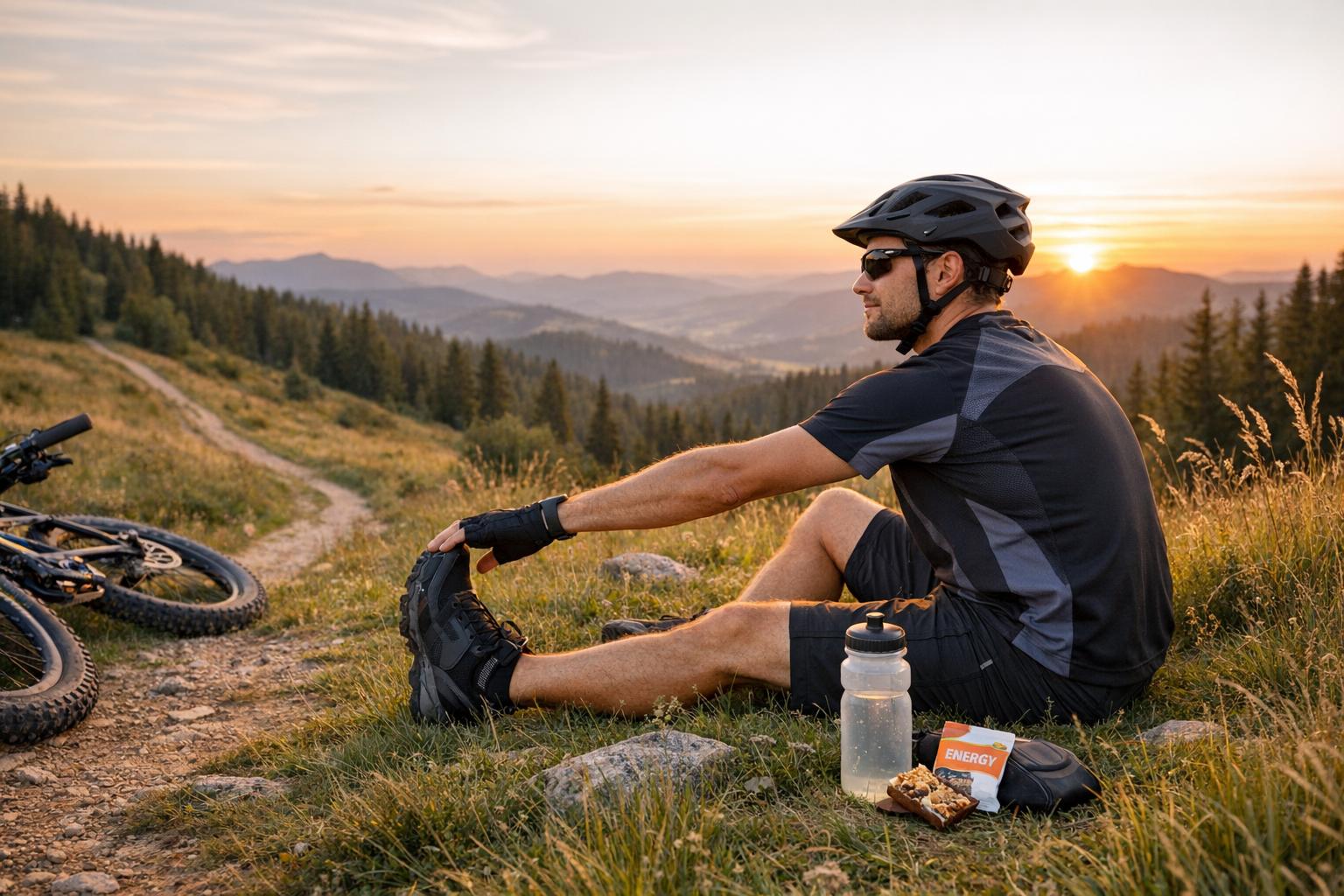
Once your active recovery is done, take a few minutes to stretch the major muscle groups. Mountain biking often leaves your quads, hip flexors, and hamstrings feeling tight due to the hunched position you maintain while riding. Stretching helps restore muscle length and improves your range of motion. Here are some stretches to try right after your cooldown:
- Cat/Cow: Eases tension in your spine and pelvis after hours of riding.
- Glute Bridge: Engages your hamstrings and glutes while loosening up tight hip flexors.
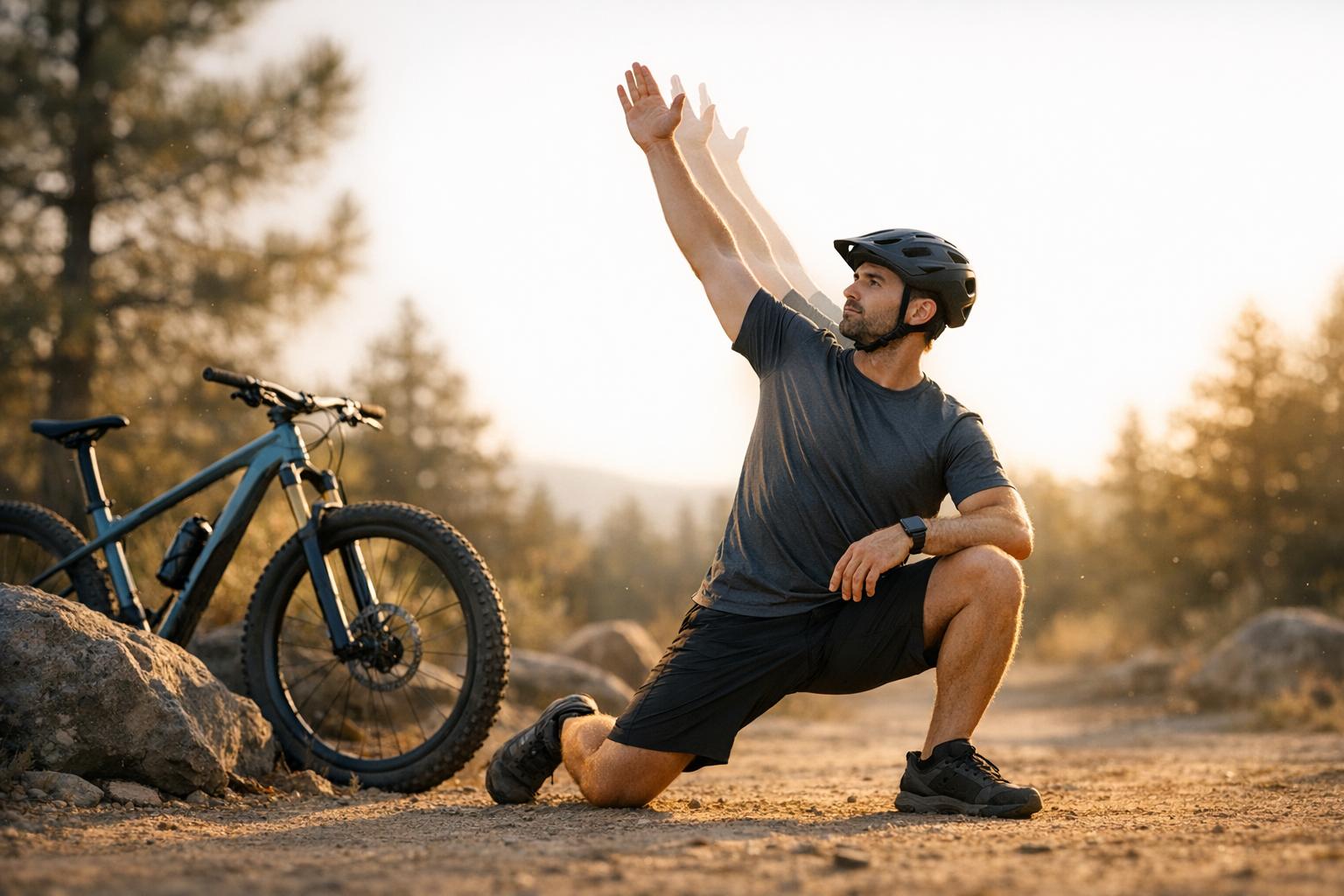
- Half-Kneeling Hip Flexor Stretch: Targets the quads and hips, which do most of the work during your pedal strokes.
- Doorway Pec Stretch: Opens up your chest and shoulders, counteracting the forward-leaning posture of biking.
Incorporating these stretches into your post-ride routine can ease muscle tightness and set you up to feel better as you move through the rest of your day.
Rehydrate with the Right Fluids
Mountain biking takes a toll on your body, draining both water and electrolytes that are crucial for recovery. Without proper rehydration, you could face headaches, fatigue, muscle cramps, and sluggish rides afterward.
Understanding Fluid Loss During Rides
When you’re out on intense rides, especially in hot or humid conditions, you can lose as much as 3–4 liters of water per hour. This level of fluid loss not only dehydrates you but also hampers your body’s ability to regulate temperature and maintain muscle function. Even a small drop – just 1% of your body weight from fluid loss – can weaken muscle endurance, power, and strength. At a 2% loss, your overall performance takes a noticeable hit.
Marni Sumbal, MS, RD, owner of Trimarni Coaching and Nutrition, highlights the risks:
"Replacing fluids inadequately during exercise can lead to a host of physical and mental issues, such as compromised digestion, impaired temperature regulation, irritability, fatigue, and reduced blood flow."
To track your fluid loss, weigh yourself naked before and after your ride. For every pound you lose, aim to drink about 24 ounces of fluid (around 150% of the weight lost) within four hours. Also, check the color of your urine – it should be light and straw-colored. If it resembles apple juice, you’re likely dehydrated and need to rehydrate promptly.
Choosing the Right Drinks
Plain water alone won’t cut it when it comes to replacing lost minerals. Instead, reach for an electrolyte drink or enhance your water with a pinch of salt – about 1/16 to 1/8 teaspoon per 16 ounces. Uriell Carlson, RDN from Inner Wild Nutrition, advises:
"My general rule is that anytime you’re sweating, you should be drinking electrolytes, not [plain] water."
For more demanding rides, like long climbs or technical descents, consider a recovery drink. Look for one with 25 grams of protein and 1 gram of carbohydrate per kilogram of body weight.
If you’re looking for a budget-friendly option, chocolate milk is a solid choice at just $0.49 per serving. It provides a 4:1 carbohydrate-to-protein ratio, though it does have slightly more fat (about 5.5 grams) compared to specialized recovery powders. Other natural options include coconut water, which helps with hydration, or tart cherry juice, which offers antioxidants to ease soreness.
Start rehydrating within 30 to 60 minutes after your ride. Sip about 8 ounces of fluid every 30 minutes during the first hour to avoid overwhelming your stomach. This routine not only replenishes glycogen but also jumpstarts muscle repair, helping you recover more effectively.
Refuel with Protein and Carbohydrates
After a tough ride, your muscles are craving fuel to recover and rebuild. Carbohydrates help replenish your energy stores, while protein provides the essential materials for muscle repair. Together, they work to get your body back in top shape.
When to Eat After Your Ride
Once you’ve cooled down and rehydrated, it’s time to refuel. The timing of your post-ride meal is key – your body absorbs nutrients most effectively within 30 to 60 minutes after exercise. Melissa Majumdar, M.S., R.D. from Emory University Hospital Midtown emphasizes:
"It’s best to get something in your system between 30 to 60 minutes after exercise."
For a rider weighing around 150 pounds, aim for approximately 70–75 grams of carbohydrates and 17–19 grams of protein during this window. A 4:1 ratio of carbs to protein is ideal for restoring glycogen levels and repairing muscles. If you’re not feeling up to a full meal, liquid options like smoothies or shakes can do the trick. Just make sure to choose nutrient-packed ingredients to hit your targets.
What to Eat
Now that you know when to eat, focus on what to eat. Lean proteins like chicken, turkey, eggs, salmon, or tuna are excellent for muscle recovery and can even help with inflammation. Pair these with complex carbohydrates such as brown rice, whole-grain bread, oatmeal, or sweet potatoes to restore energy gradually. Uriell Carlson, RDN from Inner Wild Nutrition, explains:
"For endurance athletes, so for cyclists, it’s carbohydrates first and protein second. The ideal ratio is four parts carbohydrates and one part protein."
Fresh fruits like bananas, berries, or mangoes are also great additions – they provide quick energy and vitamin C, which supports connective tissue repair. Simple meals like Greek yogurt with granola or a peanut butter and banana sandwich are easy options that meet your nutrient needs effectively.
To ensure your body absorbs nutrients quickly, steer clear of high-fat or high-fiber foods right after your ride. Save heavier meals for later and keep your post-ride snack or meal balanced, straightforward, and timely.
sbb-itb-9d75ae1
Stretch Major Muscle Groups
After a ride, it’s crucial to address muscle imbalances and joint tension caused by the repetitive pedaling motion and forward-leaning posture of cycling. Bianca Beldini, D.P.T., a USA Triathlon–certified coach and physical therapist, highlights the importance of this step:
"Stretching and mobilizing directly after riding is the most important time to rebalance the body’s muscular system and to ‘undo’ any repetitive strain put on the joints used during cycling."
Skipping post-ride stretching can increase your risk of injury. Studies show that over half of cyclists experience low back pain, and reduced flexibility has been linked to a higher mortality risk in adults aged 46 to 65. Regular stretching not only helps prevent injuries but also improves circulation, reduces arterial stiffness, and enhances the pliability of your muscles and connective tissues.
Stretches for Cyclists
Once you’ve refueled your muscles, it’s time to restore flexibility. Focus on the areas that work the hardest during your ride: hip flexors, quads, glutes, hamstrings, lower back, calves, mid-back (thoracic spine), and even forearms and wrists, which absorb shock from uneven terrain [28,31].
Here are some effective stretches to include in your routine:
- Lower Back: Try the Updog stretch. Lie face down, press into your palms, and extend your arms to stretch your abs and hip flexors while easing tension in your lower back.
- Glutes: Do a supine figure-four stretch. Cross one ankle over the opposite knee, then gently pull your legs toward your chest. This targets deep gluteal muscles and relieves pressure on the sciatic nerve [26,27].
- Quads and Hip Flexors: Use a quad couch stretch or a modified dragon pose to release tightness caused by repetitive pedaling [27,30].
- Chest and Shoulders: A doorway stretch is great for opening up your pecs and countering the hunched posture from cycling.
- Mid-Back: Kneel in front of a chair, rest your elbows on the seat, and drop your chest toward the floor. This stretch improves trunk flexibility and targets the lats.
Hold each stretch for 30 to 45 seconds. You should feel a gentle pull or mild discomfort – never pain. Breathe deeply, and with each exhale, try to gradually deepen the stretch [27,29].
Paul Schroeder, P.T., M.P.T., C.S.C.S., a spokesperson for the American Physical Therapy Association, underscores the importance of back stretching:
"Back stretching for cyclists is very important… it can also help you ride stronger and longer while reducing your risk of injury."
Incorporating these stretches into your post-ride routine can make a big difference in recovery and performance.
Static vs. Dynamic Stretching
Timing your stretching correctly can optimize recovery. Static stretching, where you hold a muscle in a stationary position, is best for after your ride. This method helps improve flexibility, reduce muscle stiffness, and rebalance your body. A 2020 study published in Science & Sports found that performing static stretches three times a week for six weeks significantly improved hamstring flexibility.
On the other hand, dynamic stretching involves controlled, functional movements like leg swings or air squats that take your joints through their full range of motion. This type of stretching is ideal for pre-ride warm-ups. Research from the Journal of Human Kinetics revealed that athletes who performed dynamic stretches before exercise achieved greater power levels compared to those who used static stretches. In fact, static stretching before a ride can actually reduce your performance.
The bottom line? Use static stretches after your ride when your muscles are warm and ready to lengthen, and stick to dynamic movements beforehand to prepare your body for the ride ahead.
Use Foam Rolling and Self-Massage
Foam rolling is an excellent follow-up to stretching, offering a deeper way to help your muscles recover. This technique, known as self-myofascial release, applies pressure to address those pesky adhesions and "knots" that can form from constant pedaling and the jarring vibrations of rough trails. Scott Levin, M.D., a sports medicine expert, highlights its convenience:
"Foam rolling is a convenient and effective way to target trouble spots and work through them at your comfort level."
How Foam Rolling Boosts Recovery
Foam rolling does more than just ease tight muscles – it promotes blood flow rich in nutrients while helping flush out lactic acid and inflammatory waste that build up during tough rides. The applied pressure encourages muscles to relax and release tension. A 2018 study found that foam rolling and massage are highly effective for reducing muscle soreness, perceived fatigue, and inflammation after exercise. This makes it a great tool for cutting recovery time and easing Delayed Onset Muscle Soreness (DOMS), which tends to peak between 24 and 48 hours post-ride and can linger for up to a week.
Timing is crucial. Aim to foam roll within 10 to 15 minutes after your ride to ward off stiffness. Move slowly – about one inch per second – and spend 30 to 90 seconds on each muscle group. If you hit a tender spot, hold the pressure there for 10 to 30 seconds to allow the muscle to relax. Keep the pressure at a level that’s firm but not painful. Deep breathing throughout the process helps your body relax further. Foam rolling works hand-in-hand with stretching to quickly ease stiffness and prepare you for your next ride.
Key Areas to Focus On
To get the most out of foam rolling, pay special attention to the muscle groups that take the hardest hits during mountain biking. Start with your quads, the powerhouse muscles for climbing. Roll from your hip down to just above your knee while holding a forearm plank position. Your forearms also deserve care – they can fatigue from gripping handlebars on technical descents, often leading to "arm pump." A lacrosse ball can work wonders for relieving this tension. Additionally, tight hip flexors – a common culprit behind lower back pain – should not be overlooked.
Other areas to target include the IT band (along the outer thigh), calves (which absorb trail impacts and assist in pedaling), and glutes (key for hip stability and power generation). For calves, try crossing one ankle over the other to increase pressure and gently rotate your leg side to side. When addressing your back, focus on the muscles along the sides and avoid rolling directly over your spine.
Foam rollers come in various price ranges, with basic models costing $20 to $40. If you’re looking for a more advanced option, the TriggerPoint GRID Foam Roller is a popular choice at around $69.
Get Enough Sleep and Active Recovery
Why Sleep Matters for Recovery
Sleep is the cornerstone of muscle repair. During rest, your body releases over 50% of its daily growth hormone, along with testosterone and estrogen – key players in rebuilding the muscle fibers you challenged on the trail. This repair primarily occurs during deep sleep stages, particularly Stage 4 or REM sleep. Skimping on sleep? You’re not just delaying muscle recovery – you’re also impacting your power output and cardiovascular performance.
Jim Rutberg, a coach at TORRE, puts it plainly:
"Sleep is the most important factor for effective recovery from training stress".
To optimize recovery, aim for 7 to 9 hours of sleep each night. For better sleep quality, keep your bedroom temperature between 61°F and 64°F (16–18°C) and avoid screens like phones or tablets for at least an hour before bedtime. If late training sessions leave your core temperature elevated, a cold shower can help cool you down quickly. Instead of fixating on your bedtime, establish a consistent wake-up time to help regulate your internal clock.
But recovery isn’t just about sleep – it’s also about staying lightly active on rest days.
Adding Active Recovery
Active recovery on rest days means engaging in low-intensity activities that keep your blood circulating without draining your energy. Think of options like a gentle 30 to 60-minute bike ride, yoga session, or swim. The key is to keep your effort in Zone 1 – light and easy – to support recovery. This approach not only helps with lymphatic drainage but also eases muscle soreness without adding fatigue.
Mountain biker Jeremiah Bishop highlights the value of activities like swimming, yoga, or a light jog for keeping circulation up and soreness down. Swimming, in particular, is a great choice since it’s low-impact and works your entire body. Even simple practices like walking in a natural setting or propping your legs against a wall for five minutes per hour of riding can boost circulation and provide mental relaxation. The idea is to stay moving without straining – save your energy for when it’s time to hit the trail again.
Conclusion
Make Recovery Routine
Recovery is the secret weapon for building strength, resilience, and endurance. It’s during this downtime that your muscles repair, adapt, and grow stronger. From cooling down and refueling to stretching, self-massage, and quality sleep, each piece plays a critical role in your recovery puzzle. Skipping this essential step can halt your progress, drain your motivation, and increase the risk of overtraining or injury.
As British Cycling wisely states:
"If you fail to schedule in enough recovery, you will stop making progress, lose motivation, risk developing overtraining syndrome and possibly expose yourself to increased risk of injury or illness."
What separates amateurs from professionals often isn’t how much they train – it’s how well they recover. Professional riders dedicate themselves fully to recovery when they’re off the bike, understanding that’s when their bodies truly adapt and grow stronger. To keep your legs fresh and your rides enjoyable, make hydration, proper nutrition, muscle care, and sleep absolute priorities. These habits aren’t just helpful – they’re essential for avoiding fatigue and staying ready to tackle your next ride.
Stick to these recovery practices, and you’ll notice the difference the next time you hit the road.
Resources from Intermountain Bikes
Looking for more tips and tools to enhance your recovery? Check out Intermountain Bikes for expert guides on mobility, nutrition, and recovery gear designed to help you ride stronger and longer.
FAQs
Why is foam rolling helpful after a mountain bike ride?
Foam rolling after a mountain bike ride is an effective way to ease muscle tightness and soreness. It helps increase blood circulation, which can promote tissue repair and support quicker recovery. Adding foam rolling to your post-ride routine can leave you feeling more refreshed and ready for your next ride with less discomfort.
To get the most out of it, target key areas such as your quads, hamstrings, calves, and lower back. Spend about 1–2 minutes on each muscle group for optimal relief.
How can active recovery on rest days boost my mountain biking performance?
Active recovery on rest days means engaging in low-intensity activities such as a leisurely bike ride, light yoga, or a gentle jog. These activities help boost blood flow, bringing oxygen and nutrients to your muscles to aid in repair. At the same time, they help remove waste products like lactate, which can contribute to muscle soreness. The result? Faster recovery and better preparation for your next ride.
But it’s not just about muscle recovery. Active recovery also keeps your joints flexible and supports neuromuscular coordination, which is crucial for navigating technical trails. Adding at least one active recovery day to your weekly routine can help ease stiffness, lower the risk of injuries, and keep you in top shape for consistent, stronger rides.
Why should you eat both protein and carbohydrates after a mountain bike ride?
After a mountain bike ride, your body craves protein and carbohydrates to bounce back effectively. Protein delivers the amino acids your muscles need to repair and rebuild, easing soreness and getting you ready for your next adventure. Meanwhile, carbohydrates help restore your glycogen reserves – your body’s go-to energy source during those intense rides.
Refueling with a balanced mix of these nutrients doesn’t just speed up recovery; it also ensures you’re fully charged and ready to tackle the trails again.