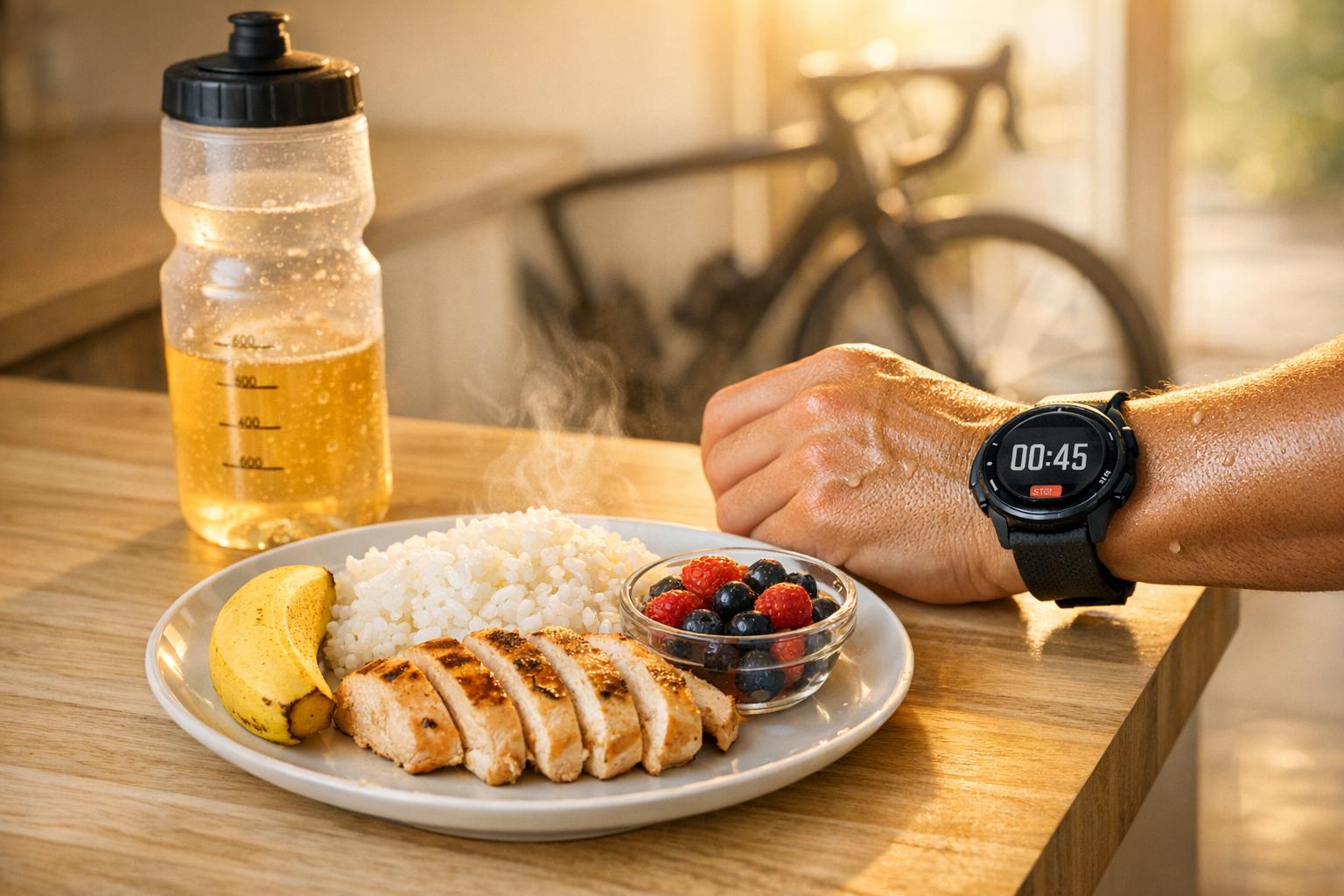
Want to recover faster after a ride and perform better the next day? Here’s the key: Eat within the first 30–60 minutes post-ride. This is when your body is most efficient at replenishing glycogen (your muscles’ fuel) and repairing tissues. Pair carbohydrates with protein for even better results.
Quick Takeaways:
- Why timing matters: Eating carbs immediately post-ride boosts glycogen resynthesis by 45% compared to waiting.
- What to eat: Aim for a 3:1 or 4:1 carb-to-protein ratio. Example: Chocolate milk or a banana with peanut butter.
- How much: Consume 1.0–1.5g of carbs per kg of body weight + 20–40g of protein within the first hour.
- Hydration tip: For every pound lost during your ride, drink 24 oz of fluid to rehydrate.
Refueling right sets you up for better recovery and stronger rides. Keep reading for practical meal ideas and tailored strategies for different ride intensities.
How Glycogen Replenishment Works
What Is the Glycogen Window?
The glycogen window is a 30–60-minute period after exercise when your muscles are especially ready to absorb carbohydrates and replenish glycogen stores. During this time, your body has heightened insulin sensitivity and an increased presence of GLUT-4 on cell surfaces, which speeds up glycogen synthesis. Initially, this process happens without much reliance on insulin. However, after this window closes, glycogen synthesis slows down and becomes more dependent on insulin.
"The classic ‘glycogen window’ or anabolic window would be better thought of as a ‘garage door’… the body is primed to rapidly replenish carbohydrate stores and maximize muscle protein synthesis immediately after exercise." – Chris Carmichael, Founder and Head Coach of CTS
This window is especially important if you’re planning another ride within 8 hours or have back-to-back training sessions. Waiting too long – just two hours – to consume carbohydrates can cut glycogen resynthesis by as much as 50%. While glycogen stores will eventually recover if you have over 24 hours between rides, eating carbs right after your workout provides a noticeable recovery edge.
Carbohydrate Intake Guidelines
To optimize glycogen replenishment, aim for 1.0 to 1.5 grams of carbohydrate per kilogram of body weight within the first hour post-ride. For continued recovery, consume 1.0 to 1.2 grams per kilogram every hour for the next 4 to 6 hours.
Here’s an example of how much carbohydrate you’d need based on your weight:
| Body Weight | Hourly Carb Target (1.2 g/kg) | Total Carbs over 4 Hours |
|---|---|---|
| 132 lbs (60 kg) | 72 g | 288 g |
| 154 lbs (70 kg) | 84 g | 336 g |
| 176 lbs (80 kg) | 96 g | 384 g |
| 198 lbs (90 kg) | 108 g | 432 g |
Timing matters just as much as the total amount. Instead of eating one large meal, break it up into smaller portions every 15 to 30 minutes to maintain steady glucose and insulin levels. Research shows that well-trained cyclists consuming carbs at a rate of 1.2 g/kg/hour could fully restore liver glycogen within 6 hours, though muscle glycogen took over 12 hours to recover completely.
If you’re not feeling hungry after a tough ride, liquid options like chocolate milk or fruit smoothies can help you meet your carbohydrate goals without needing to eat a big meal. Pairing these carb strategies with protein will further improve your recovery.
sbb-itb-9d75ae1
Why Protein Matters for Recovery
How Protein Supports Muscle Repair
After replenishing carbohydrates, protein becomes the next key player in recovery. While carbs help refuel your energy stores, protein is essential for repairing the muscle damage caused by intense rides. During exercise, muscles experience strain, breaking down proteins that are vital for energy and strength. Post-ride protein intake supplies the amino acids needed to repair tissues and rebuild essential muscle proteins, including those in the mitochondria.
Research highlights the benefits of combining carbohydrates with protein during the recovery window. For example, endurance cyclists who consumed a mix of 0.8 g of carbs and 0.4 g of protein per kilogram of body weight per hour during the first two hours of recovery performed significantly better the next day. These athletes lasted 63.5 ± 4.4 minutes in a time-to-exhaustion test 18 hours later, compared to just 49.8 ± 5.4 minutes for those who consumed only carbs.
"Performance was higher 18 h after exhaustive cycling with intake of CHO+PROT compared to an isocaloric amount of carbohydrate during the first 2 h post exercise." – Rustad et al., Researchers
Protein doesn’t just aid repair – it also reduces metabolic stress and muscle damage. For instance, markers like creatine kinase dropped by 83% when athletes consumed a carb-protein mix compared to carbs alone. This benefit comes in part from an improved insulin response, which helps limit muscle protein breakdown.
For optimal recovery, aim to consume 20–40 g of high-quality protein within 30–60 minutes after your ride. Younger athletes can stick to the lower end of this range, while older riders may need closer to 40 g to counteract age-related declines in muscle protein synthesis. A 3:1 or 4:1 carbohydrate-to-protein ratio is recommended. For example, a 150-pound cyclist might aim for about 75 g of carbs paired with 19 g of protein.
Top Protein Sources for Post-Ride Meals
Certain protein sources are especially effective for recovery. Whey protein and chocolate milk, for instance, are quickly digested and offer ideal carb-to-protein ratios. Other great options include Greek yogurt, eggs, and lean meats, which provide additional nutrients. Whey protein is particularly beneficial due to its rapid digestion and leucine content, an amino acid that jumpstarts muscle repair. You can blend whey protein into a smoothie with fruit for a convenient, easy-to-digest recovery option. Greek yogurt is another versatile choice – enjoy it with fruit and granola or mix it into a smoothie.
Since the body can absorb only about 30 grams of protein at once, it’s better to spread your intake throughout the day instead of consuming it all at once. For regular training, aim for a daily protein intake of 1.3 to 1.7 grams per kilogram of body weight. During more intense training periods, you can increase this to up to 2.0 grams per kilogram.
How Meal Timing Affects Next-Day Performance
What Cycling Studies Show
Timing your meals doesn’t just help with recovery right after exercise – it sets the stage for how well your muscles perform the next day. Research highlights that delaying carbohydrate intake by as little as 3 hours can significantly lower your ability to handle high-intensity intervals 24 hours later, even if your total carbohydrate intake for the day stays the same.
Take a 2024 study from Victoria University, for example. Nine recreationally active men completed 10 two-minute intervals. One group consumed 2.4 grams of carbs per kilogram of body weight right after finishing their workout (within the first 3 hours), while the other group only drank water post-ride. Over the next 24 hours, both groups consumed about 7 grams of carbs per kilogram of body weight. But here’s the catch: the group that delayed their carbohydrate intake performed 5 fewer intervals during a task-failure test the next day. They also felt the effort was 2 units harder on the RPE scale. This study builds on earlier research showing the importance of glycogen and protein in recovery.
While carbs are essential immediately after exercise, adding protein to the mix amplifies recovery. A study from April 2016 drives this point home. Eight endurance-trained cyclists rode at about 72% VO2max until exhaustion. During the first 2 hours of recovery, one group consumed a mix of 0.8 grams of carbs and 0.4 grams of protein per kilogram of body weight per hour. The other group consumed only carbohydrates. The results? The protein-carb group lasted 63.5 minutes in a time-to-exhaustion test 18 hours later, compared to just 49.8 minutes for the carb-only group. That’s a 27.5% improvement in performance thanks to pairing protein with carbs early on.
"Our findings support immediate post-exercise refueling if the goal is to maximize next-day HIIE capacity and recovery time is ≤24 h." – Javier Díaz-Lara and Matthew J. Lee, Researchers
This research makes it clear: when you eat is just as important as what you eat, especially if you’re training on consecutive days. The so-called glycogen window plays a key role here. Refueling immediately after exercise jumpstarts recovery, helping your body restore glycogen and repair muscle tissue. Waiting too long to refuel disrupts this process, leaving you with a performance gap that can’t be fixed by simply eating more later.
Sports Dietitian Explains the Importance of the Recovery Meal
Practical Post-Ride Nutrition Guidelines
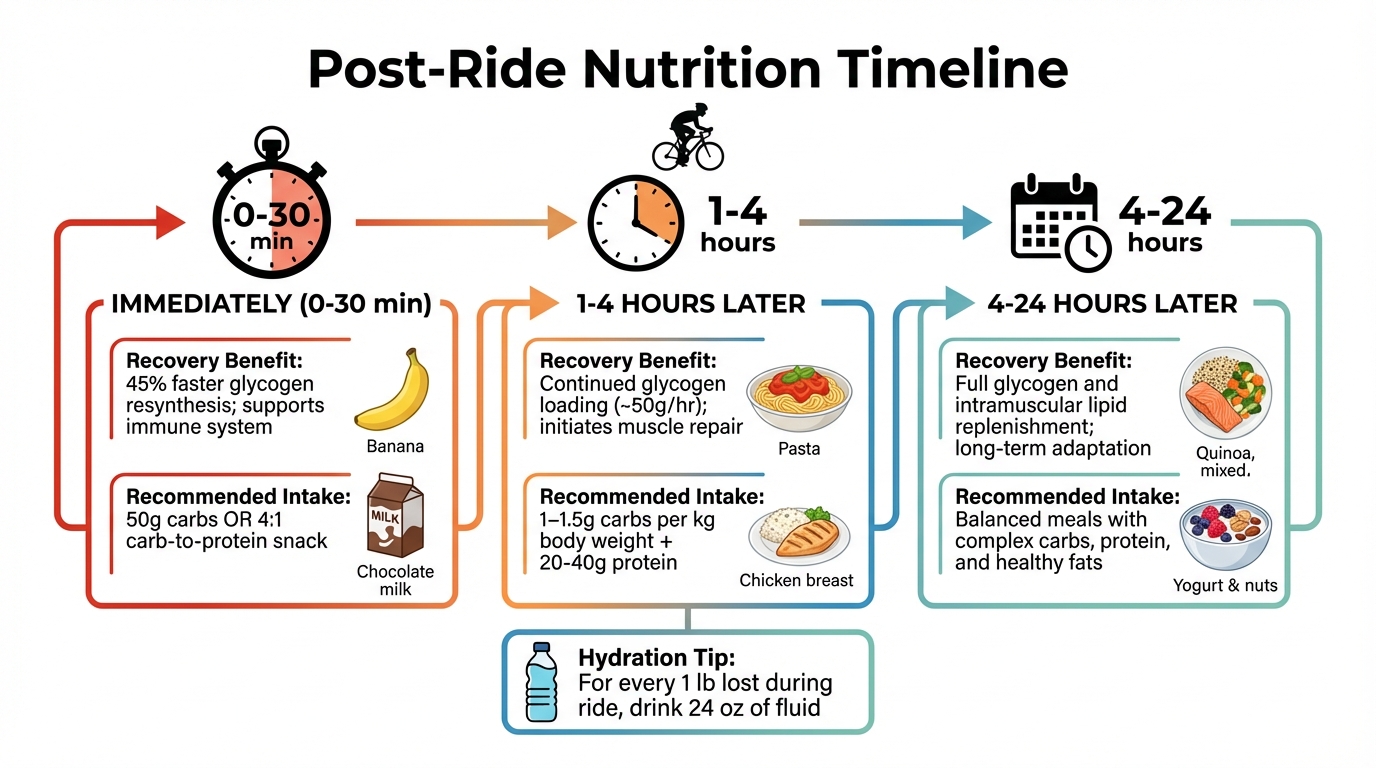
Post-Ride Nutrition Timeline: Recovery Benefits and Recommended Intake by Time Window
Let’s dive into what and when to eat after your rides to maximize recovery. The table below outlines how timing impacts recovery and what you should aim to consume:
| Time Window | Recovery Benefit | Recommended Intake |
|---|---|---|
| Immediately (0-30 min) | 45% faster glycogen resynthesis; supports immune system. | 50g carbs or a 4:1 carb-to-protein snack. |
| 1-4 Hours Later | Continued glycogen loading (~50g/hr); initiates muscle repair. | 1-1.5g carbs per kg body weight + 20-40g protein. |
| 4-24 Hours Later | Full glycogen and intramuscular lipid replenishment; long-term adaptation. | Balanced meals with complex carbs, protein, and healthy fats. |
The immediate post-ride window provides the biggest recovery boost, but don’t stress too much if you miss it – eating within 45 to 60 minutes still helps replenish glycogen effectively.
Rehydrate by tracking your fluid loss. Weigh yourself before and after your ride, and for every pound lost, drink 24 ounces of fluid over the next four hours. This not only replaces water but also restores key electrolytes like sodium, potassium, calcium, and magnesium.
Adjusting Nutrition for Different Ride Types
Your recovery plan should match the intensity and duration of your ride. Here’s how to tweak these guidelines:
- High-intensity rides (over 60 minutes) or moderate rides (over 2 hours): Refuel within 60 minutes with 1 to 1.5 grams of carbs per kilogram per hour for the first 2 to 4 hours. For example, a 150-pound (68 kg) rider should aim for 68 to 102 grams of carbs per hour.
- Short recovery rides (under 60 minutes): These generally don’t require extensive recovery nutrition. A light snack will suffice if your next meal is close.
Older cyclists (50+) face additional challenges due to natural muscle decline of 3% to 5% per decade after age 30. To combat this, aim for the higher end of protein recommendations – closer to 40 grams post-ride instead of the standard 20 grams. Recovery may also take longer, often 24 to 48 hours, so spacing out intense efforts becomes crucial.
Post-Ride Meal Examples
Pairing carbs and protein in a 4:1 ratio is key for optimal recovery. Here are some practical meal and snack ideas:
- Quick snacks (within 30 minutes): Perfect for when you’re not feeling hungry after a tough ride. Options include:
- Chocolate milk, which has the ideal carb-to-protein ratio and is easy to digest.
- A fruit smoothie made with Greek yogurt and frozen mango or banana.
- A banana paired with a peanut butter sandwich.
- Full meals (1 to 4 hours post-ride): These should include lean protein and carbs. Try:
- Half a cup of rice or pasta with sliced chicken breast and fruit.
- An oatmeal bowl topped with peach, ricotta cheese, and fresh mint.
- A spicy chicken and rice wrap or udon noodles with chicken, carrots, and parsley oil.
- Vanilla Greek yogurt with berries and granola for a quick, balanced option.
"After a long, hard ride, something is better than nothing – as long as it’s higher in carbs and lower in fat." – Melissa Majumdar, M.S., R.D.
Avoid high-fat or high-fiber foods immediately after riding, as they slow digestion and delay the absorption of the nutrients your muscles need. Save indulgent meals like a bacon cheeseburger for later, once your initial recovery is complete.
Conclusion
The timing of your post-ride meal is just as important as what you eat. During the first 30 to 60 minutes after cycling, your body is at its peak for nutrient absorption, with glycogen resynthesis significantly higher compared to waiting longer to refuel. This window of opportunity is a critical period that can directly influence how well you perform the next day.
To make the most of this recovery window, aim for a combination of carbohydrates and protein right after your ride. A 3:1 or 4:1 carbohydrate-to-protein ratio is ideal for replenishing energy stores and repairing muscle tissue. These nutrients work together to speed up recovery and set you up for stronger rides ahead.
If you can’t manage a full meal immediately, even a small snack within 30 minutes can make a difference – especially after rides over an hour or when you plan to ride again within 24 hours. It’s important to be mindful of your recovery nutrition, even if you don’t feel particularly hungry after a workout.
Research consistently shows that refueling promptly is essential for improving performance over time. For cyclists aiming to get the most out of their training, post-ride nutrition isn’t something to overlook. Stick to the basics: eat within an hour, focus on carbohydrates, include protein, and don’t forget to rehydrate. How well you recover today will shape how you perform tomorrow.
FAQs
Do I still need a recovery snack after an easy ride?
Yes, grabbing a recovery snack after an easy ride can still make a difference. It helps your muscles recover and restores glycogen levels, especially if you didn’t consume enough during the ride. Even light exercise can tap into your energy reserves, so refueling properly ensures your body is prepared for whatever comes next.
What if I can’t eat within 30 minutes after riding?
If you can’t eat within 30 minutes after your ride, aim to refuel as soon as you can – ideally within an hour. This window is crucial for replenishing glycogen stores and aiding muscle recovery. While the first 30 minutes is the best time to refuel, eating within the hour can still make a big difference in your recovery process.
How do I refuel if my stomach feels upset post-ride?
If your stomach feels unsettled after a ride, stick to foods that are gentle and easy to digest. Options like white rice cakes with ginger or a banana sandwich drizzled with honey can be soothing. Steer clear of foods high in fat, protein, or fiber, as they may slow down digestion and make you feel worse. Instead, focus on bland, simple choices and sip on clear fluids. Adding ginger or lemon to your diet can also help calm your stomach.