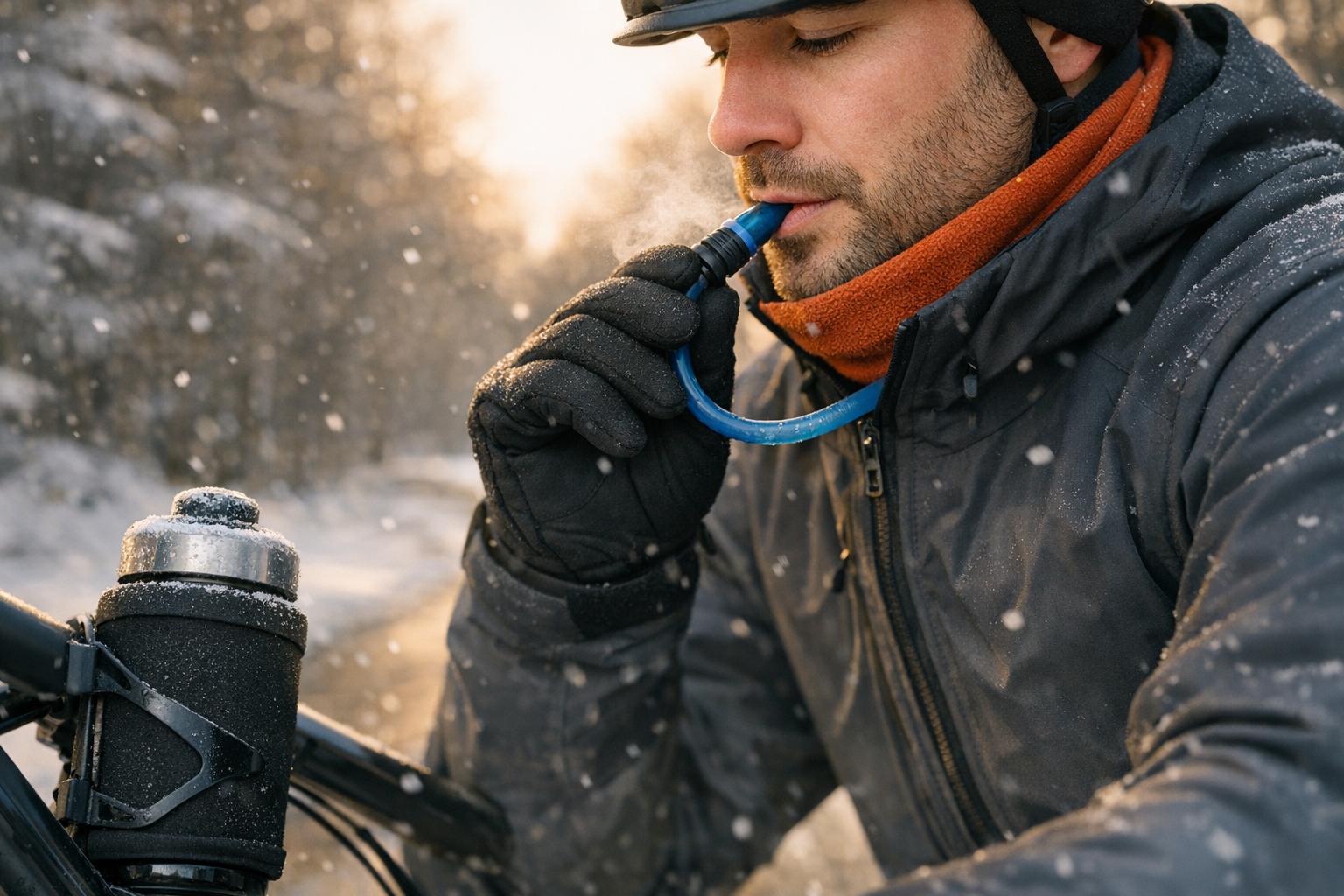

Base layers are the secret to staying warm and dry during winter biking. They wick sweat from your skin, prevent chilling during breaks or descents, and trap body heat to keep you comfortable. The right base layer can make cold-weather rides far more enjoyable by regulating temperature and managing moisture effectively.
Key Takeaways:
- Material Matters: Choose between merino wool (warm, odor-resistant), synthetics (fast-drying, durable), or blends (balanced performance).
- Fit is Key: A snug, second-skin fit ensures moisture-wicking and warmth without restricting movement.
- Layer Thickness: Match the base layer weight to the temperature – lightweight for mild cold, mid-weight for moderate cold, and heavyweight for freezing conditions.
- Care Tips: Use proper detergents, avoid high heat, and air dry to extend the life of your base layers.
Whether you’re tackling freezing descents or climbing in brisk temperatures, the right base layer ensures your focus stays on the ride – not the cold.
The Magic of Base Layers & Choosing the Right One
Base Layer Materials Compared
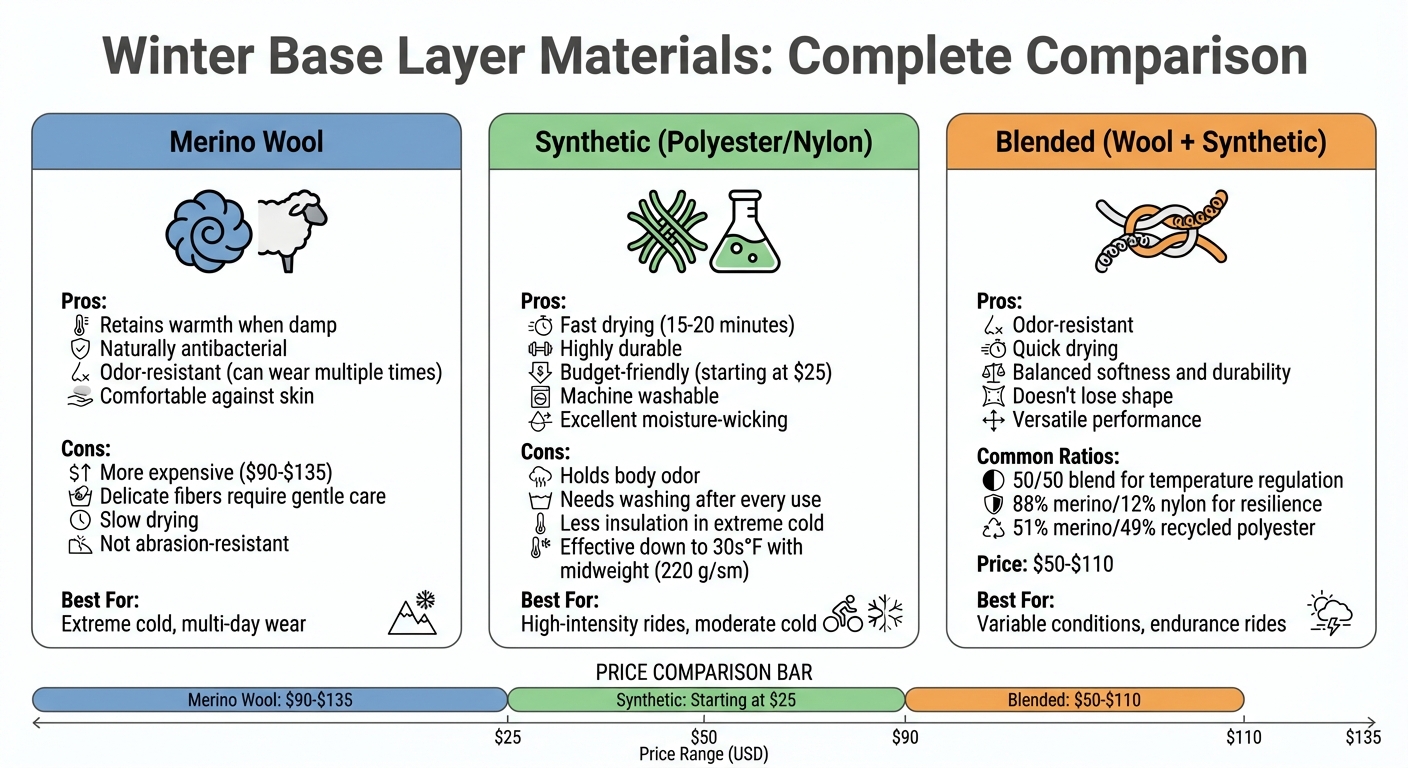
Winter Bike Base Layer Materials Comparison: Merino Wool vs Synthetic vs Blends
Winter base layers typically come in three material types: merino wool, synthetics, and blends. Each material offers its own set of benefits and drawbacks, impacting moisture control, warmth, and durability – key elements for staying comfortable and avoiding heat loss during cold-weather rides. Let’s break down the pros and cons of each option.
Merino Wool: Pros and Cons
Merino wool is a natural choice when it comes to insulation. It retains warmth even when damp, thanks to its ability to absorb moisture into its fiber core while its lanolin-coated outer layer keeps the surface feeling dry. Plus, it’s naturally antibacterial, meaning you can wear it multiple times without worrying about odor buildup. As Justin Simoni, Lead Reviewer at OutdoorGearLab, puts it:
"Its ultra-fine natural fibers won’t stand a chance if it encounters anything abrasive, such as tree limbs or granite rock faces. But if you treat it right, it provides consistent comfort and performance."
However, merino wool does have its downsides. It’s more expensive than synthetic options, with prices ranging from $90 to $135 for quality pieces. Its delicate fibers require gentle care, such as hand washing or air-drying, to avoid stretching or damage. Additionally, it dries much slower than synthetic materials, which can be a drawback for multi-day adventures.
Synthetic Materials: Polyester and Nylon
Synthetic base layers, often made from polyester or nylon, are all about efficiency. These materials excel at moisture-wicking, using a capillary action to pull sweat away from the skin and dry in as little as 15–20 minutes. They’re also highly durable, standing up to frequent machine washing without losing performance. On top of that, synthetics are budget-friendly, with options starting at just $25.
That said, synthetics aren’t perfect. They tend to hold onto body odor, so you’ll likely need to wash them after every use. While they’re great for moderate conditions, they don’t insulate as well as merino wool in extreme cold. Still, midweight synthetic options (around 220 g/sm) can keep you comfortable in temperatures down to the 30s°F.
Blended Materials: Wool and Synthetic Combinations
Blended base layers offer a middle ground, combining the strengths of both wool and synthetics. These blends provide odor resistance, quick drying, and a balance of softness with durability. Common ratios include 50/50 blends for even temperature regulation or lighter options with about 88% merino wool and 12% nylon for added resilience. Some premium blends mix responsibly sourced merino wool (51%) with recycled polyester (49%) to enhance moisture management and maintain loft.
As OutdoorGearLab explains:
"Merino wool and synthetic blends combine the best of all worlds, offering high performance without losing shape or holding onto body odor after multiple uses."
Blended base layers are typically priced between $50 and $110, offering versatility for riders who face changing conditions. They’re especially useful for those who need a single base layer that can handle both long endurance rides and more intense efforts without requiring constant washing.
What to Look for in Winter Base Layers
When choosing a winter base layer, focus on fit, construction, and thickness to ensure it performs well in cold weather. Let’s break down how these factors contribute to keeping you comfortable and protected during your rides.
Fit: Snug but Not Restrictive
A good base layer should feel like a second skin. It needs to be snug enough to manage moisture effectively while still allowing you to move freely. A tight fit helps wick sweat away and traps a thin layer of warm air against your skin. If the layer is too loose, it can lose that crucial insulation as you move.
Here’s a simple test: try the pinch method – if the fabric feels tight enough to resist pulling away, it’s likely too small. Also, mimic your riding posture. If you feel restricted in your shoulders or armpits, you might need a larger size. As Sub Zero puts it:
"If you cannot get the full rolling movement of your arms and shoulders then you need to try the next size up."
Look for helpful design features like thumb loops to keep sleeves in place and an extended rear tail to protect your lower back from wind and spray. Make sure the sleeves reach just past your wrists and the torso length is sufficient to prevent the layer from riding up during your ride.
Construction: Seams, Panels, and Stretch
The way a base layer is built plays a huge role in its comfort and functionality. Flatlock seams are a must – they lie flat against your skin, reducing friction and minimizing chafing on long rides. Some advanced designs use body-mapped panels, strategically placing windproof materials on the front, shoulders, and sleeves to block cold air, while adding breathable mesh under the arms and on the back to release heat and moisture. This is especially helpful during intense intervals when sweat can build up quickly.
High-stretch fabrics, often made with spandex or elastane, ensure the base layer hugs your body without restricting movement. For extra protection on colder days, look for high collars that shield your neck without unnecessary bulk – perfect for temperatures in the 30s°F and 40s°F.
Thickness and Temperature Ratings
Matching the fabric weight and temperature rating to your riding conditions is essential for staying comfortable. Base layers typically come in three categories:
- Lightweight (Mesh/Ultra-thin): Ideal for high-intensity rides or mild cold (50°F–68°F), these layers prioritize breathability and moisture-wicking.
- Mid-weight (Thermal): Balances insulation and breathability, making it suitable for fluctuating temperatures.
- Heavyweight (Thermal/Wind-blocking): Designed for freezing conditions, these layers use brushed or grid-backed fabrics to trap heat.
| Temperature Range | Recommended Base Layer Type | Key Features |
|---|---|---|
| 50°F to 68°F | Lightweight / Mesh | High breathability and moisture-wicking |
| 32°F to 50°F | Thermal / Mid-weight | Moderate insulation and moisture management |
| 30°F to 32°F | Heavy Thermal | Brushed lining for warmth |
| Below 30°F | Heavyweight / Wind-blocking | Windproof panels and thick insulation |
For the best results, start your ride feeling slightly cold. If you’re warm before you begin, you’ll likely overheat once you’re pedaling. On rides below 32°F, combine a heavyweight, moisture-wicking base layer with a proper winter jacket to combat evaporative cooling during descents. Some base layers even include windproof membranes on the front panels to shield your core from biting windchill, making them a smart choice for blustery days.
sbb-itb-9d75ae1
How to Care for Your Base Layers
Taking care of your base layers is crucial to keep them performing well and lasting longer – especially when you’re gearing up for winter biking. The way you wash and store these garments can vary depending on whether they’re made from merino wool, synthetic materials, or a blend of the two.
Washing Instructions by Material Type
Each type of material has unique care needs to preserve its moisture-wicking and insulating properties. Always turn your base layers inside out before washing to protect the outer surface and minimize pilling. Also, avoid mixing them with heavy items like jeans or zippered garments to reduce the risk of abrasion.
For synthetic base layers, skip the regular household detergent. Standard detergents can leave residues that compromise the fabric’s moisture-wicking ability. Instead, opt for technical cleaners like Grangers Active Wash or Nikwax. As Helly Hansen points out:
"A couple washes with a technical cleaner will remove all the residue left behind by your standard detergent, allowing your base layer to be refreshed in its breathability and fabric integrity".
If odors persist, try running consecutive wash cycles using a technical deodorizer.
Merino wool needs extra care. Use a wool-specific or mild detergent and wash in cool or lukewarm water, as hot water can cause shrinkage. Avoid bleach and fabric softeners. Smartwool emphasizes:
"It’s best to avoid using fabric softener when washing Merino wool as it can leave a residue on the fibers and affect their natural properties, such as moisture-wicking and odor resistance".
For blended fabrics that combine wool and synthetics, follow the care guidelines for wool since it’s the more delicate material.
Here’s a quick reference for washing different materials:
| Material Type | Recommended Detergent | Wash Cycle | Drying Method |
|---|---|---|---|
| Merino Wool | Wool-specific or mild soap | Gentle / Cool-Warm | Lay flat to air dry; avoid direct sunlight |
| Synthetic | Technical cleaner (e.g., Nikwax) | Normal / Follow label | Air dry preferred; low tumble if allowed |
| Blended | Wool-specific cleaner | Gentle | Air dry |
To cut down on washes, rinse your base layers with fresh water immediately after a ride.
Drying and Storage Methods
Drying and storing your base layers correctly can make a big difference in how long they last. Air drying is the safest option for all types of base layers. These fabrics dry quickly, so there’s little need to risk heat damage by using a dryer. Kylene Wolfe, Product Manager at Outdoor Research, advises:
"Don’t put base layers in the dryer. They don’t take long to dry – so why waste energy? – and then there’s less chance of them being broken down by heat and losing their original fit and color saturation".
If you must use a dryer, stick to a low-heat setting and only if the care label allows it. High heat can damage synthetic fibers and shrink wool. For wool garments, reshape them while damp and lay them flat to maintain their original dimensions.
When it comes to storage, make sure your base layers are completely clean and dry before tucking them away for the off-season. Damp clothing can lead to odors and mildew. Fold merino wool items to prevent stretching, while synthetic layers can be folded or hung. Keep everything in a drawer or closet away from direct sunlight. If your wool layers develop pilling over time, use a fabric comb or sweater shaver to gently remove the fuzz without harming the material.
Conclusion
The right base layer is key to keeping your core temperature steady, ensuring warm blood circulates to your hands and feet. As Jeremy Powers, former U.S. national cyclocross champion, explains:
"If your core is warm, you’ll be warm".
Here’s a quick breakdown of material options: Merino wool provides excellent insulation and resists odors, synthetics dry fast for intense activities, and blends strike a balance between the two.
A snug, form-fitting base layer works best, as it wicks away sweat effectively and retains heat, helping your body maintain a stable temperature throughout your ride. Pro tip: start your ride feeling a bit cool for the first 10–20 minutes. As your heart rate climbs, your body will naturally warm up.
To keep your base layers performing season after season, care is essential. Use technical cleaners for synthetics, wool-specific detergents for merino, and always air dry them. With proper care, high-quality base layers can last for seven years or more.
FAQs
What’s the best material for a winter biking base layer?
When it comes to choosing the best base layer for winter biking, it really boils down to your riding habits, the weather, and what feels right for you. Merino wool is a standout option. It’s breathable, keeps you warm even if it gets damp, and naturally resists odors – making it a great pick for long rides or when your pace varies. On the other hand, synthetic fabrics like polyester or polypropylene are excellent for wicking away moisture quickly. They’re often more budget-friendly and durable, though they can be prone to holding onto odors.
If you’re gearing up for frigid conditions (below 20°F), opt for a heavier merino layer or a synthetic base with a brushed interior for extra insulation. For milder winter days (30–50°F), a lightweight merino or thinner synthetic layer should do the trick. Keep in mind things like how intense your rides are, how often you’ll need to wash the layer, and your budget to find the perfect fit for staying warm, dry, and comfortable on every ride.
How should I wash and dry merino wool base layers to keep them in good condition?
To keep your merino wool base layers in top condition, here’s what you need to do:
- Turn them inside out before washing. This protects the outer surface and helps minimize pilling.
- Wash on a gentle cycle using cool or warm water (about 86°F) and a mild detergent specifically designed for wool. Steer clear of bleach and fabric softeners – they can damage the delicate fibers.
- Lay flat to dry on a clean towel or drying rack to maintain the garment’s shape. Air drying works best, but if you’re in a pinch, use the dryer on its lowest heat setting and tumble for a short time.
- Between washes, simply air out your base layer in a well-ventilated area. Thanks to merino wool’s natural ability to resist odors, you can often wear it multiple times before washing.
Stick to these steps, and your merino wool base layers will stay soft, last longer, and be ready for all your winter adventures.
How can I choose the right base layer thickness for winter biking in different temperatures?
When deciding on the right base layer thickness for winter biking, think about the temperature, your activity level, and how much warmth you’ll need. Here’s a quick guide:
- Mild days (above 30°F) or high-intensity rides: A lightweight base layer is your best bet. It provides enough insulation without overheating.
- Moderate cold (20–30°F) or steady-paced rides: A mid-weight base layer strikes the right balance between warmth and breathability.
- Extreme cold (below 20°F) or low-intensity rides: Opt for a heavyweight base layer to keep you properly insulated.
Your effort level plays a big role, too. If you’re pushing hard, you’ll naturally generate more heat, so you might need a thinner layer even in colder weather. Start with the suggested thickness, test it on a short ride, and tweak as needed. Adjusting mid and outer layers can also help you stay comfortable as conditions shift.