Affiliate disclosure: Intermountain Bikes is reader-supported. Some links on this page are affiliate links, including Amazon Associates links. If you buy through them, we may earn a small commission at no extra cost to you. It never changes what we recommend.
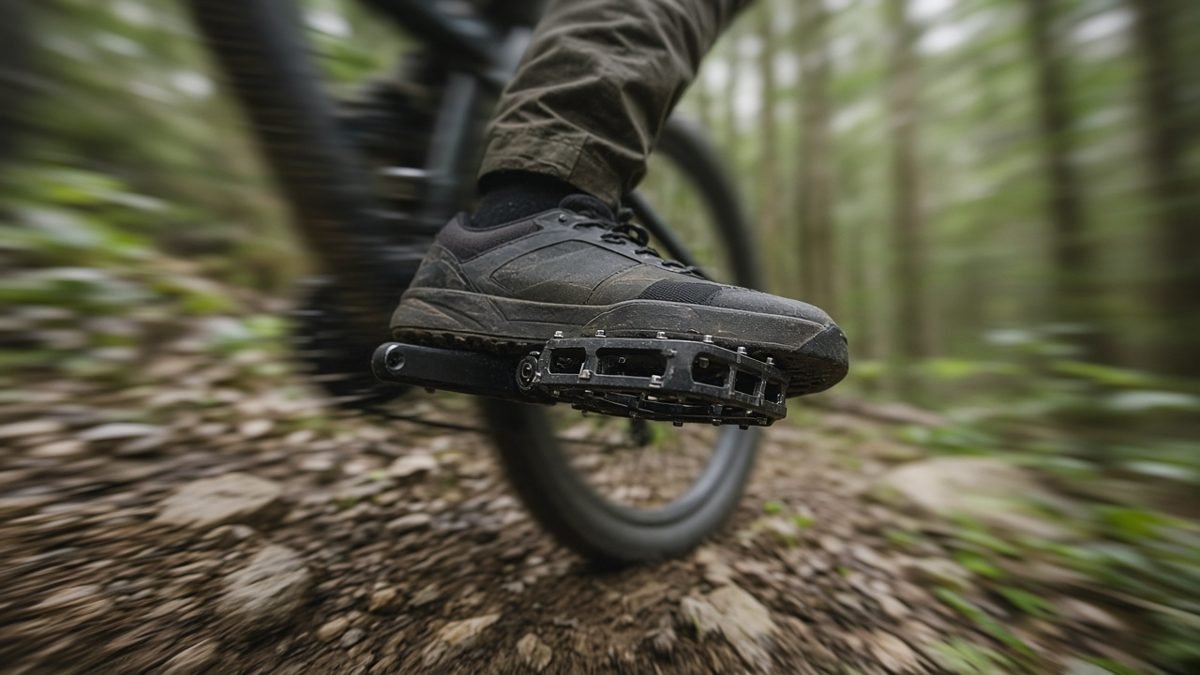
Short answer: most beginners should start on flat pedals with proper flat-pedal shoes. Flats let you put a foot down instantly, cost less, and teach good technique. Move to clipless (SPD) pedals once you are comfortable on the trail and want more pedaling efficiency and a more locked-in feel on rough climbs. Good first flats are the OneUp Composite and Race Face Chester; a good first clipless pedal is the Shimano PD-M520, or the Shimano XT PD-M8120 if you want a trail pedal with a support cage.
How we put this together: this guide is based on manufacturer specs and published pedal tests such as OutdoorGearLab’s flat pedal review and Canyon’s MTB pedal guide. We are not claiming our own lab testing here. Prices change, so check current listings.
Flat vs Clipless at a Glance
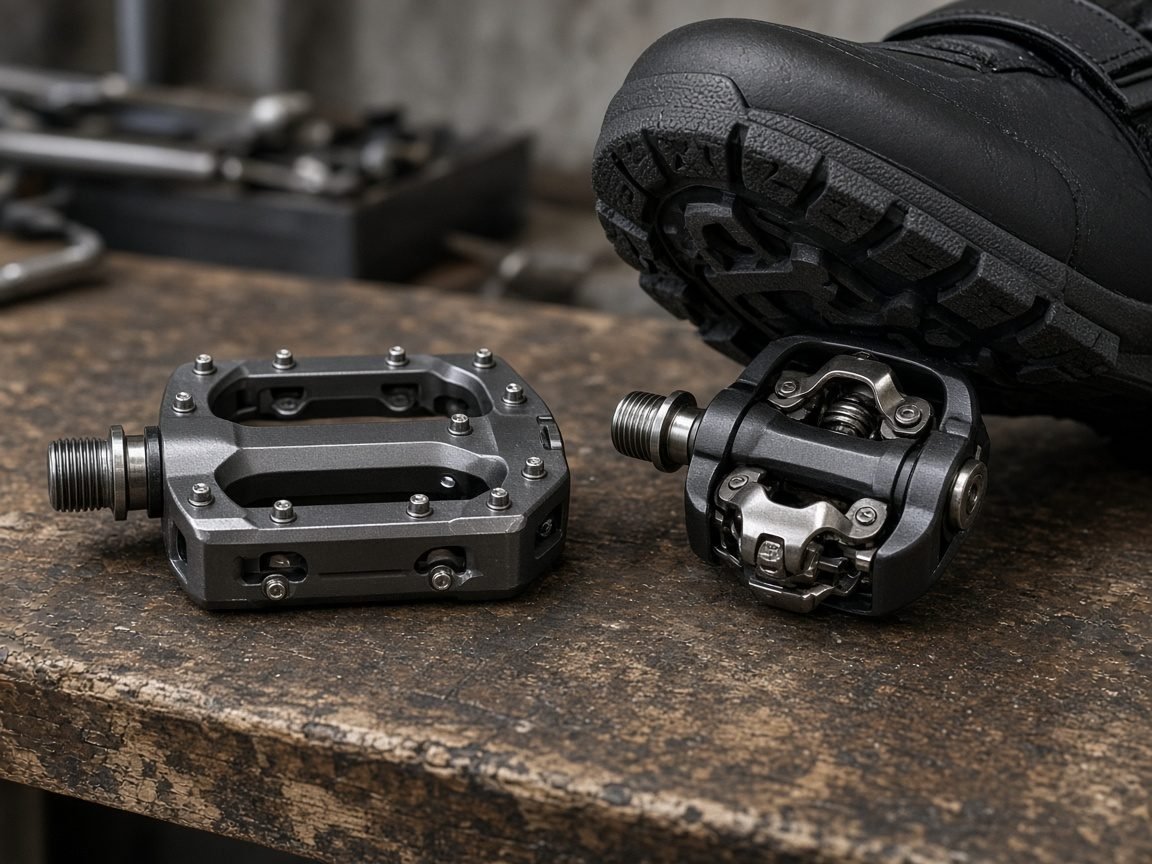
| Flat pedals | Clipless (SPD) | |
|---|---|---|
| Learning curve | None | A few rides to learn clipping in and out |
| Getting a foot down | Instant | Twist heel out (becomes automatic) |
| Pedaling efficiency | Good | Better, especially on long climbs |
| Foot stays put on rough ground | Depends on shoes and technique | Yes |
| Shoes | Flat-pedal shoes with soft rubber | Two-bolt SPD shoes + cleats |
| Starter cost (pedals) | ~$30-$60 | ~$40-$60 (M520), more for trail models |
| Best for | New riders, jumps, technical skills, casual rides | Cross-country, long trail rides, racing |
Why Beginners Usually Do Better on Flats
- Confidence: you can dab a foot in a tricky corner or bail without twisting out of a binding.
- Technique: flats reward good habits like heels down and weight through the feet, the same skills you need for jumping and switchbacks.
- Cost and simplicity: no cleats to set up or adjust.
The catch: grip depends heavily on your shoes. Running shoes slip on pinned pedals. A flat-pedal shoe with sticky rubber makes a bigger difference than the pedal itself.
When to Switch to Clipless
- You ride long climbs or longer cross-country loops and want more efficiency.
- Your feet bounce off flat pedals on chunky descents.
- You are comfortable on your local trails and ready to spend a few rides practicing.
Many riders own both and switch depending on the ride. There is no wrong answer.
Best Flat Pedals for Beginners
OneUp Composite: Best Overall Flat
A large, thin nylon-composite platform (115 x 105 mm per OneUp) with 10 replaceable pins per side, at about 355 g a pair. OutdoorGearLab called it an excellent value that is easy to rebuild. The large platform is forgiving if your foot lands a little off.
Race Face Chester: Best Budget Flat
A long-running favorite: affordable, tough, and offered in more than one platform size, so smaller feet can choose a smaller pedal. OutdoorGearLab notes it is a little less grippy in the wet than pricier options.
Pair them with real flat-pedal shoes
Best Clipless Pedals for Beginners
Shimano PD-M520: Best First SPD Pedal
A two-sided SPD pedal with adjustable entry and release tension, an open binding that sheds mud, and a sealed cartridge axle. It ships with SM-SH51 single-release cleats; SM-SH56 multi-release cleats are an option many new riders like because they release in more directions.
Shimano XT PD-M8120: Best Clipless Trail Pedal
A wider support cage around the SPD mechanism gives you a platform to stand on if you miss the clip, which helps a lot while you learn on technical terrain.
Shoes and cleats
You need a two-bolt SPD-compatible mountain bike shoe with a recessed cleat so you can walk. Our guides to cycling shoes under $100 and what to wear mountain biking help narrow it down.
How to Learn Clipless Safely
- Set release tension to the lowest setting on both pedals.
- Place cleats so the ball of your foot sits over the pedal axle, pointing straight ahead. Our mountain bike fit guide covers saddle height too.
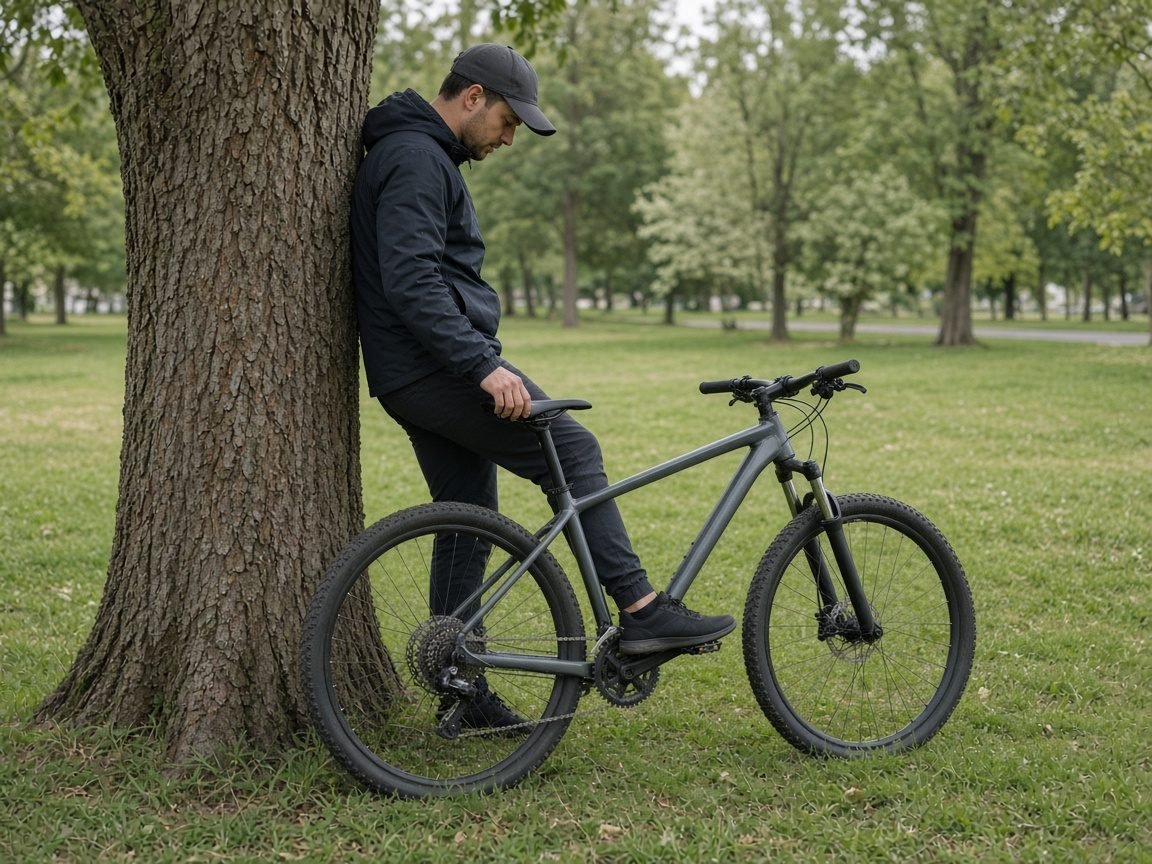
- Practice on grass or a flat lot: lean against a wall, clip in, and twist your heel outward to release, many times on each side.
- Unclip early before every stop, and pick one “dab foot” you always release first.
- Start on easy trails for a few rides before technical terrain.
- Raise tension gradually only if your foot releases when you do not want it to.
Everyone tips over at a stop sign once. Grass is a kinder place to do it. If you take a tumble, see our guide to treating common mountain biking injuries. Installing pedals yourself? Remember the left pedal is reverse-threaded, and a repair stand makes the job easier.
Frequently Asked Questions
Should a beginner mountain biker use flat or clipless pedals?
Most beginners should start with flat pedals and flat-pedal shoes. They make it easy to put a foot down and help build good technique. Switch to clipless once you are confident and want more efficiency.
Are clipless pedals dangerous for beginners?
They are safe once you practice. Set release tension low, practice clipping out on grass, and unclip early before stops. Multi-release cleats like Shimano SM-SH56 can make learning easier.
Do I need special shoes for flat pedals?
Not strictly, but flat-pedal mountain bike shoes with soft, sticky rubber grip pinned pedals much better than running shoes.
What are the best beginner clipless pedals?
The Shimano PD-M520 is a popular, affordable first SPD pedal. The Shimano XT PD-M8120 trail pedal adds a support cage that helps if you miss the clip.
Why are they called clipless pedals if you clip in?
The name refers to the old toe clips and straps they replaced. Clipless pedals use a cleat on the shoe that locks into the pedal.
The Bottom Line
Start on flats like the OneUp Composite or Race Face Chester with sticky flat-pedal shoes. When you are ready for more efficiency, try Shimano SPD pedals with low tension and a few practice sessions on grass.