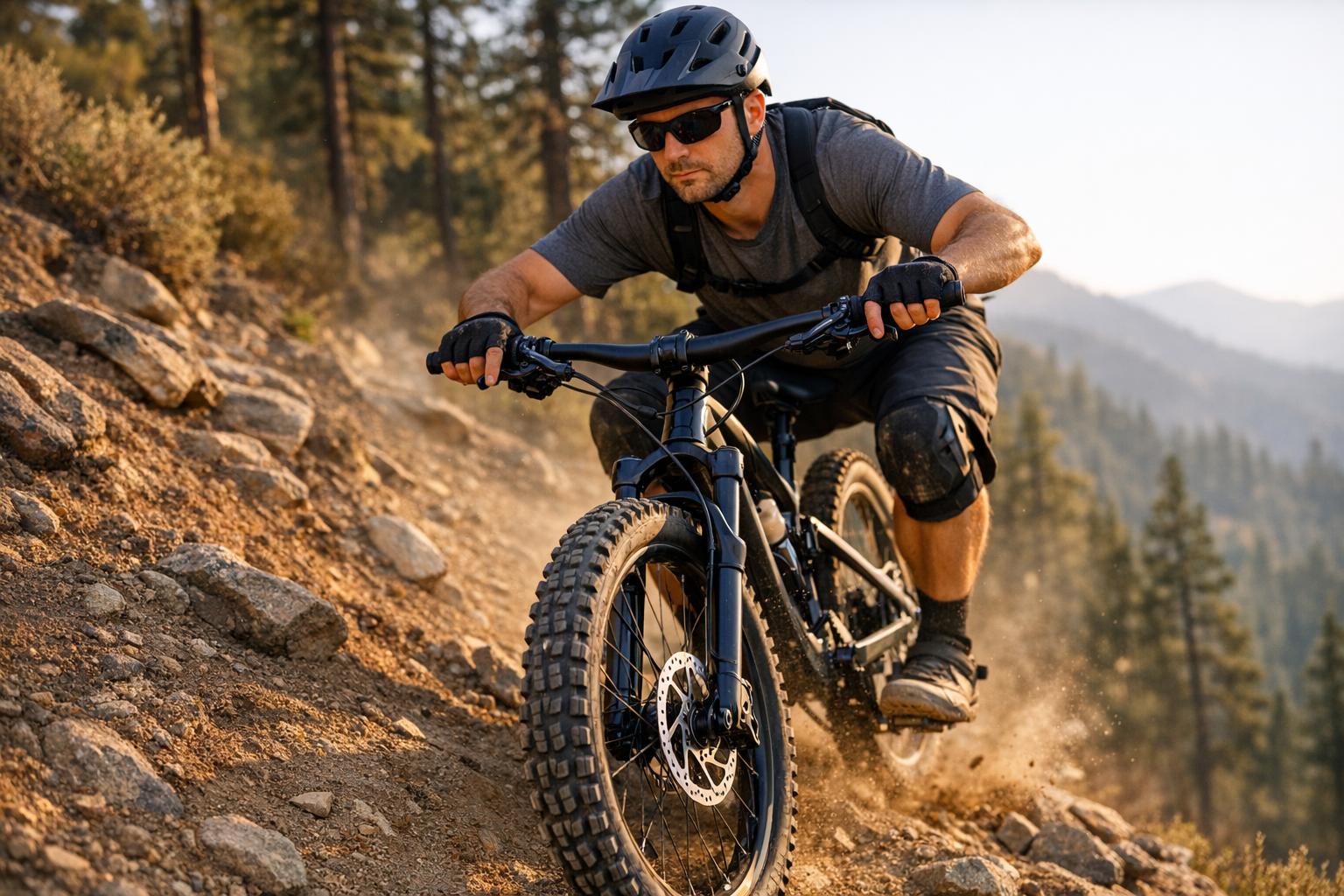

A proper mountain bike fit is the key to comfort, performance, and preventing injuries. Whether you’re a beginner or an experienced rider, dialing in your bike’s fit can make every ride smoother and more enjoyable. Here’s what you need to know:
Key Points to Start With:
- Frame Size: Choose based on your height and inseam. A proper frame size ensures better control and comfort.
- Saddle Height & Position: Adjust for efficient pedaling and reduced knee strain.
- Handlebars & Stem: Tweak height, width, and length for better control and upper-body comfort.
- Bike Geometry: Understand terms like reach, stack, and angles to match your bike to your riding style.
Common Issues and Fixes:
- Knee Pain: Likely caused by incorrect saddle height. Adjust for a slight knee bend at the pedal’s lowest point.
- Back or Neck Pain: Stems from handlebars being too low or far. Modify handlebar height or stem length.
- Numb Hands: Shift weight distribution by adjusting the saddle or handlebars.
Why It Matters:
A well-fitted bike improves handling, boosts power transfer, and reduces discomfort, letting you ride longer and tackle tougher trails. Start by selecting the right frame size, then fine-tune your setup through small adjustments.
For advanced precision, consider using professional fitting services or online tools to tailor your bike to your body and riding style. The right fit transforms your bike into an extension of you.
HOW TO FIT A MOUNTAIN BIKE TO YOUR BODY | Free Fit Kit
Mountain Bike Sizing Basics
Getting the right frame size is the foundation of a comfortable and efficient bike fit. Since the frame size is fixed, it’s essential to nail it from the start. A properly sized frame improves both comfort and control, while a poorly chosen size can lead to ongoing discomfort and issues that adjustments alone may not fix.
To determine the right size, it’s important to understand how your body measurements relate to the bike’s geometry. While height is often the go-to measurement, factors like inseam length and riding style play a significant role in selecting the best frame for you.
Key Measurements for Sizing
Three main measurements are critical for determining how a mountain bike fits: seat tube length, top tube length, and standover height. These measurements help interpret sizing charts and guide your purchase.
- Seat tube length: This measures the distance from the center of the bottom bracket (where the pedals attach) to the top of the seat tube. It’s usually expressed in inches and is the primary indicator of frame size. For instance, a 17-inch frame means the seat tube is 17 inches long.
- Top tube length: This refers to the horizontal distance between the head tube and the seat tube. It affects how far you’ll need to reach for the handlebars, influencing whether the riding position feels cramped or overly stretched. Modern bikes often use "effective top tube length" to account for sloping frame designs.
- Standover height: This is the vertical distance from the ground to the top of the top tube at its lowest point. It ensures you have enough clearance to dismount safely. Aim for at least 2 inches of clearance between your inseam and the top tube. For more aggressive terrain or frequent dismounts, 3 to 5 inches of clearance is ideal.
To measure your inseam at home, stand against a wall with your feet about 6 inches apart. Hold a book between your legs, snug against your body, and measure from the floor to the top of the book. This inseam measurement can help you estimate your frame size. A simple formula to get started: multiply your inseam (in inches) by 0.67, then subtract 4. This provides a general frame size recommendation in inches.
Frame Size and Rider Height Correlation
Manufacturers typically label mountain bike sizes (XS, S, M, L, XL) based on seat tube measurements and corresponding rider height ranges. While these size labels are a helpful starting point, individual proportions can vary, so it’s important to tailor your choice to your specific measurements.
| Size | Frame Size (inches) | Rider Height |
|---|---|---|
| XS | 13" | 4’8"–5’2" |
| S | 15" | 5’2"–5’6" |
| M | 17" | 5’6"–5’10" |
| L | 19" | 5’10"–6’1" |
| XL | 21" | 6’1"–6’4" |
These ranges vary slightly between brands, so always check the specific sizing chart for the bike you’re considering. Geometry differences between models can affect how a bike fits.
For example, a rider who is 5’8" with a 32-inch inseam would typically fit a Medium (17-inch) frame. However, if their proportions differ – such as having longer legs relative to their height – they might need to adjust their frame choice or tweak components like saddle position or stem length.
If you’re between sizes, it’s often better to choose the smaller frame for better maneuverability, especially on technical trails. While you can adjust components like saddle height, stem length, and handlebar position, these tweaks can’t fully compensate for a frame that’s too large.
Modern mountain bikes often feature longer top tubes and sloping geometries, making reach and effective top tube length more important than traditional seat tube measurements. This shift underscores the importance of consulting manufacturer-specific charts, as sizing can vary significantly between brands and models.
Start with height-based sizing, then fine-tune your choice using inseam measurements, riding style, and personal preferences. Whenever possible, test ride different frame sizes to find the one that feels most natural and suits your riding needs.
Key Bike Geometry Factors
Frame size might give you a rough idea of how a bike fits, but it’s the geometry that truly defines how your mountain bike feels and performs on the trail. Geometry dictates everything from your stability on steep descents to how well you can power through climbs. Knowing the key geometry terms can help you pick a bike that aligns with your riding style and body proportions.
Geometry Terms Explained
Reach is one of the most critical measurements in modern mountain biking. It’s the horizontal distance from the bottom bracket (where your pedals attach) to the center of the head tube. Reach determines how stretched out you feel when standing on the pedals, which is a key position for technical riding. A longer reach provides more stability and control, especially when descending, while a shorter reach keeps you more centered, giving you quicker handling.
Stack measures the vertical distance from the bottom bracket to the top of the head tube. This affects how upright or aggressive your riding posture feels. A higher stack offers a more relaxed position, reducing strain on your back and neck during long rides. On the other hand, a lower stack puts you in a forward-leaning, aerodynamic stance, which is great for speed and control but may be less comfortable over time.
Head tube angle plays a big role in how your bike handles. A slacker angle (closer to horizontal, like 65°) makes the bike more stable at high speeds and on steep descents. A steeper angle (closer to vertical, like 70°) allows for quicker, more responsive steering, which is ideal for tight trails and climbing.
Seat tube angle impacts how efficiently you can pedal and how your weight is distributed. A steeper angle (75-77°) places you directly over the pedals for better climbing power, which is especially useful on trail and enduro bikes. A slacker angle (72-74°) shifts you further back, offering more comfort for long rides but sacrificing some climbing efficiency.
Wheelbase is the distance between the front and rear axles. A longer wheelbase enhances straight-line stability, making the bike feel predictable at high speeds and on rough terrain – perfect for downhill and aggressive trail riding. A shorter wheelbase, however, improves maneuverability, which is helpful for navigating tight corners and technical sections.
All these measurements work together to shape how a bike performs. Modern mountain bikes often feature longer reach and slacker head tube angles for better stability and control on challenging terrain, while steeper seat tube angles ensure efficient climbing. These elements combine to influence how the bike handles across different riding conditions.
Geometry for Different Riding Styles
The type of mountain biking you enjoy should guide your choice of geometry. Each style demands a unique setup to maximize performance and comfort.
Cross-country riders prioritize climbing efficiency and quick handling. Bikes designed for this style usually have steeper head tube angles (69-71°) for responsive steering on twisty trails. A shorter reach keeps you centered for better weight distribution during climbs, while wheelbases around 42-44 inches provide the agility needed for technical sections. Moderate stack heights create a more upright position, reducing fatigue on long rides.
Trail riders need a balance between stability and versatility. These bikes typically have head tube angles in the 66-68° range, offering confidence on descents while still climbing well. Reach measurements are moderate, giving you control without feeling overly stretched out. Wheelbases of 44-46 inches strike a good balance between stability and maneuverability. Steeper seat tube angles enhance climbing efficiency, even with a slightly more aggressive geometry.
Downhill and enduro riders focus on stability and control, often at the expense of climbing efficiency. These bikes feature slack head tube angles (63-65°) for confidence on steep descents and high-speed sections. Longer reach measurements improve control when standing on the pedals, while wheelbases of 46-48 inches or more provide the stability needed for rough terrain. Higher stack heights support a more upright position, ideal for tackling technical descents.
| Riding Style | Head Tube Angle | Wheelbase | Reach | Primary Benefits |
|---|---|---|---|---|
| Cross-Country | 69-71° | 42-44" | Shorter | Quick handling, climbing efficiency |
| Trail | 66-68° | 44-46" | Moderate | Balanced performance, versatile |
| Downhill/Enduro | 63-65° | 46-48"+ | Longer | Stability, control on steep descents |
When deciding on geometry, think about the type of trails you ride most often. If your rides involve a lot of climbing on singletrack or fire roads, cross-country geometry will suit you best. For bike parks and steep, challenging trails, downhill-oriented geometry is the way to go. Most riders fall somewhere in between, making trail geometry a versatile choice.
Keep in mind that you can fine-tune your bike’s handling with components. For example, a shorter stem can make a longer reach feel less stretched out, while handlebar adjustments can tweak your riding position. However, these changes can only do so much – choosing a frame with the right geometry for your style is the foundation for a bike that performs and feels great.
Step-by-Step Fit Adjustments
Fine-tuning your bike’s fit is all about making systematic adjustments and testing each change for comfort and control. The steps below focus on refining your saddle, handlebar, and stem settings to optimize your ride.
Saddle Positioning
Getting your saddle position right is key to efficient pedaling and protecting your knees. Adjust the height, angle, and fore/aft position with care.
Saddle height plays a huge role in pedaling efficiency. To find the right height, measure your inseam in inches, multiply it by 0.883, and use that number to set the distance from the bottom bracket to the top of the saddle. For instance, if your inseam is 32 inches, your saddle height should be about 28.3 inches. From there, tweak the height incrementally for the best fit.
Another way to check is the heel-to-pedal test. Sit on your bike with your heel resting on the pedal when it’s at its lowest point. Your leg should be fully extended. When you switch to the ball of your foot, your knee should have a slight bend.
The saddle angle should be level to evenly distribute your weight. Use a spirit level to check alignment. A nose-down tilt can put unnecessary pressure on your hands, while a nose-up position might cause discomfort in your lower back.
Finally, adjust the fore/aft position to fine-tune pedaling efficiency and reduce knee strain. With the crank arm horizontal, align your knee over the pedal axle. Use a plumb line dropped from your kneecap to confirm the alignment. Loosen the seat clamp and slide the saddle forward or backward as needed.
Make small adjustments and test the changes frequently to find what works best.
Handlebar and Stem Adjustments
Once your saddle is dialed in, focus on your handlebar and stem settings to enhance control and upper-body comfort.
Handlebar height directly affects your riding posture. Raising the handlebars promotes a more upright position, which can ease strain on your neck and back – ideal for relaxed or long rides. Lowering the bars can improve aerodynamics and handling, especially for aggressive descents.
Handlebar width impacts leverage and control. Mountain bike handlebars generally range from 720 mm to 800 mm. Downhill and enduro riders often prefer wider bars (760–800 mm) for added stability, while cross-country riders might choose narrower ones (700–740 mm) for better maneuverability. Aim for a width that feels natural, usually about shoulder-width or slightly wider.
Stem length influences both your reach and steering responsiveness. Shorter stems (35–50 mm) provide quicker handling and a more upright posture, which is great for technical trails. Longer stems (60–100 mm) can extend your reach and improve climbing efficiency, though they may reduce control on descents. Pick a stem length that fits your riding style and body proportions.
| Component | Adjustment Range | Impact on Riding |
|---|---|---|
| Handlebar Height | Spacer movement, stem flip | Comfort vs. aerodynamics |
| Handlebar Width | 720–800 mm | Control vs. maneuverability |
| Stem Length | 35–100 mm | Reach vs. handling response |
To make these adjustments, you’ll need tools like hex wrenches, a torque wrench, and a spirit level. Online fit calculators can also help you refine your settings. Take your time and test each adjustment to ensure everything feels just right.
sbb-itb-9d75ae1
Advanced Fit Techniques and Tools
Once you’ve nailed the basics, advanced techniques can take your bike fit to the next level, fine-tuning your setup for maximum performance. These methods go beyond simple adjustments, diving deeper into how your body mechanics and riding habits interact with your bike.
Using Fit Calculators and Apps
Digital fit calculators are a convenient way to refine your bike setup from the comfort of home. Tools like the Jenson USA Bike Fit Calculator and Bike Insights use algorithms to recommend things like frame size, saddle height, and reach based on your measurements. To get started, you’ll need to gather key details like your height, inseam, torso length, and arm length – standard measuring techniques work just fine for this.
What makes these calculators even more helpful is their ability to tailor recommendations to your riding style. For example, cross-country riders might see suggestions for a longer reach and a more stretched-out position, while downhill riders often benefit from a shorter reach and higher stack for better control on technical trails. Some platforms even let you compare bike geometries side-by-side, so you can visualize how different setups might feel before committing to a purchase.
Most basic calculators are free or included with bike purchases, while more advanced apps might charge a small fee – usually under $50. These tools are a great starting point, especially if you’re new to mountain biking or thinking about switching up your bike style.
For riders looking for even more precision, professional bike fitting services offer a hands-on, data-driven approach.
Professional Bike Fitting Services
Professional bike fitting takes customization to another level with in-person assessments and advanced technology. In the U.S., these sessions typically cost between $150 and $400 and last 1 to 2 hours. They include a thorough evaluation, on-bike analysis, and detailed recommendations tailored to your needs.
Advanced fittings often use cutting-edge tools like laser alignment systems and 3D motion analysis, which track joint angles and movement patterns to identify inefficiencies that digital calculators might miss. Some services also use motion capture systems and pressure mapping to provide real-time insights into how your body interacts with the bike. These adjustments can significantly improve both comfort and power output. In fact, a 2022 survey found that over 60% of riders reported reduced discomfort and better efficiency after a professional fitting.
Here’s a quick breakdown of tools and services to help you find the best fit:
| Tool/Service | Features | Typical Cost (USD) | Best For |
|---|---|---|---|
| Online Fit Calculators | Input body measurements for tailored suggestions | Free – $50 | DIY, initial sizing |
| Mobile Fit Apps | Interactive tools, some use phone cameras | Free – $50 | DIY, quick adjustments |
| Professional Fitting (Basic) | Manual measurements and static analysis | $150 – $250 | Riders seeking comfort |
| Pro Fitting (Advanced) | 3D motion analysis, pressure mapping, laser alignment | $250 – $400+ | Performance tuning, injury prevention |
Professional fitting is especially useful if you’re dealing with ongoing discomfort, have unique body proportions, or want to optimize your performance. You’ll usually get a detailed report with specific measurements and settings, making it easier to replicate the fit at home or transfer it to a new bike.
Common Fit Problems and Solutions
Let’s dive into some common fit problems mountain bikers face and how to address them. Even with a well-set-up bike, discomfort can creep in, and knee pain tops the list of complaints among riders. The good news? Most fit issues can be resolved by identifying the root cause and making targeted adjustments. A survey by Singletracks revealed that 65% of riders who tweaked their bike setup saw noticeable improvements. Here’s how to tackle the most frequent problems.
Troubleshooting Fit Issues
Knee pain is the most common issue, and it’s usually tied to saddle height. If the saddle is too high, you’ll feel pain behind your knee due to overextension. If it’s too low, expect pain at the front of your knee from excessive compression. The solution? Adjust your saddle so your leg is almost fully extended at the bottom of the pedal stroke, leaving a 25-30 degree bend in your knee when the ball of your foot rests on the pedal.
Lower back and neck pain often point to handlebar issues. When handlebars are too low or too far away, you’re forced to overreach, putting strain on your upper body. Raising the handlebars by 10-20 mm or shortening the stem can ease this strain and improve your comfort on longer rides.
Numb hands usually mean your weight isn’t distributed properly. Too much weight on your hands can lead to discomfort. To fix this, try raising the handlebars, moving the saddle slightly forward, or shortening the stem. These adjustments help shift your weight back to your saddle and legs.
Saddle discomfort – whether it’s soreness, numbness, or pressure points – often stems from incorrect saddle positioning rather than the saddle itself. Make sure your saddle is level and positioned so that when your pedal is at the 3 o’clock position, your knee aligns directly over the pedal axle.
Here’s a handy table to match symptoms with solutions:
| Symptom | Likely Cause | Recommended Adjustment |
|---|---|---|
| Knee pain (behind) | Saddle too high | Lower saddle height for proper extension |
| Knee pain (front) | Saddle too low | Raise saddle to reduce compression |
| Lower back pain | Handlebars too low/far | Raise bars 10-20 mm or shorten stem |
| Neck pain | Excessive reach | Reduce stem length or raise handlebar height |
| Numb hands | Too much weight on hands | Raise bars, adjust saddle forward, add padding |
| Saddle soreness | Poor fore-aft position | Align knee over pedal axle at crank’s horizontal |
| Hip pain | Saddle too low | Raise saddle to proper height |
Fine-Tuning Your Fit
When making adjustments, take it one step at a time. Test each change over several rides before moving on to the next. Even small tweaks of 5-10 mm can make a noticeable difference. If you’re still experiencing discomfort after trying these fixes, consider consulting a professional bike fitter or visiting your local bike shop. Complex issues often require a more holistic approach to ensure your bike works seamlessly with your body’s mechanics.
Keep in mind that bike fit isn’t a one-and-done deal. Your needs may evolve as your riding style changes, your fitness improves, or your body adapts over time. Regularly reassessing your setup ensures you stay comfortable and efficient on every ride. Small, thoughtful adjustments can lead to big improvements in your overall riding experience.
Conclusion: Achieving the Perfect Fit
Getting your bike to fit just right starts with selecting the right frame size and evolves through careful adjustments tailored to your needs. The essentials? Begin with the correct frame size and match your bike to your riding style, fine-tuning as your skills and preferences grow.
Once you’ve nailed down the frame size, focus on dialing in the details. Start by using your measurements and the manufacturer’s sizing chart as a guide, then refine through test rides. Pay close attention to factors like reach, effective top tube length, and standover height – these directly affect your comfort and control on the trail.
Small adjustments can make a big difference. Whether it’s raising your saddle by a few millimeters or shifting your handlebars slightly, take note of each change and test it over multiple rides before making further tweaks. This systematic approach helps you find the setup that works best for your body and riding style. As your skills develop, revisit and adjust your setup to stay in sync with your performance goals.
A bike that fits perfectly doesn’t just enhance comfort – it also improves handling, boosts power transfer, and builds confidence, allowing you to tackle tougher trails and technical sections. Over time, these benefits add up, making every ride more enjoyable and helping you grow as a rider.
For more tips and expert advice on mountain bike fitting, check out Intermountain Bikes. Their resources and step-by-step tutorials cater to riders of all levels, offering solutions for comfort issues and advanced fitting techniques. With their guidance, you’ll have the tools to keep refining your setup for peak performance and maximum trail enjoyment.
FAQs
How can I choose the right mountain bike frame size if my body proportions don’t match standard sizing charts?
Finding the right mountain bike frame size can feel like a challenge if your body proportions don’t match standard sizing charts, but it’s absolutely doable with a few adjustments. One of the first things to check is the standover height – you’ll want about 2–3 inches of space between the top tube and your inseam when standing over the bike. After that, focus on the reach (the distance to the handlebars) and the seat tube length, both of which can be adjusted to improve comfort and control.
Still feeling unsure? A visit to a local bike shop for a professional fitting can help pinpoint the best setup for you. You can also experiment with adjustable components like stems, handlebars, and seat posts. Even small changes can make a big difference in tailoring the bike to fit your proportions perfectly.
How can I adjust my mountain bike to reduce discomfort during long rides?
If long rides are leaving you feeling uncomfortable, a few simple tweaks to your bike setup could make all the difference. Start with your saddle height – your knee should have a slight bend when the pedal is at its lowest point. This adjustment helps ensure proper leg extension and reduces unnecessary strain.
Next, check your saddle position. Slide it forward or backward to avoid overstretching or feeling cramped while riding. Finding the right balance here can significantly improve your posture and overall comfort.
Don’t overlook your handlebar height and angle. Adjusting these can ease tension in your back and wrists. Experiment with raising or lowering the handlebars to find a position that feels natural. Also, make sure your brake levers are positioned for easy reach, so you’re not overextending your fingers when you need to use them.
If you’re still experiencing discomfort, it might be worth consulting a professional bike fitter. They can help you fine-tune every aspect of your setup. Alternatively, you can refer to resources like the detailed guide from Intermountain Bikes for more tips on achieving a comfortable and efficient ride.
Is it worth investing in professional bike fitting if I’m a casual mountain biker?
Professional bike fitting can make a big difference, even if you only ride casually. When your bike is adjusted to fit you correctly, it can improve comfort, lower the chance of injuries, and make your rides much more enjoyable. If you’ve ever felt discomfort, pain, or even fatigue while riding, a proper bike fit might be the solution.
You don’t need to go all out with an advanced fitting session if you’re a casual rider. Simple tweaks like adjusting your seat height, handlebar position, or pedal alignment can have a noticeable impact. If you’re not sure where to start, try a basic fitting session or reach out to a local expert. It’s an easy step that could transform how you feel on your bike.