
Switchbacks are tight, sharp turns on mountain biking trails that test your control, balance, and precision. To master them, you need focused practice on drills that build muscle memory and improve key techniques like body positioning, line choice, and braking. Here’s what you need to know:
- Key Techniques:
- Maintain a neutral stance with level pedals and centered weight.
- Use the "cowboy stance" for downhill turns: wide knees, heavy feet, light grip.
- Look ahead toward the exit of the turn, not at your front wheel.
- Brake early and evenly before entering the turn, avoiding mid-turn braking.
- Effective Drills:
- Tight Circles: Practice balance and bike lean by riding in progressively smaller circles.
- Figure Eights: Weave between two markers to improve smooth transitions.
- Trackstands: Learn to balance without forward movement, useful for pausing mid-turn.
- Cone Drills: Simulate switchbacks by navigating a zigzag cone pattern.
- Parking Space Turns: Practice tight U-turns within a single parking space.
- Rock Dodges: Sharpen quick obstacle-avoidance skills.
- Practice Tips:
- Warm up for 10–15 minutes before starting.
- Focus on gradual progress and set specific goals.
- Practice in a safe, open area with proper gear like helmets and pads.
- Keep sessions short (45–60 minutes) and consistent, aiming for twice a week.
With these drills and techniques, you’ll gain confidence and control to handle even the toughest switchbacks. Regular practice is the key to improvement.
Perfect Your Switchbacks With This Simple Drill – Practice Like a Pro #56
Basic Techniques for Switchback Handling
Getting comfortable with switchbacks starts with nailing the basics. These core techniques are the building blocks for more advanced skills. Once you’ve got these down, you’ll be able to handle switchbacks with confidence.
Body Position and Balance
Your body position plays a huge role in controlling your bike through switchbacks. Begin with a neutral stance: keep your pedals level, bend your knees slightly, and center your weight over the bike. This stance gives you stability and ensures both wheels stay firmly planted on the trail.
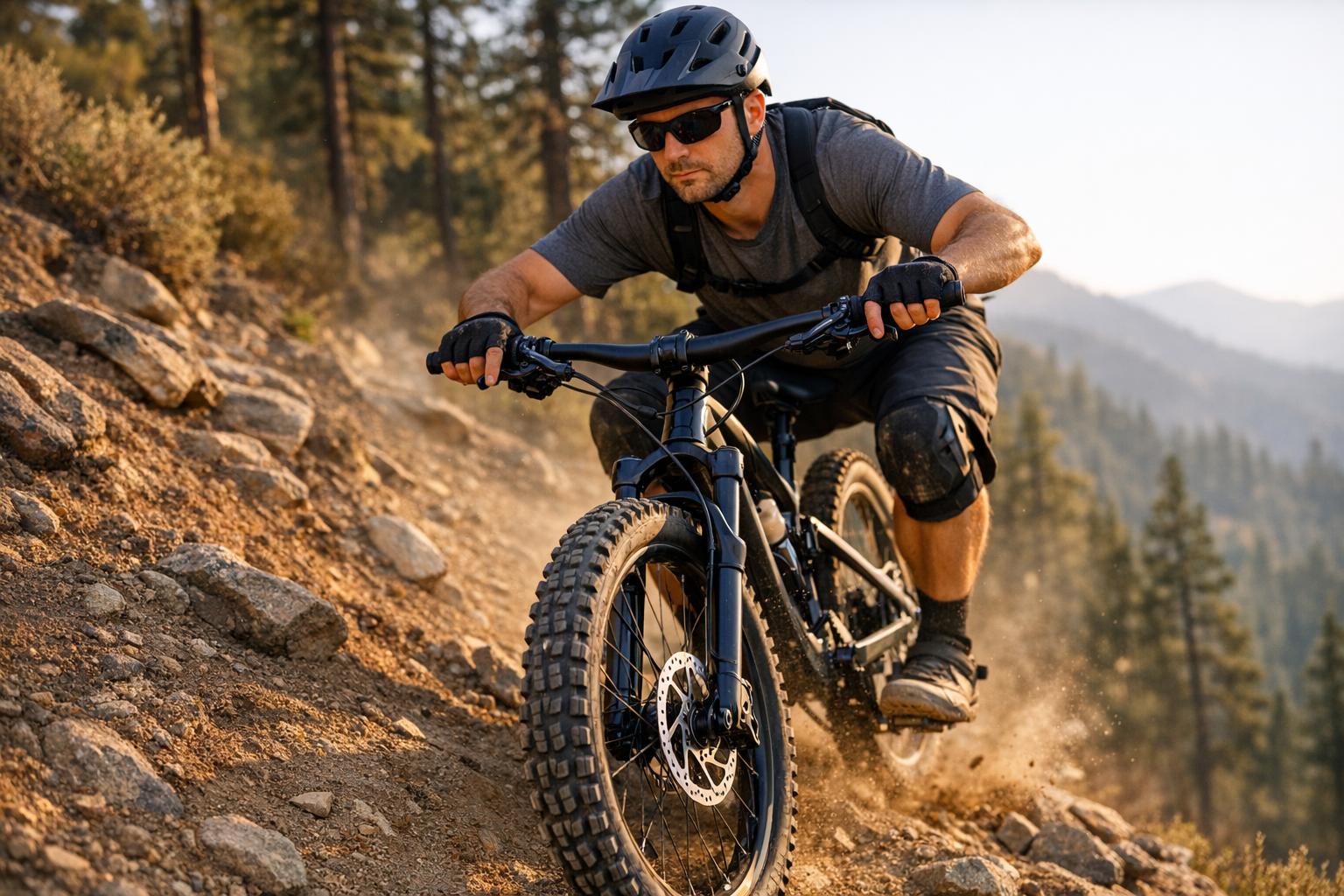
For downhill switchbacks, many riders swear by the "cowboy stance." To do this, spread your knees wide, press your feet firmly onto the pedals, and keep a light grip on the handlebars. This technique lets the bike move freely between your legs while you stay in control. It might feel strange at first, but it’s a game-changer for tackling steep, tight turns.
Don’t stay rigid. Switchbacks demand dynamic movement. Use your hips to twist and guide the bike, and let your midsection lead the way. Your knee becomes a steering tool, helping you carve through the turn. This active approach makes navigating switchbacks smoother and more precise.
Vision and Line Choice
Where you look is where you’ll go. Instead of staring at the ground right in front of your wheel, focus ahead – through the turn and toward your exit. This habit trains your bike to follow your gaze, making tight turns feel more natural over time.
Picking the right line is just as important. A good strategy is to start on the inside of the turn and let your front wheel arc around the rear wheel. Keep the rear wheel close to the inside edge of the trail. If you’re unsure, check out the tire marks left by other riders. Often, you’ll notice the front tire took one path while the rear tire created a tighter rut. These marks can reveal the most effective line for tricky switchbacks.
Braking and Speed Control
Controlled braking is critical for mastering switchbacks. Brake early – before you enter the turn – and do so evenly. Once you’re in the switchback, focus on your balance and line rather than trying to adjust your speed mid-turn.
Use both your front and rear brakes evenly to maintain traction, especially on loose or steep terrain. Avoid grabbing the brakes too hard while turning; instead, slow down beforehand and let your momentum carry you through the corner. Striking the right balance with speed is essential. Too much speed can throw you off your line, while going too slow can mess with your balance. Also, shift gears before entering the turn so you’re ready to accelerate smoothly as you exit.
These basics lay the groundwork for tackling advanced switchback techniques in the next section.
| Technique | Application | Key Focus | Pitfalls |
|---|---|---|---|
| Neutral Stance | All switchbacks | Level pedals, centered weight | Stiff posture, gripping bars too tightly |
| Cowboy Stance | Downhill switchbacks | Wide knees, heavy feet, light hands | Leaning too much on handlebars |
| Early Braking | Speed control | Brake before the turn | Braking mid-turn, uneven pressure |
| Vision Ahead | Line choice | Look toward the exit | Fixating on obstacles or the ground |
Drills for Improving Switchback Skills
These exercises are designed to help you build the muscle memory and confidence needed for tackling switchbacks. You can practice them in a parking lot or any open park area.
Let’s start with the basics: mastering fundamental turning techniques.
Tight Circles and Figure Eights
Tight circles are a great way to practice control and balance. Start by riding in circles about 10–15 feet in diameter on flat ground. Focus on steady speed and balance. As you get more comfortable, gradually reduce the circle size until you’re riding in a circle just slightly larger than your bike’s wheelbase. The trick is to lean the bike into the turn while keeping your body upright. Practice this in both directions to develop balanced skills.
Figure eights take things up a notch by combining left and right turns. Place two markers about 20 feet apart and weave between them in a figure-eight pattern. This drill helps you work on smooth transitions, which are crucial for navigating consecutive switchbacks. Start with wide loops and tighten them as you improve, focusing on maintaining momentum and sharp directional changes.
Trackstands and Ratcheting
Trackstands are all about balance. This drill teaches you to stay balanced on your bike without moving forward, which is incredibly helpful when you need to pause mid-turn to reassess your line. To practice, find a slight uphill slope (2–3% grade works well). Turn your front wheel slightly uphill and use small weight shifts and handlebar adjustments to stay steady. Start with short holds of a few seconds and gradually increase your duration.
Ratcheting is a perfect companion to trackstands. This technique involves making small pedal movements – both forward and backward – to adjust your position without completing a full pedal stroke. It’s especially useful in tight switchbacks where full rotations aren’t possible. Practice ratcheting by combining it with trackstands, using small, controlled pedal movements to inch forward or backward while maintaining balance.
Pre-Turn and Cone Drills
Cone drills simulate real switchback scenarios. Set up 4–6 cones in a zigzag pattern, spacing them about 15–20 feet apart to start. The goal is to practice pre-turning – starting your turn before you reach the apex of the corner. As you approach each cone, initiate your turn early and focus on finding the best line through the setup. Use an inside-to-outside approach, keeping your rear wheel close to the inside of the turn while letting your front wheel carve around it. This mimics the technique needed for real switchbacks.
Once you’re comfortable, increase the difficulty. Move the cones closer together, add slight elevation changes, or vary your speed. The key is to start steering just before reaching the cone. This early input leads to smoother, more controlled cornering.
Parking Space Turns and Rock Dodges
Parking space turns are perfect for practicing tight maneuvers. Find an empty parking lot and use the painted lines as boundaries. Try to make U-turns within a single parking space (typically 9 feet by 18 feet). This forces you to combine tight steering, body positioning, speed control, and balance. Begin with larger spaces and gradually work into smaller ones, aiming to complete the turn without crossing the lines or putting a foot down.
Rock dodge drills help you practice quick direction changes for when obstacles suddenly appear on a switchback. Scatter safe objects like water bottles or cones randomly within a 30-foot by 30-foot area. Ride through the area at a moderate pace, dodging obstacles while maintaining control. This drill sharpens your ability to make rapid adjustments, which is essential for avoiding rocks, roots, or other surprises on the trail. Keep your steering smooth and your eyes focused ahead to anticipate the next move.
Drill Circuit and Progress Tracking
Combine these drills into a circuit to create a comprehensive switchback training session. Here’s a quick reference table for your practice:
| Drill Type | Setup Requirements | Key Skills Developed | Practice Duration |
|---|---|---|---|
| Tight Circles | 20 ft × 20 ft flat space | Balance, bike lean, steady speed | 10–15 minutes |
| Figure Eights | Two markers, 20 ft apart | Smooth transitions, directional flow | 10–15 minutes |
| Trackstands | Slight uphill slope | Balance, micro-adjustments | 5–10 minutes |
| Cone Drills | 4–6 cones, 15–20 ft apart | Pre-turning, line selection | 15–20 minutes |
| Parking Space Turns | Marked parking lot spaces | Tight maneuvering, U-turns | 10–15 minutes |
| Rock Dodges | 30 ft × 30 ft area | Quick line changes, obstacle avoidance | 10–15 minutes |
Incorporate these drills into your weekly practice to steadily improve your trail skills. For added motivation, time yourself completing the drill circuits and track how your performance improves over time. With consistent effort, you’ll find yourself handling switchbacks with far more ease and confidence. As Intermountain Bikes suggests, regular practice is the key to mastering these techniques.
sbb-itb-9d75ae1
Practice Tips and Safety
Mastering switchback skills takes more than just practice – it requires thoughtful planning and a focus on safety. By organizing your sessions and taking precautions, you can make steady progress while avoiding unnecessary setbacks.
How to Structure Practice Sessions
Start with a 10–15 minute warm-up at an easy pace to get your body moving and clear your mind. This simple step reduces the chance of early mistakes and helps you ease into the session.
Build your practice around a logical progression. Begin with drills you’re already comfortable with, then move on to more challenging techniques. Set specific goals to keep yourself motivated, like completing 10 tight circles without putting a foot down or shaving 15 seconds off your cone drill time from last week. Track your progress in a journal or an app to identify areas for improvement and celebrate your wins. Practicing with friends or joining a local riding group can also keep things fun, provide safety support, and introduce you to new techniques. For fresh ideas and expert guidance, resources like Intermountain Bikes are great to check out.
Keep your sessions focused and manageable – aim for 45–60 minutes, including warm-up and cool-down. Consistency is key, so schedule regular sessions. Two 45-minute practices each week will help you develop muscle memory more effectively than a single, exhausting 3-hour session every couple of weeks. This steady approach naturally leads to better and safer riding habits.
Safety Considerations
Once your session is planned, shift your attention to safety. Always wear the right gear: a well-fitted helmet, gloves, knee and elbow pads, and sturdy shoes. Eye protection is essential for shielding against debris, and if you’re riding in more technical areas, body armor can be a smart addition.
Before you start, inspect your practice area for potential hazards like loose rocks, holes, wet spots, or debris. Choose a space with plenty of room to maneuver and minimal distractions or crowds. Use cones, chalk, or other markers to clearly define your practice boundaries – this keeps your drills organized and reduces the risk of collisions.
Push your limits gradually. Focus on mastering the basics before moving on to tighter turns or advanced techniques. When trying something new, start slow and stick to forgiving surfaces like grass instead of pavement. If you feel tired, take a break – fatigue can lead to poor decisions and increase the risk of crashes.
Whenever possible, practice with a partner who can provide feedback and assist in case of an emergency. If you’re practicing alone, make sure someone knows where you are and when to expect you back.
Finally, don’t underestimate the importance of mental preparation. Visualize yourself successfully completing turns before you try them, stay relaxed, and focus on technique over speed. And know when to call it a day – if you’re feeling off or conditions aren’t ideal, it’s better to stop and try again another time than risk an injury that could derail your progress.
About Intermountain Bikes

If you’re working on improving your switchback skills, Intermountain Bikes is here to help with specialized resources and expert advice. It’s your go-to destination for mastering mountain biking techniques with confidence.
"We want to share the knowledge we have acquired over time to help you become the best mountain biker you can be!"
- Intermountain Bikes
What sets Intermountain Bikes apart is its focus on more than just gear reviews. The platform provides step-by-step instructional guides that align perfectly with your hands-on practice sessions. Guides like "How to Whip a Mountain Bike: The Two-of-Three Method" and "How to Jump on a Mountain Bike: Beginner Technique" simplify complex maneuvers into clear, actionable steps. These resources are designed to complement your trail practice, making it easier to apply new techniques and refine your skills.
Their approach to skill-building mirrors the fundamentals of effective switchback training – combining theoretical insights with practical application. Through their guides, you’ll learn essential concepts like proper body positioning, how to use your vision effectively, and braking strategies. Armed with this knowledge, you can hit the trail with a clearer understanding of what to practice and how to troubleshoot common challenges.
In addition to skill guides, Intermountain Bikes offers expert advice on gear selection to enhance your performance. Since factors like tire choice, brake efficiency, and bike geometry play a big role in switchback success, their reviews and comparisons help you make informed decisions about the equipment that best supports your progress.
Whether you’re a beginner setting up your first practice session or an experienced rider perfecting advanced techniques, Intermountain Bikes offers content tailored to your level. From understanding the basics of switchbacks to mastering tight, technical turns, their resources are designed to meet you where you are.
For riders committed to improving their switchback skills and overall technique, Intermountain Bikes bridges the gap between knowing how to ride and understanding why certain techniques work. They provide the tools you need to ride smarter, more efficiently, and with greater confidence.
Conclusion
Getting the hang of switchbacks takes time, patience, and a solid grasp of the basics. The drills we’ve covered – like tight circles, figure eights, trackstands, and cone drills – lay the groundwork for smoother, more confident trail riding.
To truly master switchbacks, it’s important to weave these techniques into your regular rides. Focus on the core principles of body positioning: for downhill turns, lean into the "cowboy" stance with wide knees and heavy feet; for uphill switchbacks, keep your chest low and forward for better balance and control. Repetition is key – these movements need to feel like second nature.
Practicing drills in a controlled environment is a game-changer. It allows you to zero in on specific movements without the distractions of the trail. This kind of focused practice builds the muscle memory you’ll rely on when tackling tricky terrain and making split-second adjustments.
It’s also crucial to prioritize safety and progress gradually. Start with basic drills in open, flat areas before pushing yourself on more technical terrain. Set clear goals for each practice session and give yourself the time to improve at a steady pace. The riders who truly excel at switchbacks are the ones who commit to mastering the basics before moving on to advanced techniques.
With regular practice and guidance – like the expert tips from Intermountain Bikes – you’ll see noticeable improvements in your switchback skills. The time and effort you invest will pay off every time you face a tight, technical turn on the trail.
FAQs
How can I practice switchbacks if I don’t have access to a mountain biking trail?
If you don’t have a mountain biking trail nearby, don’t worry – you can still sharpen your switchback skills in open areas like parks, empty parking lots, or even your backyard. All you need is a few cones, sticks, or any markers to create a course that mimics tight turns. Then, practice weaving through them at various speeds to simulate real trail conditions.
Pay attention to important techniques like shifting your weight properly, keeping your eyes focused ahead through the turn, and maintaining your balance. Adding track stands to your routine is another great way to boost control and stability – both essential for tackling switchbacks with ease. These simple drills can help you build confidence and fine-tune your bike handling, even when you’re off the trail.
What are some effective ways to track my progress when practicing switchback skills?
Tracking your progress as you work on mastering switchbacks can be a great way to stay motivated and pinpoint areas that need work. Start by setting clear, measurable goals – like making it through a switchback without putting your foot down or shaving time off a tricky section.
Consider keeping a journal or using a biking app to log your rides. Note key details such as the type of terrain, how confident you felt, and any specific challenges you encountered. Another helpful tip? Record videos of yourself tackling switchbacks. Watching these can offer valuable insights into your technique and highlight areas for improvement. Reviewing your progress regularly not only shows you how much you’ve improved but also helps keep your goals in sight.
What mistakes should I avoid when practicing switchback drills?
When working on switchback drills, there are a few pitfalls to keep in mind. One of the most common is braking too hard or at the wrong moment. Overdoing it can make you lose traction or control. Aim for smooth, controlled braking before you enter the turn to keep everything steady. Another frequent mistake is failing to look ahead. Always keep your gaze fixed on where you want to go – it’ll help guide your bike naturally through the switchback. Lastly, watch out for poor body positioning. Leaning too far back or staying stiff can throw off your balance. Instead, stay relaxed with your weight slightly forward and maintain a balanced stance for better control and a smoother ride.