Flying or shipping your bike can be a hassle, but with the right preparation, you can avoid damage, delays, and extra fees. Here’s what you need to know:
- Plan Ahead: Check airline or shipping company rules, weight/size limits, and required documents. For international travel, prepare customs paperwork and expect possible delays.
- Disassemble Smartly: Remove pedals, handlebars, wheels, seatpost, and rear derailleur. Wrap parts in padding, secure brakes, and adjust tire pressure per carrier guidelines.
- Pack Wisely: Choose between a cardboard box (cheap but less secure), soft-sided bag (portable but requires padding), or hard-sided case (most protective but expensive).
- Shipping vs. Flying: Flying is faster but involves airport hassles and stricter weight limits. Shipping is slower but offers door-to-door convenience and better protection.
Quick Tip: Always take photos of your bike before packing for insurance claims and label everything clearly.
Whether flying or shipping, careful planning and proper packing ensure your bike arrives safe and ready to ride.
8 Hacks For Packing A Bike Box | Useful Tips For Travelling With Your Bike
Planning and Documentation Before You Travel
Before you start taking your bike apart, it’s important to get familiar with the transport rules and gather all necessary paperwork. Airlines and shipping companies have their own set of requirements, and skipping this step could lead to extra fees or delays.
Check Airline or Shipping Company Rules
Each airline has its own policies for transporting bikes, and the differences can be pretty significant. Weight limits usually fall between 50 and 70 pounds, while size restrictions range from 158 cm (about 62 inches) to 320 cm (about 126 inches) in total linear dimensions (length + width + height). Fees are often lower if paid during booking, so make sure to confirm weight, size limits, and any special rules ahead of time. These might include disassembly requirements or restrictions on batteries.
For most airlines, you’ll need to remove the pedals, turn the handlebars sideways, and deflate the tires before packing. If you’re traveling with an electric bike, pay close attention to lithium battery rules and CO₂ canister limitations, as these are often strictly regulated.
If the airline’s website doesn’t provide clear details about size or weight limits, it’s a good idea to call them directly to get clarification before your trip.
Collect Required Documents
The paperwork you’ll need depends on whether you’re flying domestically or shipping your bike internationally. For domestic flights, your usual travel documents should be enough. But international shipments call for more preparation.
Take clear photos of your bike to document its condition. These pictures can be invaluable if you need to file a damage claim with the airline or shipping company. Also, write your name and contact information on a piece of paper and attach it to your bike frame. This simple step can help reunite you with your bike if the luggage tags go missing.
For international travel, bikes are often classified as "Personal Effects", which means you’ll need specific documentation. Be ready to provide shipper and recipient details (including local contact numbers), a detailed packing list, a digital copy of your passport (including the number and signature), your travel itinerary, and any employment or Tax ID documentation that’s required. Since some countries have unique requirements, keeping digital copies of all your documents on hand can make the process smoother.
Once your paperwork is sorted, you can focus on carefully disassembling and packing your bike for transport.
Check Destination Rules
Knowing what happens when your bike arrives is just as important as getting it there in one piece. Many international destinations have customs and import regulations that could delay pickup or tack on unexpected costs.
Check with your airline about pickup procedures. Oversized items often need to be collected from a designated area, so knowing where to go will save time.
For international shipments, customs clearance can take up to two weeks. Services like BikeFlights.com often recommend this timeline to ensure everything goes smoothly. Duties, taxes, and fees are usually calculated and paid upfront during booking, which helps speed up the customs process and avoid delays.
If you’re unsure about the specific requirements for your destination, consulting a customs broker can be a smart move. Some countries have strict quarantine rules for sporting goods or charge customs duties on high-value bikes. Doing your homework ahead of time will help ensure a hassle-free experience when your bike reaches its destination.
Preparing and Taking Apart Your Bike
Once your documentation is squared away, it’s time to take your bike apart. Proper disassembly is key to protecting your bike during transit and will make putting it back together much simpler when you arrive.
Clean Your Bike
Start by giving your bike a thorough cleaning. Use soap and water to wash the drivetrain, wheels, chain, cassette, and derailleur. Make sure everything is completely dry before you begin taking it apart – trapped moisture can cause issues during transport. Cleaning also gives you the perfect opportunity to inspect your bike for any existing damage. Take photos of any scratches, dents, or worn parts. These can be a lifesaver if you need to file a damage claim later.
Remove Key Parts
Here’s how to disassemble your bike step by step:
- Pedals: Start with the pedals. Remember, the left pedal has reverse threading, so turn it clockwise to remove. Use a pedal wrench or Allen wrench, and apply a bit of grease to the threads before storing them in a plastic bag.
- Wheels: Remove both the front and rear wheels. If your bike uses thru-axles, reinstall them into the fork and frame to avoid losing them.
- Handlebars: Loosen the stem screws to remove just the handlebars, or take off the entire stem from the fork. Mark their position and angle with tape before loosening anything. Once detached, secure the handlebars to the frame with zip ties or padding to keep them safe.
- Seatpost: Use tape to mark the seatpost’s position before removing it. After taking it out, tighten the seatpost collar and wrap the post in padding for protection.
- Rear Derailleur: Use a 5mm Allen key to remove the rear derailleur. Wrap it in dense padding and secure it to the inside of the frame. Use a zip tie to manage any extra chain slack along the chainstay.
- Accessories: Take off items like bottle cages, fenders, frame bags, mini pumps, or GPS units. Screw the bottle cage bolts back into the frame to avoid losing them and to keep the threads clean.
Sean Hurley from TrainerRoad shared a helpful tip back in October 2021: for bikes with electronic components, remove batteries from SRAM derailleurs, take out coin cell batteries from SRAM shifters, unplug shifter cables under Shimano hoods, and remove power meter batteries. This prevents battery drain or loss during travel.
Bag and label all small parts, and secure them to the frame so nothing gets misplaced.
Fix Tire Pressure and Protect Brakes
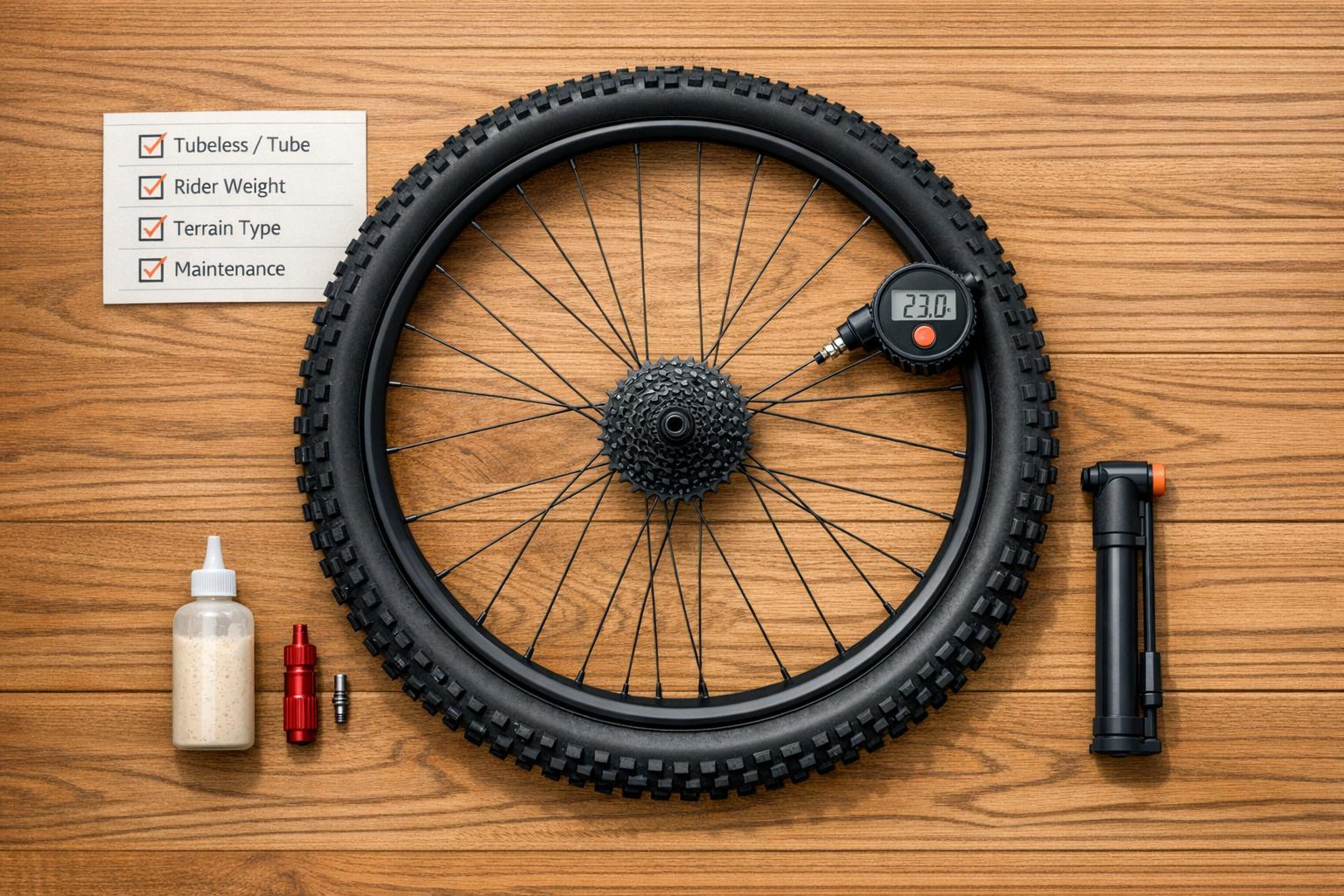
Now that you’ve removed key components, it’s time to focus on the remaining parts and tire settings. Tire pressure requirements can vary depending on your bike setup and airline policies. For most bikes, especially those with tubeless tires, complete deflation isn’t necessary. However, some airlines might ask for partial deflation, so it’s best to double-check with your carrier. If you’re running tubeless tires, leave just enough air to keep them seated.
For your brakes, use a pad spreader to keep the disc brake pads separated during transit. Secure the spacer with a zip tie. If your brake calipers stick out beyond the rear dropout, remove them, wrap them in padding, and attach them to the inside of the frame. This reduces stress on the brake cables and protects the calipers. You can also use shipping tape to secure any loose hardware on the caliper mount.
If possible, remove the disc rotors from your wheels. Wrap them carefully to protect the braking surfaces and store them in your parts bag. Protect your cassette by covering it with foam or padding to avoid damage from sharp gear teeth.
Finally, install end caps over your axle ends to prevent scratches on your bike case or other components. Pad or cover any exposed tubing, cable housing ends, derailleur hangers, and painted surfaces to keep your bike safe from scratches and dings during transport.
Packing and Protecting Your Bike
Once your bike is disassembled, the next step is choosing a packing method to ensure it arrives safely at your destination.
Pick Your Packing Option
There are three main ways to pack your bike, each with its own pros and cons. Cardboard bike boxes are the most affordable option – many bike shops will even give them to you for free. They’re simple to use and work well for one-way trips. However, they’re bulky, fragile, and not the easiest to transport once you’ve arrived. Plus, airlines typically won’t insure bikes packed in cardboard, and you’ll still face oversize baggage fees.
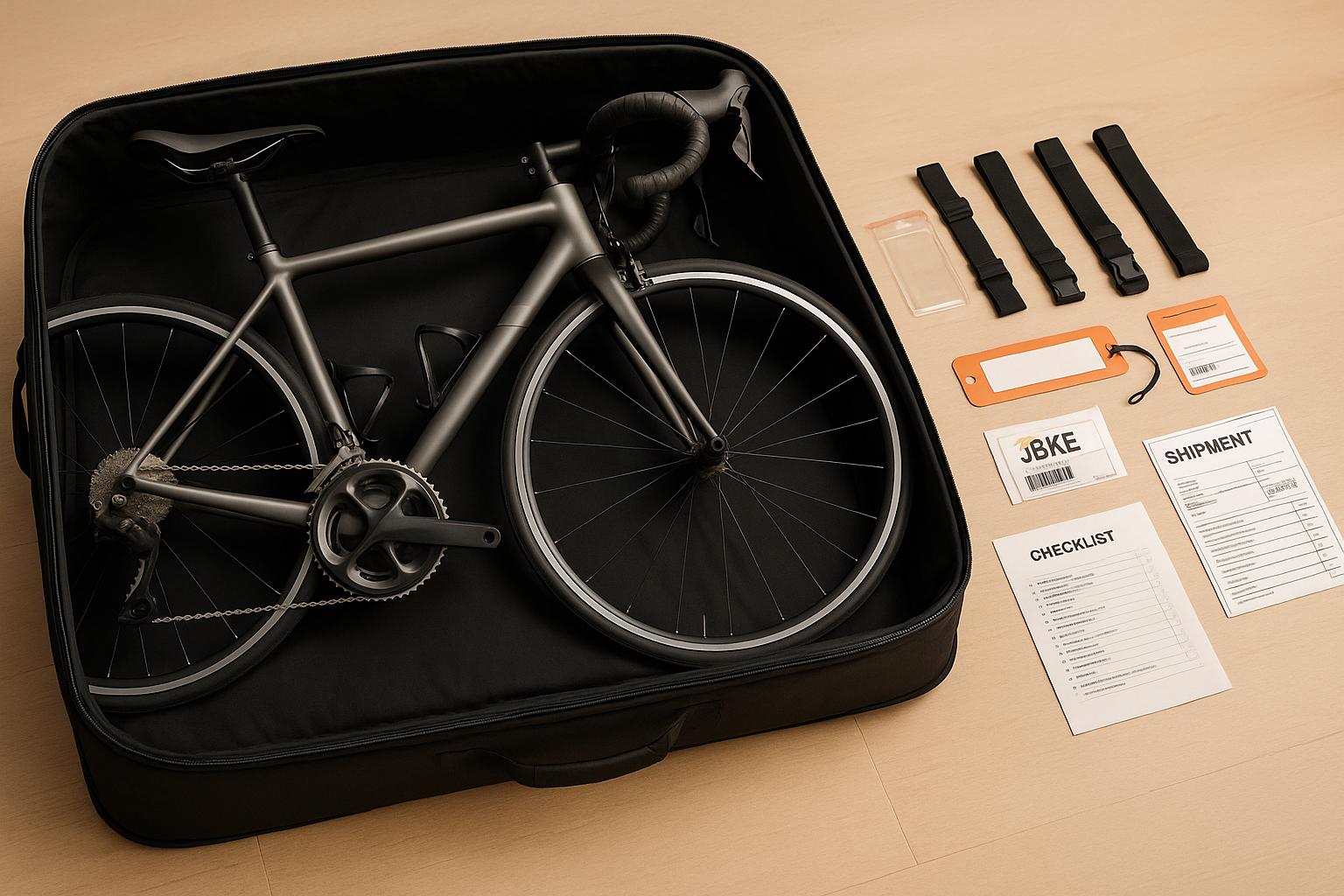
Soft-sided bike bags strike a balance between protection and portability. These bags are easier to handle than cardboard boxes, and certain models may help you avoid airline oversize fees. Prices generally range between $400 and $600. The trade-off? Packing them can be a bit tricky, and you’ll often need to add extra padding to keep your bike safe.
Hard-sided cases provide the most protection, making them a great choice for high-end bikes or frequent travelers. While they’re a bit challenging to pack, they offer solid peace of mind. On the downside, they’re heavy, awkwardly sized, and expensive, often triggering additional airline fees. Still, if you’re traveling with a pricey mountain bike, the added protection is often worth the investment.
Your choice depends on your needs. If you’re taking an occasional trip with a mid-range bike, a cardboard box might do the trick. But if you’re a frequent traveler or own an expensive bike, a soft bag or hard case is a smarter long-term solution.
Once you’ve decided on your packing method, it’s time to secure each bike component.
Wrap and Secure Parts
To protect your bike during transit, wrap and secure all components thoroughly. With your key parts already removed, focus on cushioning each piece.
Start with the frame and fork. Wrap all tubes with foam padding and use tape or zip ties to hold everything in place. For thinner tubes, add extra foam or cardboard for reinforcement. If your bike has external cables, slide a soft cloth between the cables and frame to prevent scratches.
Next, handle the handlebars. Wrap them in foam or bubble wrap, position them parallel to the top tube with brake levers facing inward, and secure them with zip ties. This keeps them from shifting and potentially damaging other parts.
For the wheels, wrap the front wheel in foam and place it in a padded wheel bag. Cover the cassette with foam or padding to protect other components from its sharp teeth. Don’t forget to install end caps over the axle ends to prevent scratches inside your case.
The seat, seatpost, and pedals also need attention. Wrap each item in bubble wrap or foam before placing them in the case. Store the pedals in a small bag or box, securing the container inside your case to keep them from moving around.
Finally, gather all small parts – like bolts and hardware – into labeled bags. This small step can save you a lot of frustration when it’s time to reassemble your bike.
Add More Padding
For extra protection, reinforce fragile areas with additional padding. This helps prevent components from rubbing against each other during transit, which could lead to scratches or worse damage.
Pay special attention to delicate parts like the derailleur hanger, brake calipers, and any carbon fiber components. Use foam, bubble wrap, or even old towels to create buffer zones around these areas.
Before sealing your case, give it a quick shake test. If you feel any movement, add more padding until everything is secure. Also, reserve space for essential reassembly tools – like Allen keys, a pedal wrench, and chain lube – in a separate, secure bag.
Keep in mind that some airlines have specific packing requirements for bikes. Double-check your carrier’s rules before finalizing your packing method. Taking a little extra time now to pack carefully can save you from costly repairs and headaches later on.
sbb-itb-9d75ae1
Shipping and Airport Steps
With your bike safely packed and ready to go, it’s time to hand it off to the carrier. These final steps will help ensure everything goes smoothly and your bike makes it to its destination without a hitch.
Weigh and Label Your Packed Bike
Before heading to the airport or shipping facility, it’s a good idea to weigh your packed bike to avoid surprises at check-in. Most carriers offer the best rates for packages under 50 lbs (23 kg), though many accept packages up to 100 lbs (45 kg) with standard approval. If your bike weighs between 100-150 lbs (45-68 kg), be sure to contact your carrier ahead of time to get the necessary approval. This will save you from delays or even rejection at drop-off.
Use a reliable scale to weigh your bike, and round up to the nearest pound. For instance, if your packed bike weighs 49.2 lbs, record it as 50 lbs. This ensures the carrier’s system processes the weight correctly.
Next, measure the dimensions of your packed bike at its widest points. Be precise, as exceeding size limits can lead to hefty fees. The maximum allowable size for most carriers is 165 inches (419 cm) in total dimensions, with no single side exceeding 108 inches (274 cm).
Finally, label your bike clearly with your name, phone number, and destination address. Use waterproof labels or cover paper labels with clear tape to prevent smudging. Don’t forget to remove any old barcodes or destination stickers from past trips – these can confuse the carrier’s sorting systems and cause delays or misrouting.
Once you’ve weighed, measured, and labeled your bike, you’re ready to confirm your drop-off and pickup arrangements.
Confirm Drop-Off and Pickup Details
Double-check your drop-off and pickup plans before leaving home. If you’re flying, confirm where to check in your oversized baggage. Many airlines have separate counters or dedicated areas for sports equipment, which might even be in a different terminal. Knowing this ahead of time can save you a lot of stress at the airport.
If you’re shipping your bike, major carriers like UPS, FedEx, USPS, and DHL make it easy to schedule a doorstep pickup. Simply head to their websites to set it up by providing your address, phone number, and package details. Be sure to request email or text confirmations for added peace of mind.
For specialized bike carriers, check their websites for nearby drop-off locations and operating hours. Some companies may have specific requirements, so it’s worth reviewing their instructions in advance.
When confirming your arrangements, don’t forget to request tracking information. A tracking number allows you to monitor your bike’s journey from pickup to delivery, which is particularly reassuring if you’re shipping a high-value bike or traveling to a remote location.
If your plans change, make sure to reschedule or cancel pickup services as soon as possible. Most carriers allow last-minute adjustments, but giving notice a few hours ahead of time is always best.
Arrive Early for Check-In
Once your shipping or drop-off details are finalized, plan to arrive at the airport at least two hours early for domestic flights and three hours early for international flights when traveling with a bike.
Checking in a bike takes a bit more time than standard luggage. Airport staff may need to inspect your packing, confirm the weight and dimensions, and attach special handling tags. During busy travel periods or holidays, it’s smart to add an extra 30-60 minutes to your schedule to account for longer lines or delays.
Be aware of your airline’s baggage cutoff times. Most airlines stop accepting checked bags 45-60 minutes before domestic departures and up to 90 minutes before international flights. Missing these deadlines could mean leaving your bike behind or having to rebook your trip entirely.
If you’re dropping off your bike at a shipping facility, try to arrive during off-peak hours. Mid-morning or early afternoon is usually quieter than the evening rush. If you’re using a retail location like FedEx at Office Depot, staff can often help with last-minute packaging adjustments if needed.
For international flights, you’ll also need extra time for documentation and security checks. Keep your passport, any bike-related permits, and customs declarations easily accessible. Some countries require specific paperwork for sporting equipment, so make sure you have everything ready to avoid delays.
Arriving early gives you the flexibility to handle unexpected issues, whether it’s overweight baggage fees, missing documents, or last-minute packing tweaks. A little extra time can make all the difference in ensuring your trip starts off on the right foot.
Flying vs. Shipping Your Bike
Deciding whether to fly with your bike or ship it separately comes down to balancing cost, timing, and convenience. Both options have their perks and challenges, so it’s all about what fits your travel plans best.
Flying with your bike ensures it arrives when you do. No waiting around or stressing about delayed deliveries – perfect if you’re racing that weekend or need your bike right away. Plus, you have full control over packing, which can be reassuring. But let’s be real: lugging a bulky bike case through the airport is no picnic, and airline fees can vary widely.
Shipping your bike, on the other hand, saves you from airport headaches. You can have it sent straight to your hotel, race venue, or any address you choose. Specialized shipping services also tend to handle bikes more gently, with lower damage rates (1–2%) compared to airlines (4–6%). However, shipping does require some planning since delivery can take 5–9 days, and you’ll need to coordinate the receipt.
Here’s a quick breakdown to help you compare the two options:
Comparison Table
| Factor | Flying with Bike | Shipping Bike |
|---|---|---|
| Cost | $25–$75 each way (varies by airline) | $60–$120 for ground shipping via BikeFlights |
| Transit Time | Arrives with you | 5–9 days for ground shipping |
| Insurance | Up to $3,800 (DOT limit) | Customizable (e.g., $3,000 for ~$40) |
| Damage Rate | 4–6% | 1–2% |
| Convenience | Immediate access but includes airport hassles | Door-to-door service, requires planning |
| Weight Limits | Strict airline restrictions | More generous, allowing extra gear |
| E-bike Compatible | Often restricted due to battery rules | Yes, with proper packaging |
If you’re flying with a bike-friendly airline like Alaska Airlines, bringing your bike on the plane could be faster and cheaper, especially for shorter trips. But if your airline charges steep fees or you’re traveling internationally, shipping might be the better option to avoid extra stress.
Your destination also plays a role. If you’ve got easy transportation to and from the airport, flying with your bike is straightforward. But if you’re heading to a remote area or just want to skip the hassle of oversized luggage, shipping it door-to-door can be a lifesaver.
For international travel, shipping often makes even more sense. For instance, BikeFlights offers rates from California to Paris, France, for under $300. That’s often cheaper than paying high airline fees and dealing with customs paperwork.
Conclusion
This guide has walked you through the key steps of planning, preparing, and packing to ensure your bike arrives at its destination in one piece. Careful planning – like checking airline policies, shipping requirements, and gathering necessary documents – can save you a lot of headaches when it’s time to travel.
Proper preparation is equally important. By carefully disassembling and cleaning your bike, you not only protect it from damage but also make inspections smoother and faster.
When it comes to packing, the materials and methods you choose play a huge role. Whether you go with a hard case, soft bag, or even a sturdy cardboard box, using enough padding and securing everything properly can make all the difference in avoiding costly repairs.
Deciding between flying with your bike or shipping it comes down to your budget, schedule, and destination. Each option has its pros, so it’s worth weighing them based on your specific needs. For more tips on bike maintenance, gear choices, and travel advice to make your cycling adventures even better, check out the resources at Intermountain Bikes.
FAQs
What are the pros and cons of using a cardboard box, soft-sided bag, or hard-sided case to pack my bike?
When you’re preparing to fly or ship your bike, the container you use plays a crucial role in keeping it safe:
- Cardboard boxes: These are lightweight, inexpensive, and easy to find. They’re a decent option for short trips or situations where you know the bike will be handled gently. But they don’t offer much in the way of protection against rough treatment.
- Soft-sided bags: These are more portable and simpler to pack. With proper padding, they provide moderate protection, but they’re not the best choice if you’re concerned about heavy impacts.
- Hard-sided cases: These offer the highest level of protection, shielding your bike from rough handling and impacts. On the downside, they’re heavier, bulkier, and come with a higher price tag.
Ultimately, your decision will depend on how much protection your bike needs, how much you’re willing to spend, and how convenient you want the packing and transport process to be.
What’s the best way to pack a bike with electronic components for flying or shipping?
When getting a bike with electronic components ready for travel or shipping, start by taking apart delicate parts like the derailleur, sensors, or electronic shifting systems. Wrap these items securely in anti-static material or bubble wrap, then place them in a clearly labeled container or small box to keep them protected. If your bike has removable batteries, check the rules set by your airline or shipping service to see if they can be transported, and pack them separately if permitted.
Ensure the bike frame and all electronic components are properly padded to avoid any damage or movement during transit. Use foam, padding, or strong cardboard to shield the frame, but don’t overpack – this can increase the risk of items being crushed. Lastly, always review the specific policies of your airline or shipping carrier to make sure you’re following their guidelines for electronic components and batteries.
What should I do if I face unexpected customs fees or delays when shipping my bike internationally?
If you run into unexpected customs fees or delays while shipping your bike internationally, the first step is to contact your shipping carrier. They can help identify the issue and verify whether all the required documentation is accurate and complete. Often, delays or extra fees come down to missing or incorrect paperwork.
Another option is to consult a customs broker. These professionals can guide you through the process, help ensure compliance with customs regulations, and might even reduce additional charges. If the delays continue, keep in regular contact with your carrier for updates and ask for advice on how to resolve the problem as quickly as possible.
To prevent similar headaches in the future, take the time to double-check all your shipping documents, like invoices and customs forms, before sending your bike. A little extra preparation can go a long way in saving both time and money when shipping internationally.