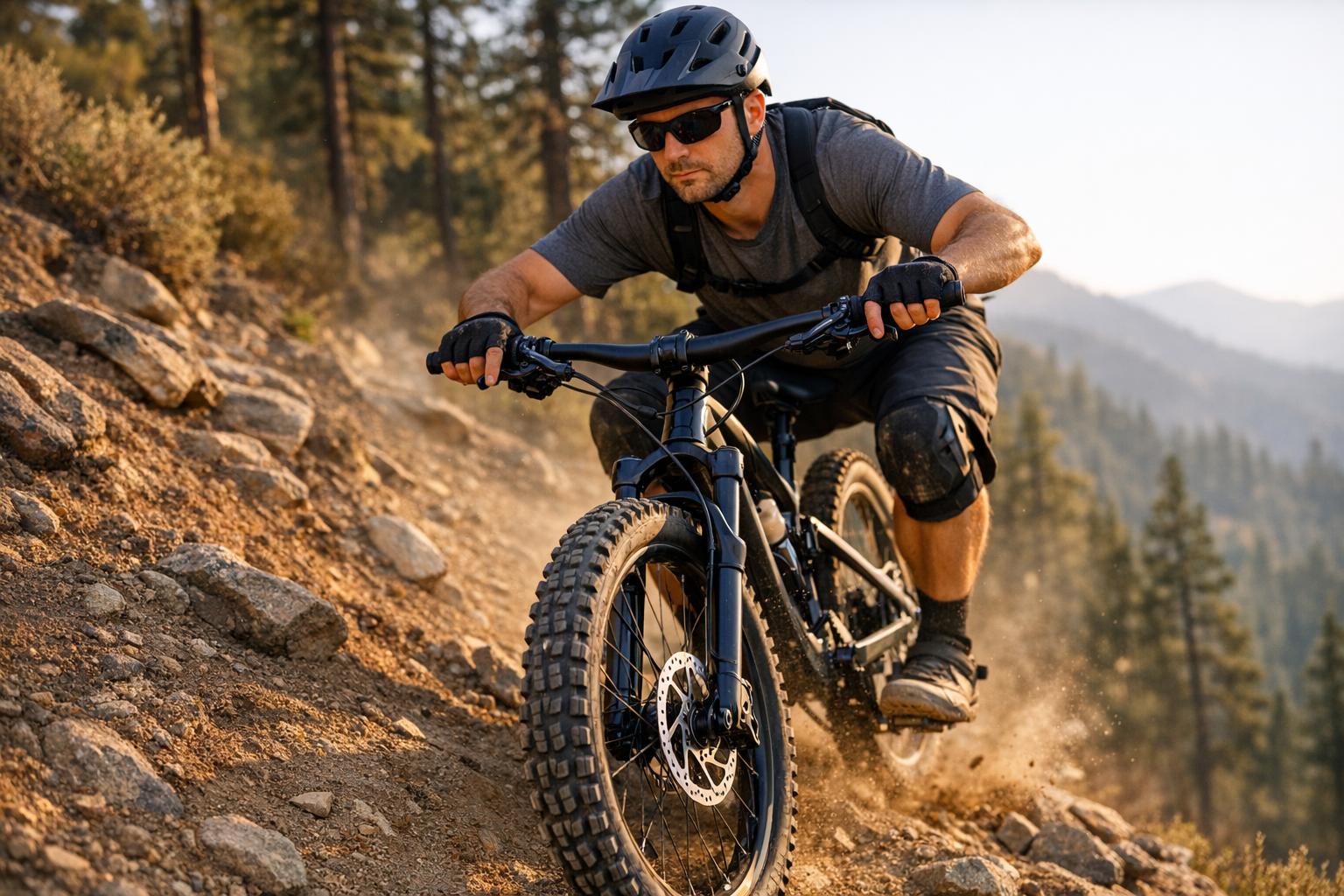
Are you looking forward to a winter biking experience up the rocky mountains since you’re either more of a biker or want to try something else apart from skiing & riding a snow scooter? It can also be the hunt to challenge your stamina & fitness levels in the winter season since there aren’t much avenues to go forward with fitness in winters due to the freezing conditions. Definitely, what you’re looking for here is fat biking.
Over a course of time, fat bikes have become the apple of the eye for the riders, specially due to their adaptability & advantages. However, many people don’t believe this & still ask if a fat bike can go in snow?
Fat bikes can go in snow. In fact the main purpose of fat bikes was indeed to make them run on tracks where the terrain was loose & lumpy as opposed to the normal tarmac. Wondering how? Read this article & know it for yourself.
What’s A Fat Bike?
A fat bike is a bicycle with seemingly obese tyres as if it is Snorlax’s tummy fat being extracted from the Pokemon & put into tyres. They look attractive to some while some find it hard to see it as they don’t like it. However, it is actually something that you can’t avoid looking at even if you want to. They might seem weird at first sight but they are way more valuable than you could even imagine. They are for off-road bicycling experience with tyres being as thick as 3.8 inches or more while the rims are 2.16 inches wide. The reason behind this is to make the tyres exert low-ground pressure while occupying a larger surface area so as to make riding on soft, unstable grounds a possibility. Such areas include snow, sand & mud. Fat bikes frames have wide forks so as to facilitate the accommodation of the wide rims. Some fat bikes, as the times change, allow tyres of various sizes to fit through which has made fat bikes a more preferred option as it gives bikers the will to be like Optimus Prime & transform their biking experience as per their needs.
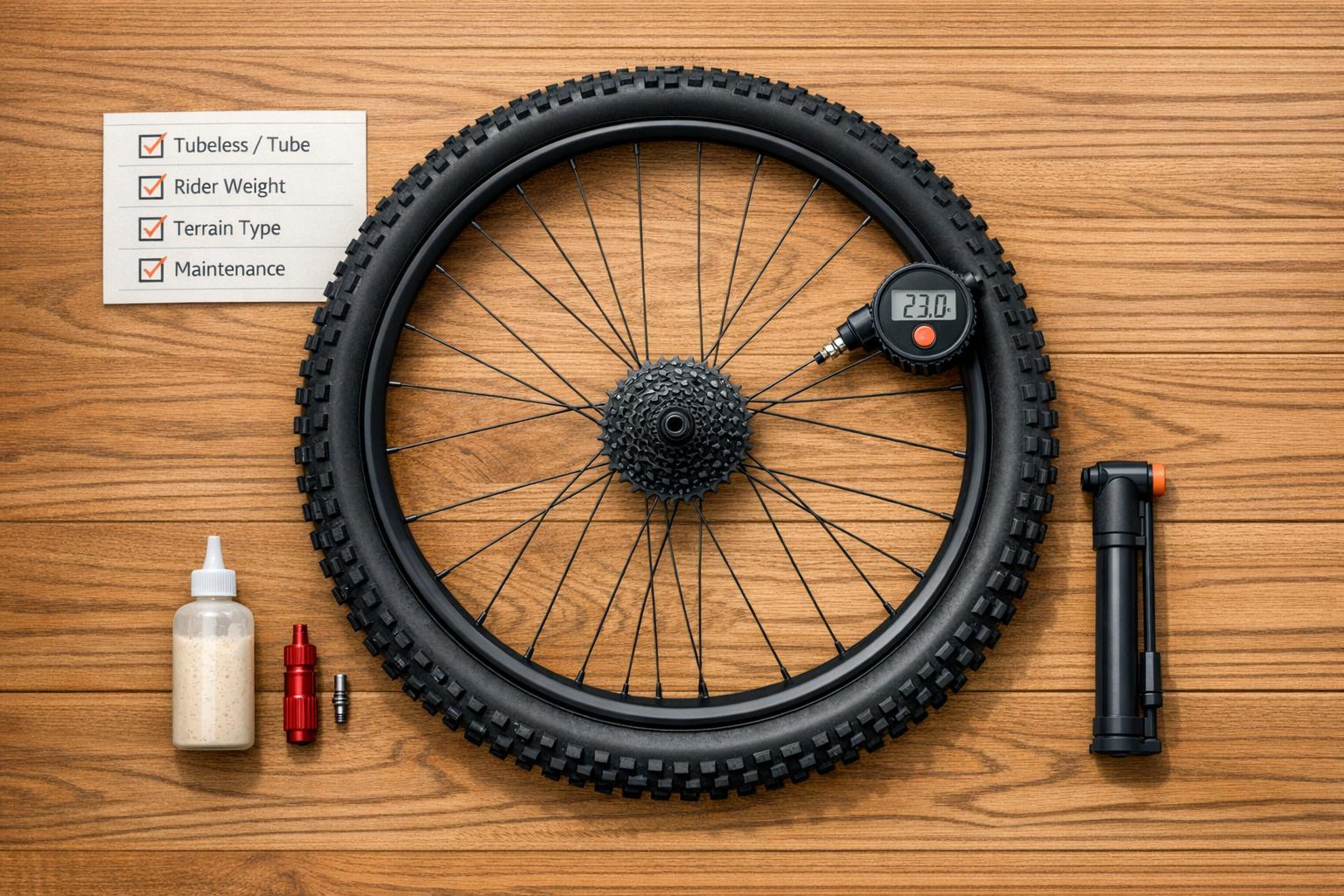
Fat bikes have emerged successfully due to the wide versatility they carry in terms of adaptability. Be it the snowy winter trails or the desert, be it the muddy wetlands or simply the mountain terrain, fat bikes can help you go anywhere & everywhere when it comes to biking. The secret behind this adaptability are the wide tyres. They aren’t fully inflated ever & based on the track that you want to ride on, can be ridden with inflation pressures as low as 340 hPa or 0.34 bar (5 psi) to allow an easy ride over rough or even amorphous obstacles. The normal range for a majority of riders is 550–690 hPa, 0.55–0.69 bar (8–10 psi). If you inflate it too full, then though you’ll be able to ride in soft surface conditions, but, there will be suspension issues as fat bikes don’t come much with suspension due to the reason that the low pressure on tyres absorb majority of shocks. Also, the tyres will slip when there’s a turn. It will be tough to balance too.
[amalinkspro type=”showcase” asin=”” apilink=”https://www.amazon.com/Ibiky-Bicycle-Mountain-Powerful-Fatbike/dp/B07WSVVJ2M/ref=as_li_ss_tl?dchild=1&keywords=fat+bike+for+snow&qid=1578790251&sr=8-9&linkCode=sl1&tag=dragonpoh-20&linkId=f8b0cb155583ba9a909eea22778fca8f&language=en_US” new-window=”true” addtocart=”false” nofollow=”true” sc-id=”4″ imgs=”%3Ca%20href%3D%22https%3A%2F%2Fwww.amazon.com%2FIbiky-Bicycle-Mountain-Powerful-Fatbike%2Fdp%2FB07WSVVJ2M%2Fref%3Das_li_ss_il%3Fdchild%3D1%26keywords%3Dfat%2Bbike%2Bfor%2Bsnow%26qid%3D1578790251%26sr%3D8-9%26linkCode%3Dli2%26tag%3Dcewebproperti-20%26linkId%3D2ad385c26fd90ac5ab69081625f4b60d%26language%3Den_US%22%20target%3D%22_blank%22%3E%3Cimg%20border%3D%220%22%20src%3D%22%2F%2Fws-na.amazon-adsystem.com%2Fwidgets%2Fq%3F_encoding%3DUTF8%26ASIN%3DB07WSVVJ2M%26Format%3D_SL160_%26ID%3DAsinImage%26MarketPlace%3DUS%26ServiceVersion%3D20070822%26WS%3D1%26tag%3Dcewebproperti-20%26language%3Den_US%22%20%3E%3C%2Fa%3E%3Cimg%20src%3D%22https%3A%2F%2Fir-na.amazon-adsystem.com%2Fe%2Fir%3Ft%3Dcewebproperti-20%26language%3Den_US%26l%3Dli2%26o%3D1%26a%3DB07WSVVJ2M%22%20width%3D%221%22%20height%3D%221%22%20border%3D%220%22%20alt%3D%22%22%20style%3D%22border%3Anone%20!important%3B%20margin%3A0px%20!important%3B%22%20%2F%3E” link-imgs=”false” specs=”The iBiky 26 unisex Bike provides off-road capabilities as well as everyday riding performance for the ultimate biking experience~~~26 by 4 fat tires give you enhanced stability when riding on different types of terrains, and the extra width helps handle bumps and obstacles perfectly on-road, off-road and down dirt path~~~Changing gears to tackle hills and other inclines is no problem~~~The bike has a carbon steel frame and alloy wheels for lightweight and durability.~~~The bikes have super cool colors and styles, so youll feel proud displaying & riding it around town” btn-color=”#ff9900″ btn-text=”” alignment=”aligncenter” hide-prime=”0″ hide-image=”0″ hide-reviews=”0″ hide-price=”0″ hide-button=”0″ width=”750″]26 Inch Wheel 21 Speed 4.0 Fat Tire Bike[/amalinkspro]
Hence, it is a thumb rule for riding a fat bike that it will never be filled up to its capacity. As the surface area increases, the pressure automatically gets distributed which ensures the tyres not to sink in making them float ahead smoothly. More surface contact ensures better traction on loose surfaces. Thus, fat bike is the ideal pedal machine for those who seek a biking experience on places where your normal road bike or mountain bike would succumb to the conditions.
Does It Go In Snow?
Of course, a fat bike goes in snow. As told earlier, the main purpose of fat bikes was to allow riders to have a biking experience on snowy trails. The history of fat bikes indeed adds the essence of adventure & interest. The history of the modern fat bikes includes two stories from Alaska & southern New Mexico. With the advent of mountain bikes in shops in the 1980s, customizations for riding on sand & snow came sooner than expected. In 1987, the first Iditabike event challenged riders to travel 200 miles of Alaska in winter, following snowmobile & dog mushing trails. Conditions along the trail ranged from rideable frozen crust to beds of soft snow & liquid water overflow. These harsh conditions garnished with lots of walking alongside the bike in the snow left riders with a want of improving their equipment for proceeding years. A wider tyre’s need became evident. Individual rims were welded side by side & fixed in tandem to a single hub with two tires. The doubled area of tyre footprint allowed more riding & less walking. One experiment popularly called the “six pack” used three rims & tires side by side on both the front & the rear of the frame.
The tandem rim concept was then worked upon & upgraded by removing the two inner rim walls so as to accomodate a single large-volume tyre which could operate at low pressure & was lighter on the bike’s weight too. Thus fat bikes came in circulation. The thicker tyres with low pressure allowed better surface contact & hence kept the bike moving instead of getting it stuck in the snow blankets.
Precautions & Considerations
Fat bikes allow you to ride over snow but that doesn’t mean that it’s going to be a merry-go round right from the launch. There are certain ground rules to be maintained which are as under:
1. Don’t leave a rut
The first rule that forms the foundation of fat biking is the rule of fat biking on groomed fattrack which is – “never ever leave ruts in the trail.” If youever find out that you’re leaving a rut behind yourself while biking, turn around & try some other time.
Freshly-groomed trails as the name indicates are just in for the game. Hence, riding immediately on them isn’t advisable as it leaves ruts which freeze later on & pose problems to the riders behind you. The time required for a trail to set itself up is dependent on many factors like temperature, humidity, etc.
- 3.8” Rule
For riding on snow, tyres at least 3.8″ wide should be opted for. Honestly, the wider it is, the better it gets. The Chequamegon Area Mountain Bike Association (CAMBA) states that “larger riders should run minimum 4.5” tires since tyre width should be proportional to the weight of the rider.”
- Tyre pressure & the conditions
Another thumb rule- “the softer the conditions, the lower the air pressure on the tyres.” But if the rider has some mass, air pressure can be increased a bit owing to the heavy-weight of the rider. Expert organisations related to fatbiking recommend around 1-4 psi for a “soft surface,” & 6-8 psi for “hard surface & base.”
- Avoid thawing conditions when the weather warms
Trail conditions become more variable as the weather changes. When the temperatures sore above freezing, one shouldn’t ride.
Also, such conditions leave scope for ruts. Riding early in the morning when the trails are still frozen is a good hack. Though the effects aren’t immediately visible, one should plan accordingly.
5. Don’t ride on wrong trails
Snowy regions have biking trails as well as the ones for snowbikes, skiing & dog-mushing. Always check the signs & trailhead kiosks if you’re unsure regarding the type of trail. It is necessary always since your mistakes might cause problems to other riders & tourists too.
6. The perfect kit for Snowmobile trails
It is always necessary to ride with care on snowmobile trails since they are quite fast. As a matter of safety, wearing a blinking tail light & reflective clothing alongside other safety gears is always a plus. Avoiding to ride on the centre of the snowmobile trails will be a safe & intelligent move too.
A Knowledge of Tyres & Conclusion
When going for biking, knowing the conditions is important apart from the things mentioned earlier. The type of tyres to be chosen like aggressive fat bike tyres (suitable to loose & sometimes squishy tracks like snow, mud, rocks, etc.), all-rounder fat bike tyres (good for dry trails where the snow is packed) & fast rolling fat biking tyres (these are low resistance tyres suitable for fat bike racing) also place a role when it comes to biking since fatbiking isn’t just a magic that happens from the first pedal. It takes a bit to know things & then master the course specially when it is beginners we talk about.
Thus, we find out that fat bike is the best & surely the only pick in biking sector when it comes to biking over snow. As better as it gets, it can be ridden over tarmac too apart from loose tracks of mud, sand, etc.