Calculate your mountain bike gear ratios easily! Input chainring, cassette, and wheel size to see gear inches and optimize your setup for any terrain.

Share this post

Mountain Bike Gear Ratio Converter

Optimize Your Ride with a Mountain Bike Gear Ratio Converter

If you’ve ever wondered why some trails feel like a breeze while others leave your legs burning, the answer often lies in your bike’s gearing. Understanding how your chainring, cassette, and wheel size interact can make a huge difference in performance, whether you’re grinding up a steep incline or flying down a smooth descent. That’s where a tool like our bike gearing calculator comes in handy—it takes the guesswork out of finding the perfect setup.

Why Gear Ratios Matter for Cyclists

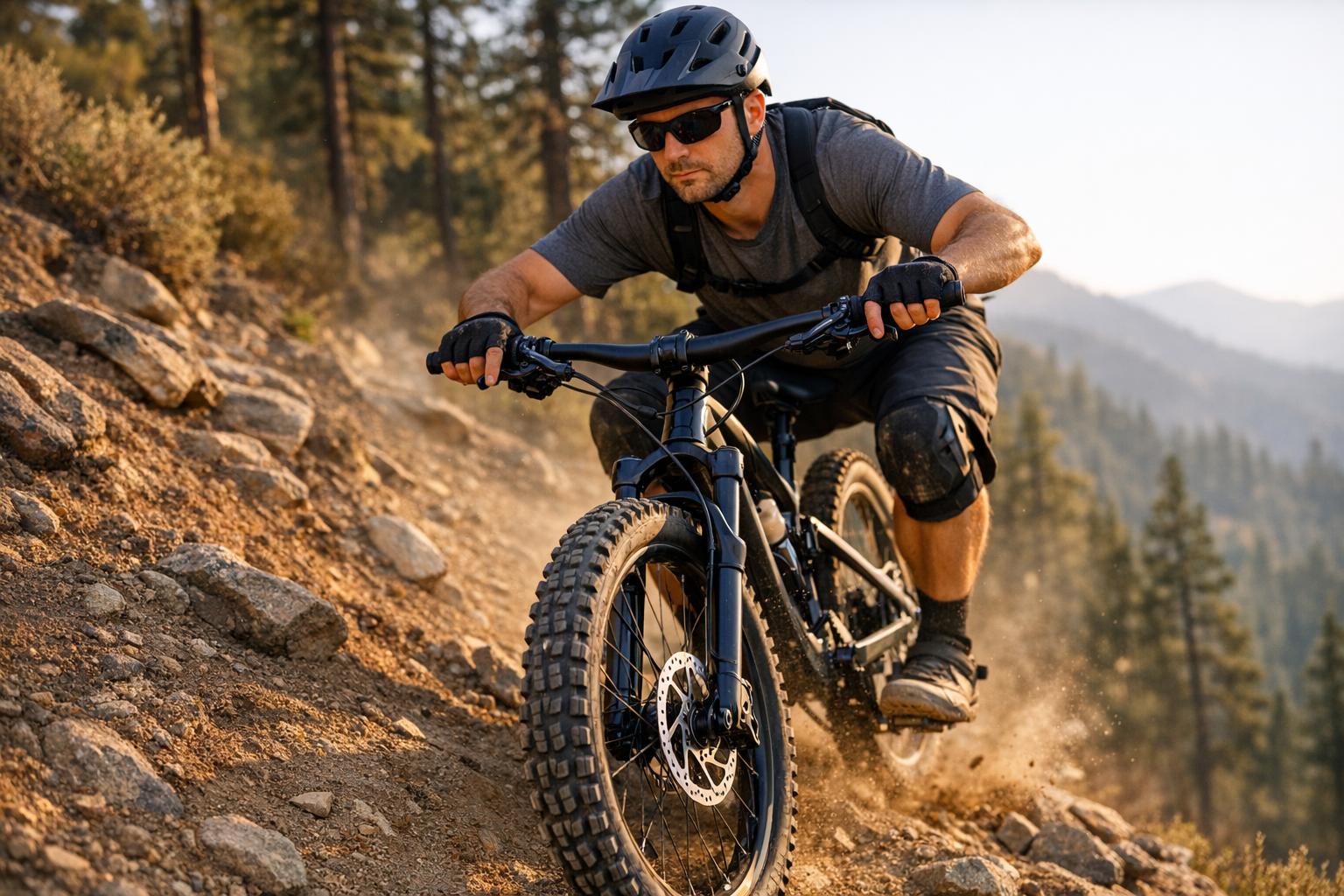
Every cyclist, from casual riders to hardcore mountain bikers, can benefit from knowing their drivetrain dynamics. A well-chosen setup means less strain on tough climbs and more control at high speeds. By inputting a few key details about your bike, you can see exactly how far each pedal stroke takes you and adjust accordingly. It’s not just about numbers; it’s about matching your equipment to your personal strength and the challenges of your favorite routes.

Tailor Your Bike to Any Terrain

Riding is personal, and so is your gear. Experimenting with different combinations lets you find what works best, whether you’re tackling rocky singletrack or long gravel paths. With clear insights, you’ll ride smarter, not harder.

FAQs

What is a gear ratio, and why does it matter?

A gear ratio tells you how many times your rear wheel turns for each pedal stroke, based on the size of your chainring and cassette cogs. It’s a big deal because it affects how hard or easy it is to pedal. A lower ratio (bigger cog, smaller chainring) makes climbing hills easier but limits top speed. A higher ratio is great for speed on flat terrain but can wear you out on steep stuff. Knowing your ratios helps you pick the right setup for your rides.

How do I know if my gearing is right for me?

It really depends on your strength, riding style, and the terrain you tackle. If you’re spinning out on descents, your hardest gear might be too easy—consider a bigger chainring. Struggling on climbs? A smaller chainring or larger rear cog can help. Use our tool to experiment with different combos and see what feels balanced for your legs and the trails you love.

What’s the difference between gear inches and meters of development?

Both are ways to measure how far your bike travels with one pedal stroke, just in different units. Gear inches is an older system that factors in wheel diameter and gear ratio to give a sense of ‘effective wheel size.’ Meters of development is more straightforward—it’s the actual distance you roll per crank turn. We show both in the results so you can use whichever makes more sense to you!

Share this post

Blog

Recent Posts

Lorem ipsum dolor sit amet, consectetur adipiscing elit.

Scroll to Top